
World News

US intelligence whistleblower Edward Snowden called on President Barack Obama to pardon him, saying in comments published Tuesday it had been morally "necessary" to shine a light on mass surveillance.
The former intelligence contractor has spent three years in exile in Russia after initiating the largest data leaks in US history, fuelling a firestorm over the issue of mass surveillance.
"If not for these disclosures, if not for these revelations, we would be worse off," he told Britain's Guardian newspaper in a video-link interview from Moscow on Monday.
"Yes, there are laws on the books that say one thing, but that is perhaps why the pardon power exists -- for the exceptions, for the things that may seem unlawful in letters on a page but when we look at them morally, when we look at them ethically, when we look at the results, it seems these were necessary things," he said.

Human rights group Amnesty International said Sunday it had "credible evidence" of the abuse and torture of people detained in sweeping arrests since Turkey's July 15 coup attempt.
The London-based group claimed some of those being held were being "subjected to beatings and torture, including rape, in official and unofficial detention centres in the country".
In Turkey, a senior official denied Amnesty's claims and vowed that Turkey would uphold human rights.
"The idea that Turkey, a country seeking European Union membership, would not respect the law is absurd," the official said.
"We categorically deny the allegations and encourage advocacy groups to provide an unbiased account of the legal steps that are being taken against people who murdered nearly 250 civilians in cold blood."
Since the failed coup, a total of 13,165 people have been detained, President Recep Tayyip Erdogan said late Saturday.

German Finance Minister Wolfgang Schaeuble on Friday issued a stark warning to Britain that it would face costly barriers to the European Union trade zone if it left the bloc.
The comments by one of Europe's most senior officials is a blow to Brexit supporters, who have argued that Britain could negotiate deals to access the single market similar to those in place for non-members Norway and Switzerland.
"That won't work," the veteran minister told Germany's Der Spiegel weekly, which on Saturday plans to publish a German-English edition at home and in Britain with "Please don't go!" on the cover.
"That would require the country to follow the rules of a club which right now it wants to leave."
European Commission president Jean-Claude Juncker last month said that British "deserters will not be welcomed with open arms" by European partners if Britain votes to leave in the June 23 referendum, but Schaeuble's intervention is the most explicit threat so far.
Vote Leave chief executive Matthew Elliott hit back, saying there was "no question about it, Britain will still have access to the single market.
"It would be perverse of the eurozone to try to create artificial barriers -- and would do far more damage to them than to anyone else," he said.
The EU accounts for 47 percent of British exports and 54 percent of imports, according to latest government figures.

Federal Reserve Chair Janet Yellen boosted Wall Street Friday, restating her confidence in the US economy but softening her view on interest rate hikes after a poor US employment report.
Meanwhile London stocks rallied despite new polls that put the British referendum vote back on a knife-edge and sent the pound tumbling.
Yellen helped markets tentatively put last Friday's surprisingly dismal US jobs report behind them, saying one month's data is not so significant and that the overall labor market situation has been "quite positive".
But she backed away from previous Fed hints for a rate increase in June or July, only saying that tighter monetary policy should come gradually.

Twin bombings claimed by the Islamic State group hit Yemeni forces in Aden on Monday, killing at least 41 people in the latest of a spate of attacks in the southern city.
The attacks in Aden -- which is serving as the temporary government headquarters after rebels forced authorities from the capital -- follow a major military operation against jihadists in parts of southern and southeastern Yemen.
Backed by a Saudi-led coalition, forces loyal to President Abedrabbo Mansour Hadi are battling both Sunni extremists and Iran-backed Shiite rebels.
In the first attack, a suicide bomber killed 34 people queueing to enlist at a recruitment centre near the Badr base in Aden's Khormaksar district, said Brigadier General Nasser al-Sarei, the commander of Yemen's special security forces.
A subsequent explosion inside the base killed seven soldiers, he said.
In a statement posted online, IS said one of its fighters detonated an explosives belt among "apostate soldiers" at a recruitment centre, followed by the bombing at a gate of the Badr base.
The jihadist group, which has seized control of large parts of Syria and Iraq, also claimed responsibility Monday for a wave of bombings in Syrian coastal cities that killed more than 100 people.
A local resident in Aden described the scene of the Badr explosions as "horrible", saying body parts had been blown dozens of metres (yards) away.
"They came to complete the procedure of their recruitment and receive their first salary," he said, speaking of the young men who had gathered outside the army centre.

G7 finance ministers on Saturday voiced concern about the sputtering global economy as they looked for a plan to stoke growth, while a currency policy clash overshadowed their meetings.
The club of rich nations also pledged to tackle tax avoidance in the wake of the Panama Papers investigation and beef up efforts to disrupt the murky world of terrorism financing.
Two days of talks at a hot spring resort in northern Japan focused on how to stoke global growth which they said was under threat from myriad challenges, including terrorism, refugee flows and the threat of Britain's exit from the European Union.
The ministers were unanimous in opposing the prospect of a "Brexit", saying it would inflict a "shock" on the global economy that would only worsen the outlook at a time of geopolitical instability.
Host Japan was keen to get its G7 counterparts on board with the view that fiscal stimulus is the best way to kickstart global growth, but Germany and Britain were cool on the idea.
On Saturday, the group suggested a go-your-own-way approach.
"(We) discussed how to employ a balanced policy mix -- monetary, fiscal, and structural -- taking into account country-specific circumstances," they said in concluding remarks.
Japan's determination to tame the resurgent yen was another sensitive topic, after its repeated threats to intervene in forex markets put it on a collision course with its G7 counterparts.

French anti-terror judges will Friday begin their first questioning of Salah Abdeslam, a member of the jihadist cell which killed 130 people in a series of attacks in Paris in November.
The 26-year-old arrived early Friday for interrogation in central Paris under heavy security, escorted by military police, elite police units and a helicopter.
Authorities hope Abdeslam will be able to shed light on the operational details of the Paris attacks, as well as provide clues as to whether other cell members are still at large.
For months, Abdeslam was the most wanted fugitive in Europe until he was tracked down and arrested on March 18 in the Brussels neighbourhood of Molenbeek where he grew up.
Transferred to France under high security on April 27, he has since been held at Fleury-Merogis prison, southeast of Paris.
- Key role -
A childhood friend of suspected ringleader Abdelhamid Abaaoud, Abdeslam is thought to have played a key role both on the night of the Paris attacks on November 13, and in their preparation.
Two others have been arrested in France in connection with the attacks carried out by the Islamic State group, but they are considered secondary participants.
Abdeslam played a key role, dropping off the three suicide bombers who blew themselves up outside the Stade de France national stadium in northern Paris.

EgyptAir said wreckage from its passenger plane that crashed into the Mediterranean on Thursday with 66 people on board has been found.
"The Egyptian Ministry of Civil Aviation has just received an official letter from the Egyptian Ministry of Foreign Affairs that confirms the finding of wreckage of the missing aircraft No. MS 804," it said in English on its Twitter account.

Turkey's ruling party named a loyal ally of President Recep Tayyip Erdogan as the new prime minister Thursday, with the incoming premier immediately vowing to "work in total harmony" with the strongman leader.
The ruling Justice and Development Party (AKP) will officially appoint Transport Minister Binali Yildirim as its chairman Sunday, meaning he will automatically become prime minister.
Yildirim will replace Ahmet Davutoglu, who stepped down after a struggle with Erdogan, as the president seeks to concentrate more power in the presidential office.
"We will work in total harmony with all our party comrades at all levels, beginning with our founding president and leader," said Yildirim after being named party head, referring to Erdogan.
The 60-year-old Yildirim is seen as one of Erdogan's closest longtime confidants and has served an almost unbroken stint from 2002 to 2013 as transport minister and then again from 2015.
They are both strongly opposed to resuming talks with the outlawed Kurdistan Workers Party (PKK), the Kurdish militant group that has claimed responsibility for several attacks across Turkey since a two-year-long ceasefire collapsed in 2015.

Protests were to take place across Venezuela on Wednesday against President Nicolas Maduro in the first challenge to sweeping powers he has decreed for police and soldiers under a state of emergency.
The opposition-led marches in Caracas and other cities were to demand that authorities validate a recall referendum seeking Maduro's ouster.
But the 53-year-old president has dismissed the push against him.
On Tuesday he said the referendum was "not viable" and a petition it was based on with 1.8 million signatures was riddled with "fraud."
The 60-day state of emergency was imposed from Monday to tackle what Maduro said were threats to security, as well as food and energy shortages.
Many of the measures rely on Venezuela's army and police being deployed to carry them out.
It notably suspends many constitutional protections by opening the way to expropriations and almost any action deemed necessary to maintain public order.
Individuals, companies and non-governmental organizations in Venezuela with links to foreign groups are also to be put under scrutiny and risk having their finances frozen, according to the decree.
The opposition-controlled congress late Tuesday rejected the decree in a vote, saying it undermined democracy. But the Supreme Court may overrule that, as it has with other congressional decisions.
Category
Sport
Rybakina pulls out of Wuhan Open as foot injury forces break from tennis
 Rybakina pulls out of Wuhan Open as foot injury forces break from tennis
Manchester United turns Old Trafford turf into a piece of club history for fans
 Manchester United turns Old Trafford turf into a piece of club history for fans
Former police chief among officers investigated over Maccabi Tel Aviv fans ban
 Former police chief among officers investigated over Maccabi Tel Aviv fans ban
Nick Kyrgios suspended after cocaine test as Australian tennis star admits ‘huge mistake’
 Nick Kyrgios suspended after cocaine test as Australian tennis star admits ‘huge mistake’
Fraud arrest follows security disruption at Birmingham European Athletics Championships
 Fraud arrest follows security disruption at Birmingham European Athletics Championships
Asher-Smith matches European medal record as Hunt completes golden treble
 Asher-Smith matches European medal record as Hunt completes golden treble
OG Anunoby brings NBA champion’s backing to Mayor’s £2m plan to transform London basketball courts
 OG Anunoby brings NBA champion’s backing to Mayor’s £2m plan to transform London basketball courts
London launches bid to bring 2029 World Athletics Championships back to the capital
 London launches bid to bring 2029 World Athletics Championships back to the capital
Serbia and Sweden withdraw support for Infantino's FIFA re-election
 Serbia and Sweden withdraw support for Infantino's FIFA re-election
Wales withdraws support for Infantino’s FIFA re-election bid
 Wales withdraws support for Infantino’s FIFA re-election bid
Education
-
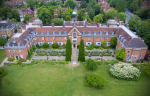 Oxford holds global university crown for record 11th consecutive year
The University of Oxford has retained its position as the world’s highest-ranked university for an unprecedented 11th consecutive year, according to the Times Higher Education (THE)Read More...
Oxford holds global university crown for record 11th consecutive year
The University of Oxford has retained its position as the world’s highest-ranked university for an unprecedented 11th consecutive year, according to the Times Higher Education (THE)Read More... -
 Jewish students face rising antisemitism on UK campuses, report finds
Antisemitic incidents at universities across Britain have risen sharply since the Hamas-led attacks on Israel in October 2023, according to a new report from the Community Security TrustRead More...
Jewish students face rising antisemitism on UK campuses, report finds
Antisemitic incidents at universities across Britain have risen sharply since the Hamas-led attacks on Israel in October 2023, according to a new report from the Community Security TrustRead More... -
 UK schools to receive new support to confront misogyny and harmful online influences
Schools across England are set to receive a new package of guidance and resources designed to help teachers tackle misogyny, promote respectful relationships and address harmfulRead More...
UK schools to receive new support to confront misogyny and harmful online influences
Schools across England are set to receive a new package of guidance and resources designed to help teachers tackle misogyny, promote respectful relationships and address harmfulRead More... -
 England to recruit 1,000 youth workers in biggest youth services expansion for a generation
The government is to fund the recruitment and training of 1,000 new youth workers across England as part of a major expansion of services aimed at helping young people who are at riskRead More...
England to recruit 1,000 youth workers in biggest youth services expansion for a generation
The government is to fund the recruitment and training of 1,000 new youth workers across England as part of a major expansion of services aimed at helping young people who are at riskRead More... -
 London schools see sharp fall in exclusions as Inclusion Charter strengthens safety and belonging
New evidence suggests that efforts to improve inclusion and prevent violence are contributing to safer and more supportive school environments across London, with suspension andRead More...
London schools see sharp fall in exclusions as Inclusion Charter strengthens safety and belonging
New evidence suggests that efforts to improve inclusion and prevent violence are contributing to safer and more supportive school environments across London, with suspension andRead More... -
 £22.5m programme to expand enrichment opportunities for children in more than 400 schools
Hundreds of thousands of young people in disadvantaged communities across England are set to gain greater access to sport, music, arts, debating, volunteering and outdoor activitiesRead More...
£22.5m programme to expand enrichment opportunities for children in more than 400 schools
Hundreds of thousands of young people in disadvantaged communities across England are set to gain greater access to sport, music, arts, debating, volunteering and outdoor activitiesRead More... -
 Jewish studies in Europe at a crossroads: an interview with Oleg Kozerod
Interview with Oleh Kozerod, Researcher at the Kuras Institute of Political and Ethnic Studies of the National Academy of Sciences of UkraineRead More...
Jewish studies in Europe at a crossroads: an interview with Oleg Kozerod
Interview with Oleh Kozerod, Researcher at the Kuras Institute of Political and Ethnic Studies of the National Academy of Sciences of UkraineRead More... -
 England’s education overhaul puts local leaders at the centre of jobs and skills reform
Government brings mayors, employers, schools and colleges together to reshape technical education and connect young people with regional job opportunitiesRead More...
England’s education overhaul puts local leaders at the centre of jobs and skills reform
Government brings mayors, employers, schools and colleges together to reshape technical education and connect young people with regional job opportunitiesRead More... -
 London’s school run transformed as car journeys fall and active travel soars
A decade of policies introduced under Mayor Sadiq Khan has significantly changed how children travel to school, with new Transport for London figures showing a sharp fall in schoolRead More...
London’s school run transformed as car journeys fall and active travel soars
A decade of policies introduced under Mayor Sadiq Khan has significantly changed how children travel to school, with new Transport for London figures showing a sharp fall in schoolRead More... -
 UK families to save thousands as free school meals and breakfast clubs expand
Millions of children will gain access to free school meals this term as the government rolls out a wider package aimed at cutting the cost of sending children to school.Read More...
UK families to save thousands as free school meals and breakfast clubs expand
Millions of children will gain access to free school meals this term as the government rolls out a wider package aimed at cutting the cost of sending children to school.Read More...
UK News
-
 England’s water reserves under growing pressure as drought persists into autumn
Sixth month of below-average rainfall leaves reservoirs dangerously depleted, with some holding barely a fifth of their capacityRead More...
England’s water reserves under growing pressure as drought persists into autumn
Sixth month of below-average rainfall leaves reservoirs dangerously depleted, with some holding barely a fifth of their capacityRead More... -
UK Green Party sparks controversy after voting to define Zionism as racism
Britain’s Green Party has triggered a major political and diplomatic controversy after members voted to formally classify Zionism as a form of racism, prompting strong condemnation fromRead More...
-
 London plans citywide licensing system to bring dockless e-bikes under control
London Mayor Sadiq Khan has unveiled plans to introduce a unified regulatory system for dockless electric bike services across the capital, aiming to address growing concerns over unsafeRead More...
London plans citywide licensing system to bring dockless e-bikes under control
London Mayor Sadiq Khan has unveiled plans to introduce a unified regulatory system for dockless electric bike services across the capital, aiming to address growing concerns over unsafeRead More... -
 UK government steps up winter preparedness with £1.4bn flood defence investment and new emergency campaign
The UK Government is stepping up efforts to protect communities, businesses and critical infrastructure from severe winter weather, combining billions of pounds in investment in floodRead More...
UK government steps up winter preparedness with £1.4bn flood defence investment and new emergency campaign
The UK Government is stepping up efforts to protect communities, businesses and critical infrastructure from severe winter weather, combining billions of pounds in investment in floodRead More... -
 UK bank shares slide as bond yields reach 28-year high ahead of Autumn Budget
British banking stocks suffered significant losses on Thursday as government borrowing costs surged to their highest level since 1998, intensifying concerns over the country's public financesRead More...
UK bank shares slide as bond yields reach 28-year high ahead of Autumn Budget
British banking stocks suffered significant losses on Thursday as government borrowing costs surged to their highest level since 1998, intensifying concerns over the country's public financesRead More...
Culture
-
 England’s national museums to keep free admission for all visitors
Government rules out charges for international tourists as museums receive further investmentRead More...
England’s national museums to keep free admission for all visitors
Government rules out charges for international tourists as museums receive further investmentRead More... -
 UK museums given three months to keep rare Renaissance bronze in Britain
British museums and galleries have been given a limited window to secure a rare Renaissance sculpture valued at more than £4.6 million, after the Government temporarily halted itsRead More...
UK museums given three months to keep rare Renaissance bronze in Britain
British museums and galleries have been given a limited window to secure a rare Renaissance sculpture valued at more than £4.6 million, after the Government temporarily halted itsRead More... -
 Oasis set to return in 2027 with massive 38-date global tour
Oasis are extending their long-awaited comeback with an ambitious 38-date tour scheduled for 2027, taking the iconic Britpop group across the UK, Ireland, continental Europe and theRead More...
Oasis set to return in 2027 with massive 38-date global tour
Oasis are extending their long-awaited comeback with an ambitious 38-date tour scheduled for 2027, taking the iconic Britpop group across the UK, Ireland, continental Europe and theRead More... -
 UK moves to keep Stanley Spencer’s landmark resurrection painting
The British government has stepped in to prevent a major early work by Stanley Spencer from leaving the country, giving museums and galleries a limited window to secure the paintingRead More...
UK moves to keep Stanley Spencer’s landmark resurrection painting
The British government has stepped in to prevent a major early work by Stanley Spencer from leaving the country, giving museums and galleries a limited window to secure the paintingRead More... -
 London’s record summer of live music delivers £3.4bn boost
London has enjoyed a record-breaking summer of live music, with millions of fans attending concerts across the capital as some of the world’s biggest artists took to its stadiums, arenasRead More...
London’s record summer of live music delivers £3.4bn boost
London has enjoyed a record-breaking summer of live music, with millions of fans attending concerts across the capital as some of the world’s biggest artists took to its stadiums, arenasRead More... -
 Government blocks export of rare Anglo-Saxon artefact in bid to keep national treasure in UK
The UK government has imposed a temporary export ban on an exceptionally rare Anglo-Saxon metal mount, giving museums and galleries time to raise funds to keep the historicRead More...
Government blocks export of rare Anglo-Saxon artefact in bid to keep national treasure in UK
The UK government has imposed a temporary export ban on an exceptionally rare Anglo-Saxon metal mount, giving museums and galleries time to raise funds to keep the historicRead More... -
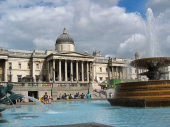 Jan van Eyck’s portraits to unite in landmark National Gallery exhibition
An unprecedented gathering of works by one of the Northern Renaissance’s greatest masters will bring Jan van Eyck’s portraiture into focus at the National Gallery this winter, with all 10 ofRead More...
Jan van Eyck’s portraits to unite in landmark National Gallery exhibition
An unprecedented gathering of works by one of the Northern Renaissance’s greatest masters will bring Jan van Eyck’s portraiture into focus at the National Gallery this winter, with all 10 ofRead More... -
 Europol sounds alarm over more violent museum heists across Europe
Museum robberies are taking a more dangerous turn across Europe, with organised criminal groups increasingly using heavy tools, explosives and other forms of force to steal valuableRead More...
Europol sounds alarm over more violent museum heists across Europe
Museum robberies are taking a more dangerous turn across Europe, with organised criminal groups increasingly using heavy tools, explosives and other forms of force to steal valuableRead More... -
 London marks UNESCO day with call for action, memory and justice on the legacy of the transatlantic slave trade
City Hall brings together community leaders, artists, young Londoners and historians to honour those affected by the transatlantic slave trade and celebrate the strength of African andRead More...
London marks UNESCO day with call for action, memory and justice on the legacy of the transatlantic slave trade
City Hall brings together community leaders, artists, young Londoners and historians to honour those affected by the transatlantic slave trade and celebrate the strength of African andRead More... -
 Honiara welcomes a global showcase of wildlife photography
Some of the world’s most striking wildlife photographs have arrived in the Solomon Islands, as the British High Commission and the Solomon Islands National Art Gallery open anRead More...
Honiara welcomes a global showcase of wildlife photography
Some of the world’s most striking wildlife photographs have arrived in the Solomon Islands, as the British High Commission and the Solomon Islands National Art Gallery open anRead More... -
 Britain’s festival season stages a cautious comeback as fans pay for more
Britain’s battered music festival industry is showing tentative signs of recovery, with several major events selling out faster than expected as organisers reshape their offer aroundRead More...
Britain’s festival season stages a cautious comeback as fans pay for more
Britain’s battered music festival industry is showing tentative signs of recovery, with several major events selling out faster than expected as organisers reshape their offer aroundRead More... -
 British Week in Paraguay marks a decade with nine days of culture, food and music
Asunción is preparing for the 10th edition of British Week, a nine-day programme showcasing British culture and connections across Paraguay.Read More...
British Week in Paraguay marks a decade with nine days of culture, food and music
Asunción is preparing for the 10th edition of British Week, a nine-day programme showcasing British culture and connections across Paraguay.Read More... -
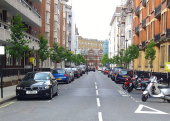 Stefan Zweig’s London refuge marked with blue plaque 90 years after Austrian writer fled Hitler
A London address that once offered refuge to one of Austria’s most celebrated writers has been formally marked in honour of Stefan Zweig, the Jewish novelist and essayist who fled theRead More...
Stefan Zweig’s London refuge marked with blue plaque 90 years after Austrian writer fled Hitler
A London address that once offered refuge to one of Austria’s most celebrated writers has been formally marked in honour of Stefan Zweig, the Jewish novelist and essayist who fled theRead More...
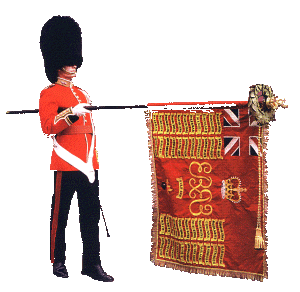
British Queen celebrates
Most Read
- Teen held after US woman killed in London stabbings
- Heave-ho Harry! Prince prepares to join the walking wounded in ice trek to North Pole
- Football: Farhad Moshiri adamant Everton deal above board
- "Master of English Style". Interview with Designer Lydia Dart
- Letter to the Financial Times from Lord Mayor Alderman Michael Bear