US President Donald Trump said Washington ordered its B-1 bomber aircraft out of Britain after receiving information about a potential threat allegedly connected to Iran, adding a new
dimension to growing security concerns surrounding the American military presence in the UK.
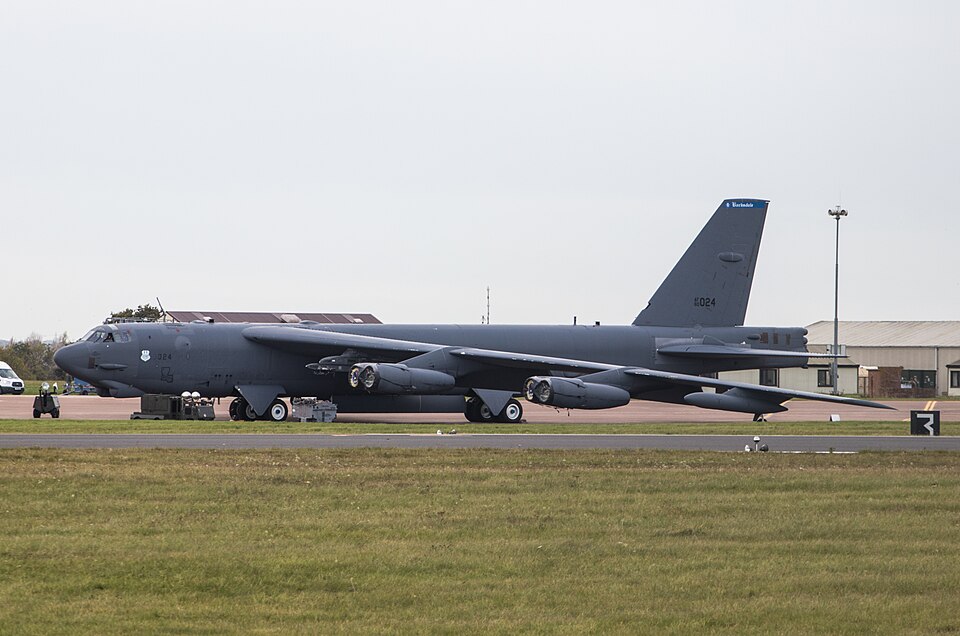
The bombers had been operating from RAF Fairford in Gloucestershire, a strategically important US airbase and one of the few locations in Europe capable of supporting America's long-range heavy bomber operations. The aircraft had recently participated in US military action against Iranian targets.
Trump said the decision to redeploy the aircraft was taken as a precaution after US authorities became aware of a possible threat.
"We had an idea that there might be a threat, and why would I leave them there?" Trump told reporters on Monday. He said moving the aircraft was relatively inexpensive and would reduce the risk to US personnel and equipment.
Asked whether the individuals behind the threat were connected to Iran, Trump replied that they "would be linked to Iran," although he did not provide details about the intelligence supporting that assessment.
Vice President JD Vance offered a similar explanation, saying the United States was acting cautiously because of what Washington considers a continuing Iranian threat.
"We are being extremely cautious," Vance told reporters, pointing to what he described as Iran's long-standing record of supporting or carrying out terrorist activity against US interests and other countries.
Washington gives mixed signals over Iran connection
The Trump administration has not presented a detailed public account of the alleged threat, and senior US officials have offered somewhat different descriptions of the circumstances surrounding the withdrawal.
Secretary of State Marco Rubio sought to distance the bomber movement from the arrests in Britain, saying there was no confirmed direct connection between the two developments. He stressed that the Pentagon routinely moves military assets according to operational requirements and security assessments.
A NATO military source nevertheless said Iran was still considered an "acute threat" to US military assets located in Britain.
The uncertainty comes after British police arrested several men in the vicinity of RAF Fairford. The arrests have intensified scrutiny of security around the base and raised questions about whether Iran or Iranian-linked networks could be attempting to target American military infrastructure in Europe.
British Prime Minister Andy Burnham has said the suspected plot was likely connected to Iran. Tehran has rejected the allegations.
Iranian Foreign Minister Abbas Araqchi dismissed claims of Iranian involvement, arguing that the accusations were unfounded and criticizing Britain and its allies over the handling of the suspects.
RAF Fairford is a crucial US bomber hub in Europe
The removal of the B-1 aircraft represents a significant temporary change to the US military posture in Britain.
Located about 145 km west of London, RAF Fairford has long served as Washington's principal European operating location for strategic bombers. Although the aircraft are not permanently based there, the airfield provides the United States with a valuable forward position from which long-range aircraft can conduct operations in Europe, the Middle East and beyond.
Fairford's importance stems partly from its infrastructure. Only a limited number of European airfields can accommodate and support US heavy bombers such as the B-1.
The Pentagon confirmed on Sunday that all US bombers deployed to Fairford had returned to their home stations in the United States. It nevertheless said the bomber fleet remained capable of providing precision global strike capabilities "anywhere, anytime."
The Wall Street Journal was the first to report that the aircraft had been withdrawn.
According to The New York Times, US commanders received new intelligence about an Iran-backed threat over the weekend and rapidly ordered the bombers to leave. The report said some aircraft departed while supporting tanker aircraft were still being mobilized.
Neither the Pentagon nor the British government provided detailed public information about the reported threat.
Withdrawal comes amid tensions over Britain's role in US operations
The development also highlights the complicated position of Britain in the current US-Iran confrontation.
During the latest conflict, Washington was permitted to use RAF Fairford for defensive operations against Iranian missile sites attacking shipping in the Strait of Hormuz. Britain did not authorize the use of its territory for offensive US strikes against Iran.
That restriction has exposed differences between Washington and London at a time when the two countries remain among each other's closest security partners.
The redeployment of the B-1s could therefore have both operational and political significance. Removing the aircraft from Fairford reduces the United States' ability to rapidly generate bomber sorties from Europe, although the Pentagon insists the aircraft remain available for global missions.
Christoph Bergs, a defence analyst at the Royal United Services Institute, said the move could temporarily reduce Washington's ability to quickly increase the intensity of air operations against Iran.
However, he noted that Britain's restrictions on offensive operations from its territory had already limited the practical role of Fairford in the conflict.
The bombers could potentially be redeployed to locations such as Diego Garcia or military facilities in the Gulf, although such a move would depend on available infrastructure, agreements with partner countries and the security situation.
Arrests near Fairford triggered heightened security
The security concerns emerged after a series of arrests around the airbase.
In the early hours of September 27, five British men in their 20s were detained after police reportedly saw them running from fields near three white vans parked close to the base. Police said no explosives were discovered, although petrol was reportedly found.
The men were subsequently released on bail.
A sixth suspect, a British-Iranian dual national arrested several days later on suspicion of preparing terrorist acts, was also released on bail.
The arrests prompted increased security measures around the airfield and drew attention because Iran's Islamic Revolutionary Guard Corps had previously identified RAF Fairford as a legitimate potential target.
Trump had previously described the suspected plot as potentially capable of causing "big damage" and suggested that it could be connected to Iran. He later expressed opposition to the suspects being released on bail.
Despite the movement of the bombers, NATO officials have sought to reassure allies that the decision does not weaken the alliance's overall defensive posture.
A senior NATO military official said the alliance's ability to respond to aggression remained unchanged, emphasizing the combined military capabilities of its 32 member states.
For Washington, however, the episode underscores the growing vulnerability of US military infrastructure in Europe as tensions with Iran expand beyond the Middle East. The decision to withdraw the B-1s also illustrates how intelligence about potential attacks can rapidly alter the deployment of some of America's most powerful conventional strike aircraft, even when the underlying threat has not been publicly explained. Photo by Steve Lynes from Sandshurst, United Kingdom, Wikimedia commons.