The use of mineral fertilisers in EU agriculture increased in 2024, marking the first notable rebound after recent declines. According to the latest Eurostat estimates, farmers applied 9.8
million tonnes of mineral fertilisers (nitrogen and phosphorus), up 6.0% compared with 2023. Despite the increase, consumption remained 15.8% below the peak recorded in 2017.
Mineral fertilisers are essential for maintaining agricultural productivity and supporting crop yields. However, excessive application can result in nutrient losses through leaching and run-off, contributing to water and soil pollution and placing pressure on ecosystems.
Nitrogen-based fertilisers accounted for the vast majority of mineral fertiliser use. In 2024, their consumption reached an estimated 8.9 million tonnes, representing a 5.8% increase from the previous year.
The highest levels of nitrogen fertiliser use were recorded in France (1.8 million tonnes), Germany (1.1 million tonnes) and Spain (0.9 million tonnes), reflecting the scale of agricultural production in these countries.
Phosphorus fertiliser use also increased, rising by 7.7% year on year to 0.9 million tonnes in 2024. Spain recorded the highest consumption (0.14 million tonnes), followed by France (0.12 million tonnes), Italy (0.10 million tonnes), Romania (0.09 million tonnes) and Germany (0.07 million tonnes). Together, these five countries accounted for more than half of total phosphorus fertiliser use across the EU.
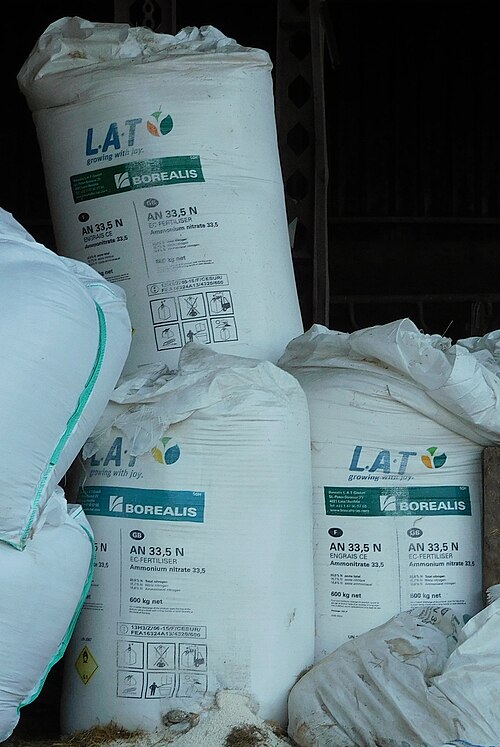
These figures are based on the latest Eurostat data on the consumption of inorganic fertilisers. Photo by Cjp24, Wikimedia commons.