Baroness Winterton's third visit in under a year signals growing British ambition in South Asia's rising economy
A senior British trade official has arrived in Bangladesh this week for her third visit in less than a year, in what analysts see as a clear signal of London's intensifying interest in one of South Asia's fastest-growing economies.
Baroness Winterton of Doncaster, the UK's Trade Envoy to Bangladesh, touched down in Dhaka at what she called "a pivotal time" — just weeks after Bangladesh's new elected government took office in February following a turbulent political transition. Her visit spans trade, investment, higher education, aviation and defence, casting a wide net over a relationship that both governments are eager to deepen.
"The UK and Bangladesh share a strong, historic partnership, and our countries continue to benefit from expanding trade and investment ties," Baroness Winterton said ahead of her meetings. "I look forward to engaging with government leaders, businesses, and entrepreneurs to identify new opportunities that support economic growth and prosperity for both nations."
High-Level meetings on the agenda
During her stay, the Trade Envoy is scheduled to meet with senior cabinet ministers, government officials, and military figures to discuss what London describes as "shared priorities for mutually beneficial growth." She will also sit down with executives from British companies already operating in Bangladesh, probing where bilateral trade and investment can be expanded further.
British High Commissioner Sarah Cooke, who has been one of the most vocal champions of closer UK-Bangladesh ties, struck an optimistic note. "Shared growth and prosperity are at the heart of the UK–Bangladesh relationship, and Baroness Winterton's third visit in a year reflects just how seriously we take that commitment," she said. "This visit will further solidify our partnership as Bangladesh enters an exciting new chapter."
Bangladesh: Britain's biggest DCTS beneficiary
A centrepiece of the visit is the UK's Developing Countries Trading Scheme, or DCTS — widely regarded as one of the most generous trade preference programmes in the world. Bangladesh holds a unique position within it: it is the single largest beneficiary of duty-free access under the scheme, channelling competitive, high-quality goods directly to British consumers while sustaining hundreds of thousands of jobs at home.
The scheme goes beyond simply waiving tariffs. It simplifies rules of origin, making it easier for Bangladeshi exporters to qualify; actively encourages diversification beyond the ready-made garments sector that has long dominated the country's export profile; and aims to foster long-term, sustainable economic development through job creation across industries.
Baroness Winterton is scheduled to visit several Bangladeshi businesses that use the DCTS to access UK markets — a hands-on signal that London wants to understand, and grow, those commercial links from the ground up.
A relationship rooted in history, evolving for the future
The ties between the United Kingdom and Bangladesh stretch back more than five decades, to Bangladeshi independence in 1971, when Britain was among the early nations to recognise the new state. Since then, the relationship has been shaped not only by trade and diplomacy, but by the nearly half a million people of Bangladeshi heritage living in the UK — a diaspora that forms a vital human bridge between the two countries.
The UK is one of Bangladesh's largest export markets, absorbing billions of pounds worth of garments, textiles, and a growing range of other goods each year. In return, British firms have invested in Bangladeshi infrastructure, energy, financial services and technology, while UK universities have enrolled tens of thousands of Bangladeshi students, producing a generation of graduates with links to both nations.
Development cooperation has also been a long-running thread. The UK, through its development programmes, has invested significantly in Bangladesh's resilience against climate change — a priority for a country regularly battered by cyclones and floods — as well as in education, healthcare, and governance reform.
Why this visit matters now
The timing of Baroness Winterton's visit is not incidental. Bangladesh has just emerged from a period of significant political upheaval, and its new government is signalling openness to fresh partnerships and economic reform. For London, that presents an opportunity — particularly as the UK, post-Brexit, continues to forge its own independent trade relationships across the developing world.
"The UK remains one of Bangladesh's largest export markets and a leading development and investment partner," a spokesperson for the British High Commission noted. The current visit, they added, "reaffirms the UK's commitment to supporting Bangladesh's transition toward a more diversified, resilient, and high-value economy."
With competition for influence in South Asia intensifying — from China's Belt and Road investments to US and EU trade overtures — Britain's repeated, high-level engagement with Dhaka carries a strategic subtext. Bangladesh, with its population of over 170 million, its growing middle class, and its ambition to graduate from least-developed country status by 2026, is a market that global powers are increasingly reluctant to overlook.
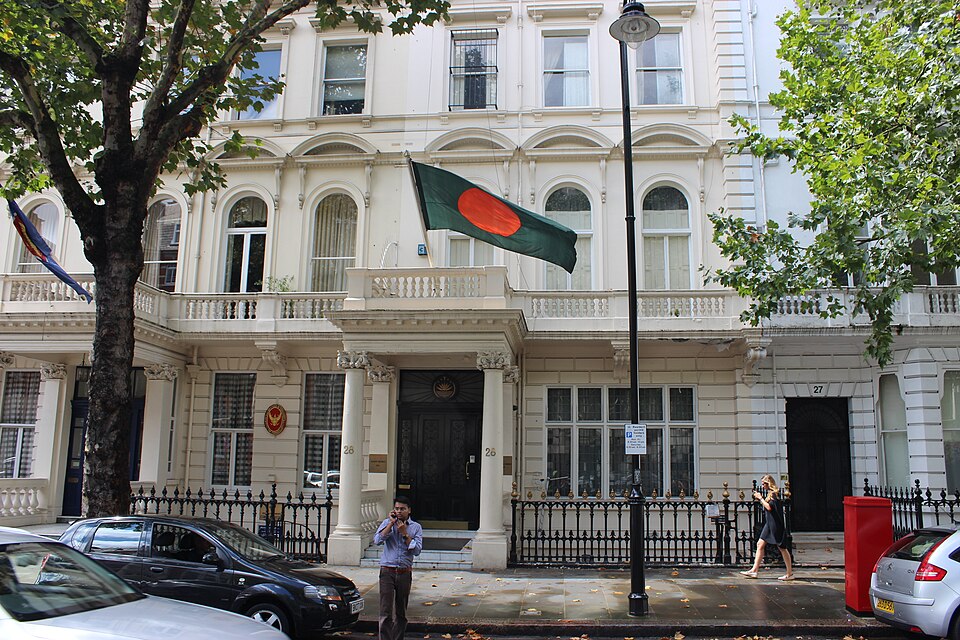
Baroness Winterton's third visit in a year suggests Britain, at least, has no intention of doing so. Photo by Kenyh, Wikimedia commons.