
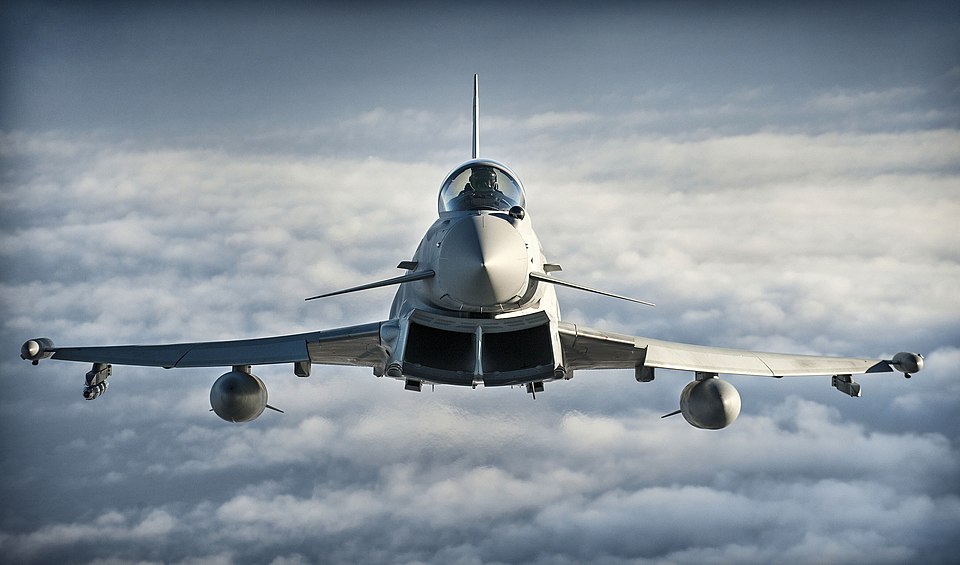
The UK has deployed a new low-cost anti-drone missile system to RAF operations in the Middle East, aiming to strengthen protection for British forces, regional allies and civilian interests
against the growing threat of drone attacks.
The Advanced Precision Kill Weapon System (APKWS) has been integrated onto RAF Typhoon fighter jets, allowing pilots to destroy hostile drones and other targets with greater precision and at significantly lower cost than conventional air-to-air missiles.
The Ministry of Defence said the weapon moved from testing to operational deployment in less than two months following accelerated work with defence companies BAE Systems and QinetiQ.
RAF Typhoon crews from 41 Test and Evaluation Squadron carried out successful air-to-air trials in April after an earlier ground-target strike test in March. The system has since been deployed on operational missions in the Middle East with sorties flown by Typhoon aircraft from 9 Squadron.
Defence Minister Luke Pollard described the rollout as a rapid collaboration between government and industry that would allow the RAF “to shoot down many more drones at a much lower cost”.
He said the Typhoon fleet remained central to both UK and NATO air defence operations, including missions protecting Europe’s eastern flank from Russian drone activity and supporting allies in the Middle East.
The APKWS uses laser-guidance technology to convert unguided rockets into precision weapons designed to counter drones and other aerial threats more economically than traditional missile systems. Defence officials say cheaper interception systems are increasingly important as militaries face larger numbers of low-cost attack drones.
Simon Barnes, managing director of BAE Systems’ air sector, said the programme demonstrated the Typhoon’s “exceptional versatility” and reinforced its role in European and Middle Eastern air operations.
Steve Wadey, chief executive of QinetiQ, said the company had supported the rapid deployment through engineering expertise and live trials.
The RAF said UK aircraft have logged more than 2,500 flying hours on defensive missions in the region since the current conflict began.
Air Commodore Donal McGurk said the new missiles would add to the “agile” air defence package already operating across the Middle East.
The UK also maintains ground-based and helicopter-based air defence systems in the Gulf region, including Sky Sabre batteries in Saudi Arabia and additional missile systems in Bahrain and Kuwait.
The announcement follows a recent Ministry of Defence contract for Skyhammer interceptor missiles designed to counter Shahed-style drones, as well as a £650 million investment announced earlier this year to upgrade the RAF’s Typhoon fleet and extend its service into the 2040s. Photo: Sgt Ralph Merry ABIPP RAF/MOD, Wikimedia commons.



























