Gunners from the Royal Air Force have, for the first time, earned the historic title of “aces” — not in fighter jets, but on the ground — after shooting down multiple hostile drones during
operations in the Middle East.
Four members of the RAF Regiment achieved the distinction by destroying at least five Iranian uncrewed aerial vehicles (UAVs) each, marking a modern evolution of a title once reserved for fighter pilots in the Second World War.
The recognition reflects how warfare — and air defence — has changed. Today’s “aces” are not dogfighting in the skies, but operating sophisticated ground-based systems designed to counter increasingly complex aerial threats.
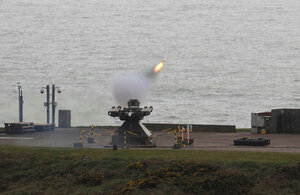
Deployed in a high-risk environment, RAF Regiment teams rely on a layered defence approach. This includes early-warning radar systems, electronic warfare capabilities, and the advanced Rapid Sentry system equipped with Lightweight Multirole Missiles (LMM). Together, these technologies allow operators to detect, track and destroy incoming drones — often under direct threat.
An RAF Regiment gunner ‘ace’ said: “We are all RAF Gunners—some as young as 18, many of us with over five confirmed engagements, and some just eight months out of training. We are proud to represent the next generation of the Corps.
Under constant threat, we are responsible for detecting, tracking and engaging targets, often while coming under fire but we continue to load and operate equipment even as missiles land around us.
We take immense pride in our role. Working long, demanding shifts in high-pressure conditions, we remain focused, determined, and resilient”.
Minister for the Armed Forces Al Carns MP said: “Our teams across the Middle East are operating in some of the most demanding conditions imaginable, and they are delivering with professionalism, courage and real combat skill.
I am hugely proud of our RAF Regiment. Night after night, under threat, they are protecting British lives and British interests, and doing so in the finest traditions of the RAF Regiment.
Several of these heroes have achieved ‘ace’ status neutralising Iranian drones. The first of its kind, it isn’t just impressive, it is exceptional.
We don’t say it enough in the UK, but thank you for your Service”.
Wing Commander Richard Maughan, Officer Commanding No. 2 Counter‑Uncrewed Aerial Systems Wing said: “Since the outset of the conflict in late February 2026, RAF Regiment personnel—supported by Royal Air Force engineers and air surveillance officers—have been at the forefront of countering persistent one‑way attack drones targeting UK and Allied personnel, infrastructure, and assets in the Middle East.
During the 23rd and 24th of March, RAF Regiment gunners operating within a ground‑based counter‑drone unit delivered the most effective defensive outcome achieved in a single night to date, underscoring the Regiment’s central role in force protection within a high‑threat environment”.
Air Cdre Paul Hamilton, Commander Global Enablement: “Our deployed gunners are showing outstanding courage to defend deployed UK personnel, allies, and partners every day.
They are genuinely putting their own lives at risk in the defence of others; as their Commandant General, I am extremely proud of the professionalism and self-sacrifice being displayed by these amazing people”.
RAF counter-drone policy and strategy
The UK’s counter-drone approach, led by the Ministry of Defence, has evolved rapidly in response to the growing use of UAVs in modern conflicts.
At its core, RAF anti-drone policy focuses on three key principles:
1. Layered Defence Systems
Rather than relying on a single solution, the RAF integrates radar, electronic warfare, and kinetic interceptors like LMM missiles. This ensures redundancy against swarm attacks and low-flying drones.
2. Forward Deployment and Force Protection
Systems like Rapid Sentry are deployed close to operational theatres — including recent plans to station them in Kuwait — to protect British and allied forces directly.
3. Scalable, Cost-Effective Response
With drones often being cheap and expendable, the RAF prioritises weapons like LMMs, produced by Thales UK, which offer precision at a relatively lower cost compared to traditional air defence missiles.
This strategy reflects a broader shift: modern air superiority is no longer just about controlling the skies with aircraft, but also about denying access to increasingly sophisticated unmanned threats.
A new kind of air superiority
The emergence of RAF drone “aces” signals a turning point in military history. As conflicts evolve, so too does the definition of aerial combat — and those who master it.
While the platforms may have changed, the principle remains the same: control the air, protect your forces, and adapt faster than the enemy.