The UK is stepping up cooperation with Ethiopia to tackle illegal migration from the Horn of Africa, with job creation, law enforcement and faster returns at the centre of a new partnership
announced during the Foreign Secretary’s first visit to Africa.
Visiting Addis Ababa, Foreign Secretary Yvette Cooper set out how the UK is strengthening action along key migration routes as patterns of irregular migration shift. Around 30% of small boat arrivals to the UK over the past two years have come from nationals of Ethiopia, Eritrea, Somalia and Sudan, underlining the Horn of Africa’s growing role as a source region.
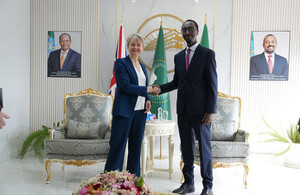
Meeting Ethiopia’s Minister of Foreign Affairs, Gedion Timothewos, Cooper said the UK must deepen partnerships with both source and transit countries to address the economic and security factors that push people into the hands of criminal smuggling gangs.
At the heart of the approach is jobs and investment. The Foreign Secretary highlighted UK-backed companies such as telecoms firm Safaricom, supported by a British consortium including British International Investment (BII), which is expanding employment opportunities inside Ethiopia. The aim is to give people viable prospects at home rather than forcing them to risk dangerous journeys to Europe.
During the visit, Cooper will sign a Joint Development Agreement for two energy transmission projects worth more than $400 million, developed by Gridworks, a BII company investing across Africa. She will also sign a Memorandum of Understanding with Ethiopia’s Ministry of Finance on the Ethiopia Investment Advisory Facility II, the UK’s flagship economic partnership with the country.
UK officials say these agreements reinforce Britain’s position as one of Ethiopia’s closest economic partners and strengthen ties ahead of COP32, which Ethiopia will host in 2027 — the same year the UK is set to chair the G20.
Alongside investment, the UK is expanding cooperation with Ethiopian authorities to disrupt criminal networks organising illegal migration from the Horn of Africa into Europe and the UK. This includes Border Security Command funding and support for Ethiopian law enforcement to improve investigations, intelligence sharing and action against smuggling gangs, as well as speeding up the return of Ethiopian nationals with no right to stay in the UK.
The Foreign Secretary is also holding talks with the African Union and regional foreign ministers on conflict prevention and resolution. Ongoing instability and conflict across the Horn of Africa have displaced millions of people, further driving irregular migration.
The Foreign Secretary, Yvette Cooper, said: “We are forging new partnerships with countries across Africa and delivering long term solutions. We are working together to tackle the economic drivers of illegal migration and the criminal gangs who operate globally, profiting from trading in people.
That includes new partnerships to improve trade and create thousands of good jobs in Ethiopia so people can find a better life back home instead of making perilous journeys
And it means new law enforcement cooperation between the Ethiopian authorities and the UK National Crime Agency to disrupt and dismantle the criminal networks who exploit vulnerable people and put their lives at risk. This follows a rising trend of organised people smuggling from the Horn of Africa towards the UK.
Criminal smuggler gangs operate across borders around the world – so we are working together with countries right along the transit routes. This cooperation in Africa follows new partnerships with countries like Iraq, the Balkan states and Europe.
The Foreign office is making international partnerships to tackle illegal migration a major priority because the partnerships we build abroad are crucial to making us stronger back at home”.
In meetings with the Ethiopian government, Cooper also underlined Ethiopia’s role in addressing regional security challenges through diplomatic and peaceful means. UK officials say stability and sustainable growth across the Horn of Africa are key to reducing migration pressures into Europe.
The visit aligns with the UK government’s newly published Africa Approach, which aims to build “modern partnerships” based on trade, investment, security and shared growth — backing African leadership while creating opportunities for businesses and communities on both sides.