
In his penultimate New Year’s Eve address, Emmanuel Macron struck an unusually restrained tone, delivering a speech that, for the first time, openly acknowledged the
approaching end of his presidency. Without the flourish that once defined his interventions, the French president reminded viewers that he would not be eligible to run again in 2027, an admission that lent the address the air of a slow political leave-taking.
Speaking for less than ten minutes on December 31, Macron kept to the constitutional ritual after months of relative silence. His last major televised appearance dated back to May, and the erosion of his authority was palpable. Seeking to defend his record, he pointed to employment gains and praised the resilience of the French economy, noting that inflation remained “one of the lowest in the eurozone.”
Conspicuously absent, however, was any reference to the political paralysis gripping the country or to the deteriorating state of public finances. Nor did Macron revisit his unfulfilled promise, made a year earlier, to consult the French public on major national issues. The abandoned pension reform — the central structural project of his second term — hovered silently over the speech, emblematic of ambitions cut short amid budgetary turmoil.
Against a backdrop of international instability, Macron broadened his lens, invoking France’s values of “humanity, peace and freedom” and urging resistance to rising nationalism. He cited Albert Camus and Marc Bloch, figures he plans to honor at the Panthéon, as moral guides in unsettled times. Yet beyond rhetoric, the address offered no concrete announcements, reinforcing the sense of a presidency entering its twilight.
Looking ahead, Macron insisted that 2026, the final full year before the presidential election, would still be “useful.” He outlined three priorities: the creation of voluntary military service, stricter regulation of social media for young people, and the long-delayed “right-to-die” legislation. These initiatives appeared as last attempts to shape a legacy, even as his influence wanes with 16 months remaining before the first round of voting.
The loss of momentum is not unusual for an outgoing president, but Macron’s predicament has been aggravated by his failed decision to dissolve the National Assembly in June 2024. The move cost him his majority and plunged France into a level of political instability unseen under the Fifth Republic.
Unpopular and constrained, Macron now risks becoming a spectator as potential successors jockey for position. Figures such as former prime minister Édouard Philippe have already voiced impatience, openly questioning whether meaningful reform is still possible before the next election.
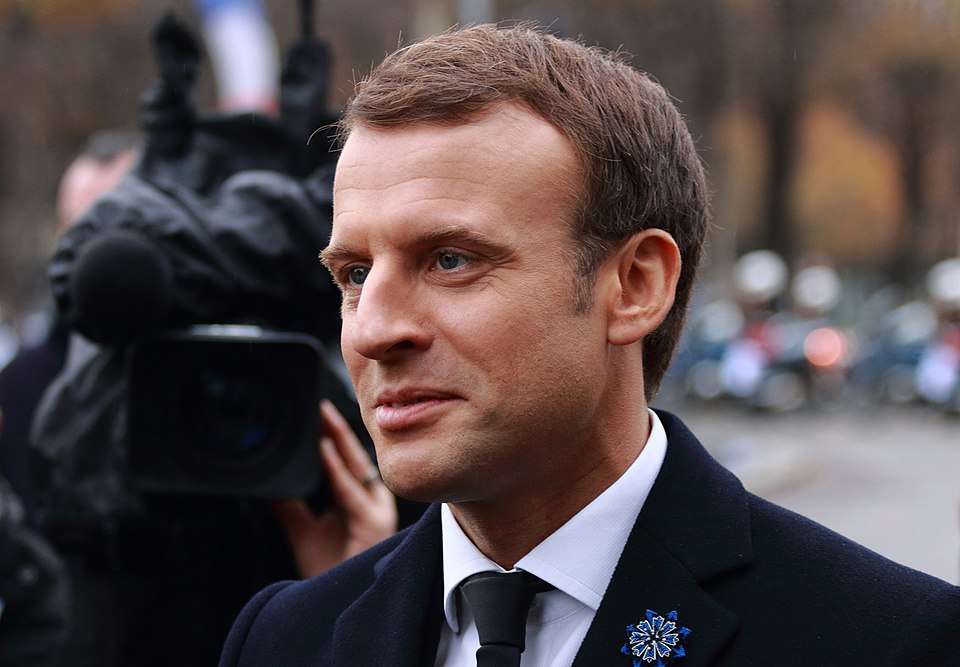
On Wednesday evening, speaking from the Salon des Ambassadeurs at the Élysée Palace, Macron stood before a mantelpiece lit with two candles — a tableau that felt almost ceremonial. For a country facing pressing economic and political challenges, the symbolism was hard to miss: time is running out, and waiting may prove costly. Photo by © Rémi Jouan, CC-BY-SA, GNU Free Documentation License, Wikimedia Commons.

































.JPG)