
UK news
The Serious Organised Crime Agency website has been taken temporarily offline after it was targeted by computer hackers.
The distributed denial of service (DDOS) attack - which involves web addresses being hit by a flood of visits - was carried out on Wednesday night, a Soca spokesman said.
The incident did "not pose any security risk to the organisation", he added.
DDOS attacks on the Soca website have previously been linked to the loose-knit international "hacktivist" group Anonymous.
Soca's website has been down since 10pm on Wednesday.
A spokesman said: "The action was taken to limit the impact of a DDOS attack on other clients hosted by our service provider.
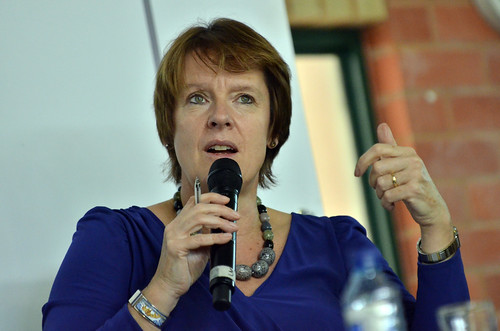
Environment Secretary Caroline Spelman has raised the possibility of standpipes returning to UK streets if the country is hit by a third dry winter in a row.
Mrs Spelman told the BBC's Inside Out programme that while it was "most unlikely" that drought-affected areas would need to use standpipes this year, another dry winter could make it more likely they would have to be brought in.
And while the wettest April on record had been good for the drought situation, she said the heavy rain had not solved the problem - and a wet winter was needed to get things back to normal.
South east, south west and eastern England are in drought along with the Midlands and South and East Yorkshire after two extremely dry winters.
Many areas rely on groundwater for much of their tap water supplies, and the dry winters mean aquifers have not had a chance to recharge when they normally would. Water companies who rely on groundwater for supplies are concerned about what will happen if there is a third dry winter.
Mrs Spelman said: "I'm not deluded into thinking that I can tell you how much rain we are going to get - and it's far too early to tell yet whether we are going to have the wet winter we do need; but whereas it's most unlikely we would have standpipes this year, if we have another dry winter that becomes more likely."
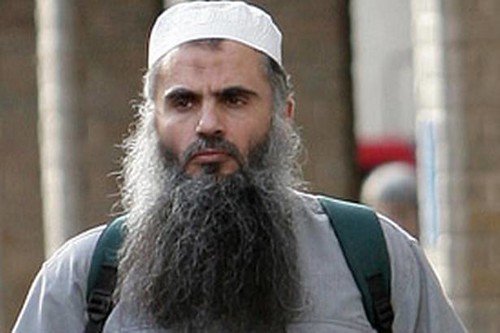
Islamist militants have offered to free a British-South African hostage if London allows radical cleric Abu Qatada to choose a country for his extradition, US monitoring service SITE said.
Al-Qaeda in the Islamic Maghreb (AQIM) also threatened that Britain would "open the door of evil" unto its country and people should it send the imam back to his native Jordan where he faces jail, the report said.
AQIM -- Al-Qaeda's North African franchise -- has been holding Stephen Malcolm, 37, and two other Western men hostage since abducting them last November in the northern Mali desert city of Timbuktu.
Britain has been trying to deport Abu Qatada for more than six years, arguing he is a threat to national security, to Jordan, where the cleric was convicted in 1998 in absentia of involvement in terror attacks.
Videos of the cleric's sermons were found in the Hamburg flat used by some of the hijackers in the September 11, 2001 attacks, while he has also defended killing Jews and attacks on Americans.
The cleric's removal was blocked in January by the European Court of Human Rights, which cited the risk that evidence obtained from torture would be used against him on his return to Jordan.

A purely Tory government would not be pressing ahead with reform of the House of Lords in this parliament, Justice Secretary Ken Clarke admitted.
The Justice Secretary hinted at tensions within the coalition amid reports that at least six Cabinet ministers would prefer to see the changes delayed.
Philip Hammond, Iain Duncan Smith, Michael Gove, Eric Pickles, Owen Paterson and Lord Strathclyde are said to be among senior Conservatives who have voiced doubts.
The party's backbenchers are also threatening a mass rebellion on the issue, with the potential for resignations by several ministerial aides.
Speaking on Sky News' Murnaghan programme, Mr Clarke stressed that he had always been in favour of an elected upper House.
"The existing House of Lords is a curious historical anomaly," he said. "We are ready for democracy, I think. All three political parties were in favour of House of Lords reform in their last manifestos."

US pop diva Lady Gaga arrived in South Korea late Friday, one week before a Seoul performance which will kick off her third concert tour. The singer, wearing a floor-length low-cut white dress, white gloves and a pearl-encrusted mask, blew kisses to fans at Seoul's Gimpo airport who tried to snap her image on smartphones. Her schedule in South Korea for the coming week was unclear and concert organisers Hyundai Card declined to give details. "The Born This Way Ball" tour begins on April 27 at Seoul's Olympic Stadium. From there Lady Gaga will take her hits and extravagant costumes to Hong Kong, Japan, Taiwan, the Philippines, Thailand, Singapore, Indonesia, New Zealand and Australia, and then on to 21 European cities. South Koreans aged under 18 have been banned from the concert after it was rated unsuitable for younger audiences.

Police closed some petrol stations Thursday to stop panic buying as the government faced criticism for warning motorists to stock up ahead of a threatened strike by tanker drivers.
Retailers said petrol sales were nearly double normal on Wednesday, while there was a surge in sales of jerrycans after a minister advised people to fill them with fuel, in comments he was later forced to retract.
Opposition Labour Party leader Ed Miliband called on Prime Minister David Cameron to apologise after the government issued a string of conflicting messages to motorists.
"The prime minister is presiding over a shambles on petrol. The country is paying the price for the incompetent way he is governing," Miliband said.
Police forces in several areas reported queues at petrol stations.
The county of Dorset said it had told some petrol stations to close temporarily because motorists were behaving "irresponsibly" and causing a danger to others.
"Police are taking action, requesting petrol stations to close temporarily in order to keep traffic flowing. Once the queues have dispersed, the petrol stations may reopen for short periods," Dorset Police said.
Emergency services in London and West Sussex said they had been called out to deal with spillages from people overfilling their vehicles.
The Automobile Association said there were "localised shortages, queues and some profiteering" at petrol stations.
Workers in five oil companies have already voted in favour of industrial action over terms, conditions and safety standards but have not yet set a date for a strike.
Negotiators said talks on the strike would not be held before Monday.
The government has said it is training up army tanker drivers to take over in case a strike goes ahead.
But the government on Thursday repeated its advice to people to keep stocked up with petrol, although it toned down the message after a series of conflicting comments by Cameron and other ministers the previous day.
Energy Minister Ed Davey denied the government was creating panic.
"Our major advice is that people just need to do the sensible thing if they're going into the petrol station, they should get a full tank of petrol, not a half-tank of petrol, and they should top up where necessary," he told the BBC.
The fuel saga hotted up on Wednesday when Cabinet Office minister Francis Maude said that motorists should fill up jerrycans with petrol and keep them in their garages.
Firefighters said his advice was dangerous -- and illegal depending on the size of the cans involved -- and the government retracted Maude's advice on Thursday.
Roads minister Mike Penning said it had been "a mistake by the cabinet minister... He has apologised since".
The government's words failed to assure motorists. Halfords, a motor supplies retailer, said sales of jerrycans had increased by 500 percent from the same time in 2011.
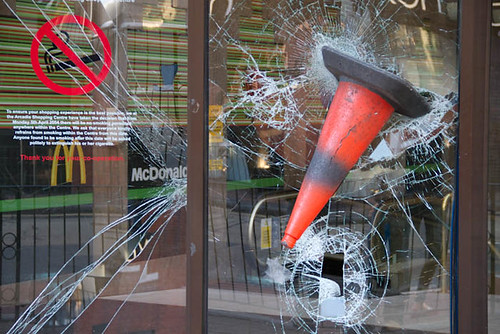
Poor parenting and a lack of support for disenfranchised young people played a major role in sparking last year's riots, an independent panel reported on Wednesday.
The Riots, Communities and Victims Panel report, commissioned by the government, also blamed an inability to prevent reoffending, lack of confidence in the police and poor schooling.
"We must give everyone a stake in society," said panel chairman Darra Singh.
"When people don't feel they have a reason to stay out of trouble, the consequences for communities can be devastating.
"The causes of the riots were complex and there is not one thing that will prevent them from happening again."
The report called on the government and local public services to develop a strategy to help "500,000 'forgotten families' turn their lives around."
Police arrested 4,130 people and charged 2,577 over the riots, an explosion of violence in English cities last summer that left five people dead and raised questions about the state of British society.
Up to 15,000 people are estimated to have taken part, most under 24 with poor academic records, the report said.
An 11-year old boy was last week handed six months' detention for his part in the disorder, becoming the youngest person to be prosecuted over the unrest.
The report suggested that schools be fined if they failed to teach pupils to read and write.
But Labour lawmaker David Lammy said that criticism of schools was "a bit unfair".
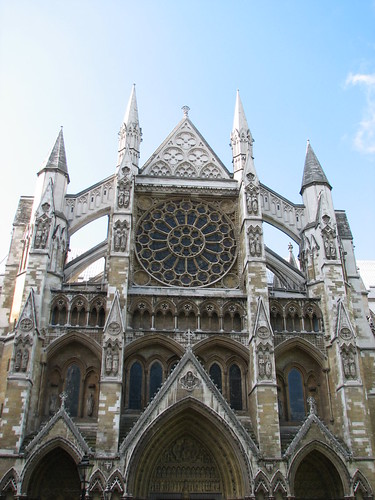
Westminster Abbey is to honour two former prime ministers from the 1970s with memorial stones.
Sir Edward Heath and Lord James Callaghan will become the first premiers to receive dedications at the Abbey for more than half a century - and the move marks the centenary of Lord Callaghan's birth.
The memorial stones for Heath, who served as prime minister between 1970 and 1974, and Callaghan, the country's premier from 1976 to 1979, are expected to be unveiled later this year.
The Dean of Westminster, the Very Rev Dr John Hall, said: "The men and women who have contributed most to our island story and our nation's international influence are memorialised in the Abbey, including most prime ministers of the 19th century and of the first half of the 20th century.
"And yet no prime minister since 1956 has a memorial in the Abbey.
"I have decided, with the support of those closest to them, to include two prime ministers from the 1970s, each of whom gave dutiful service in their own time. The announcement falls on the 100th anniversary of James Callaghan's birth.
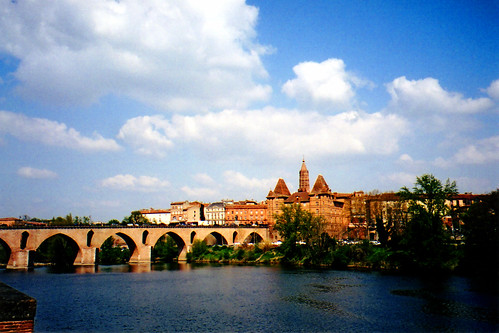
A gunman has opened fire in front of a Jewish school in south-west France, killing several people.
City prosecutor Michel Valet said there were "several dead" in the shooting at a school in Toulouse. He said it was unclear whether the victims were children.
The shooting happened in the same area where a gunman on a motorbike opened fire on three uniformed paratroopers at a bank machine on Thursday, killing two and critically wounding the other.
The attack in the town of Montauban occurred not far from the soldiers' barracks. Four days earlier, a gunman on a motorbike shot and killed another paratrooper in Toulouse.
Authorities said at the time that forensic analysis showed that the same weapon was used in the shootings in Montauban and Toulouse.
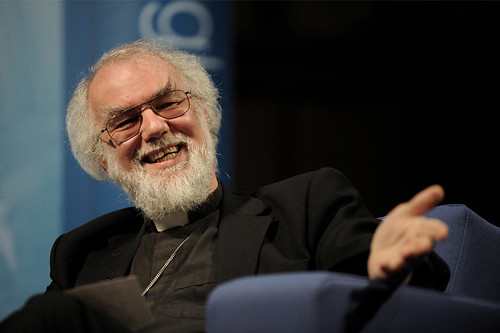
Archbishop of Canterbury Rowan Williams, the spiritual leader of the world's Anglicans, said Friday he will resign at the end of the year after a decade of turmoil over female and gay bishops.
The bushy-bearded 61-year-old announced in a statement that he would take up a position as master of Magdalene College at Britain's prestigious Cambridge University in January 2013.
"It has been an immense privilege to serve as Archbishop of Canterbury over the past decade, and moving on has not been an easy decision," he said in the statement, released by his office, Lambeth Palace.
"During the time remaining there is much to do, and I ask (for) your prayers and support in this period and beyond."
The Church of England could now see its first black Archbishop of Canterbury, with John Sentamu, the Archbishop of York, widely viewed as front-runner to replace Williams.
Williams' successor will be formally appointed by Queen Elizabeth II, who is the Supreme Governor of the Church of England. Lambeth Palace said Williams's intention to resign had been formally conveyed to the queen.
The actual decision will rest in the hands of a commission grouping senior churchmen and lay people, who will then forward their nomination to British Prime Minister David Cameron.
Welsh-born Williams was appointed the 104th Archbishop of Canterbury in 2002, replacing George Carey.
But his tenure was marked by his difficulties in maintaining unity amid disagreements over the consecration of female bishops in Britain, and of openly gay bishops in the United States.
The rows have threatened to cause a permanent rift with conservative Anglican bishops in Africa in particular.
Williams told the Press Association, Britain's domestic news agency, that his resignation comes ahead of a number of key events including a vote by the Church of England this year on whether to give final approval to women bishops.
"A number of what I call watersheds seemed to make this a reasonable moment, at least, to think about moving on," he said.
He admitted that the disagreements within the Church had been a "major nuisance" but insisted they had not clouded his tenure as Archbishop of Canterbury.
"Crisis management is never a favourite activity, I have to admit, but it is not as if that has overshadowed everything," he said.
"It has certainly been a major nuisance. But in every job that you are in there are controversies and conflicts, and this one isn't going to go away in a hurry.
"I can't say that it is a great sense of 'free at last'."
Category
Sport
Rybakina pulls out of Wuhan Open as foot injury forces break from tennis
 Rybakina pulls out of Wuhan Open as foot injury forces break from tennis
Manchester United turns Old Trafford turf into a piece of club history for fans
 Manchester United turns Old Trafford turf into a piece of club history for fans
Former police chief among officers investigated over Maccabi Tel Aviv fans ban
 Former police chief among officers investigated over Maccabi Tel Aviv fans ban
Nick Kyrgios suspended after cocaine test as Australian tennis star admits ‘huge mistake’
 Nick Kyrgios suspended after cocaine test as Australian tennis star admits ‘huge mistake’
Fraud arrest follows security disruption at Birmingham European Athletics Championships
 Fraud arrest follows security disruption at Birmingham European Athletics Championships
Asher-Smith matches European medal record as Hunt completes golden treble
 Asher-Smith matches European medal record as Hunt completes golden treble
OG Anunoby brings NBA champion’s backing to Mayor’s £2m plan to transform London basketball courts
 OG Anunoby brings NBA champion’s backing to Mayor’s £2m plan to transform London basketball courts
London launches bid to bring 2029 World Athletics Championships back to the capital
 London launches bid to bring 2029 World Athletics Championships back to the capital
Serbia and Sweden withdraw support for Infantino's FIFA re-election
 Serbia and Sweden withdraw support for Infantino's FIFA re-election
Wales withdraws support for Infantino’s FIFA re-election bid
 Wales withdraws support for Infantino’s FIFA re-election bid
Education
-
 Oxford holds global university crown for record 11th consecutive year
The University of Oxford has retained its position as the world’s highest-ranked university for an unprecedented 11th consecutive year, according to the Times Higher Education (THE)Read More...
-
 Jewish students face rising antisemitism on UK campuses, report finds
Antisemitic incidents at universities across Britain have risen sharply since the Hamas-led attacks on Israel in October 2023, according to a new report from the Community Security TrustRead More...
-
 UK schools to receive new support to confront misogyny and harmful online influences
Schools across England are set to receive a new package of guidance and resources designed to help teachers tackle misogyny, promote respectful relationships and address harmfulRead More...
-
 England to recruit 1,000 youth workers in biggest youth services expansion for a generation
The government is to fund the recruitment and training of 1,000 new youth workers across England as part of a major expansion of services aimed at helping young people who are at riskRead More...
-
 London schools see sharp fall in exclusions as Inclusion Charter strengthens safety and belonging
New evidence suggests that efforts to improve inclusion and prevent violence are contributing to safer and more supportive school environments across London, with suspension andRead More...
-
 £22.5m programme to expand enrichment opportunities for children in more than 400 schools
Hundreds of thousands of young people in disadvantaged communities across England are set to gain greater access to sport, music, arts, debating, volunteering and outdoor activitiesRead More...
-
 Jewish studies in Europe at a crossroads: an interview with Oleg Kozerod
Interview with Oleh Kozerod, Researcher at the Kuras Institute of Political and Ethnic Studies of the National Academy of Sciences of UkraineRead More...
-
 England’s education overhaul puts local leaders at the centre of jobs and skills reform
Government brings mayors, employers, schools and colleges together to reshape technical education and connect young people with regional job opportunitiesRead More...
-
 London’s school run transformed as car journeys fall and active travel soars
A decade of policies introduced under Mayor Sadiq Khan has significantly changed how children travel to school, with new Transport for London figures showing a sharp fall in schoolRead More...
-
 UK families to save thousands as free school meals and breakfast clubs expand
Millions of children will gain access to free school meals this term as the government rolls out a wider package aimed at cutting the cost of sending children to school.Read More...

Culture
-
 England’s national museums to keep free admission for all visitors
Government rules out charges for international tourists as museums receive further investmentRead More...
-
 UK museums given three months to keep rare Renaissance bronze in Britain
British museums and galleries have been given a limited window to secure a rare Renaissance sculpture valued at more than £4.6 million, after the Government temporarily halted itsRead More...
-
 Oasis set to return in 2027 with massive 38-date global tour
Oasis are extending their long-awaited comeback with an ambitious 38-date tour scheduled for 2027, taking the iconic Britpop group across the UK, Ireland, continental Europe and theRead More...
-
 UK moves to keep Stanley Spencer’s landmark resurrection painting
The British government has stepped in to prevent a major early work by Stanley Spencer from leaving the country, giving museums and galleries a limited window to secure the paintingRead More...
-
 London’s record summer of live music delivers £3.4bn boost
London has enjoyed a record-breaking summer of live music, with millions of fans attending concerts across the capital as some of the world’s biggest artists took to its stadiums, arenasRead More...
-
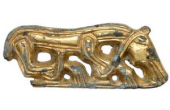 Government blocks export of rare Anglo-Saxon artefact in bid to keep national treasure in UK
The UK government has imposed a temporary export ban on an exceptionally rare Anglo-Saxon metal mount, giving museums and galleries time to raise funds to keep the historicRead More...
-
 Jan van Eyck’s portraits to unite in landmark National Gallery exhibition
An unprecedented gathering of works by one of the Northern Renaissance’s greatest masters will bring Jan van Eyck’s portraiture into focus at the National Gallery this winter, with all 10 ofRead More...
-
 Europol sounds alarm over more violent museum heists across Europe
Museum robberies are taking a more dangerous turn across Europe, with organised criminal groups increasingly using heavy tools, explosives and other forms of force to steal valuableRead More...
-
 London marks UNESCO day with call for action, memory and justice on the legacy of the transatlantic slave trade
City Hall brings together community leaders, artists, young Londoners and historians to honour those affected by the transatlantic slave trade and celebrate the strength of African andRead More...
-
 Honiara welcomes a global showcase of wildlife photography
Some of the world’s most striking wildlife photographs have arrived in the Solomon Islands, as the British High Commission and the Solomon Islands National Art Gallery open anRead More...
-
 Britain’s festival season stages a cautious comeback as fans pay for more
Britain’s battered music festival industry is showing tentative signs of recovery, with several major events selling out faster than expected as organisers reshape their offer aroundRead More...
-
 British Week in Paraguay marks a decade with nine days of culture, food and music
Asunción is preparing for the 10th edition of British Week, a nine-day programme showcasing British culture and connections across Paraguay.Read More...
-
 Stefan Zweig’s London refuge marked with blue plaque 90 years after Austrian writer fled Hitler
A London address that once offered refuge to one of Austria’s most celebrated writers has been formally marked in honour of Stefan Zweig, the Jewish novelist and essayist who fled theRead More...

British Queen celebrates
Most Read
- Teen held after US woman killed in London stabbings
- Heave-ho Harry! Prince prepares to join the walking wounded in ice trek to North Pole
- Football: Farhad Moshiri adamant Everton deal above board
- "Master of English Style". Interview with Designer Lydia Dart
- Letter to the Financial Times from Lord Mayor Alderman Michael Bear