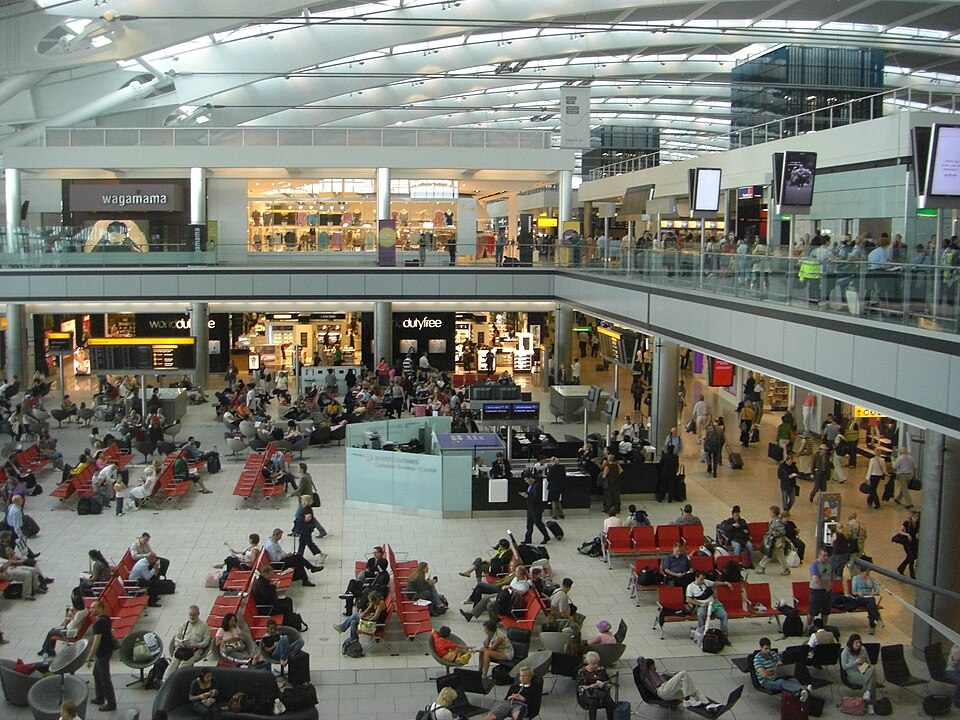
British Finance Minister John Healey has defended plans to expand Heathrow Airport, arguing that a third runway could play a significant role in boosting the UK economy. His comments
highlight a growing divide within the government, after Prime Minister Andy Burnham recently declined to endorse the controversial project.
The proposed expansion of Heathrow, Europe's busiest airport, has remained one of Britain's most contentious infrastructure debates for decades. Supporters believe additional runway capacity would strengthen international connectivity, attract investment and help businesses expand. However, the proposal has repeatedly faced political resistance and concerns over its environmental and social consequences.
The previous government, led by Keir Starmer, backed the principle of a third runway in 2025, seeking to move the long-running debate towards a decision. Burnham has taken a more cautious position, saying in September that he would not support the project and arguing that the concerns of communities living near the airport must be considered.
Speaking to reporters on Friday during the International Monetary Fund's annual meetings in Bangkok, Healey presented the expansion as consistent with the government's broader economic priorities.
“The case for a third runway at Heathrow has always been a case for growth,” he said, reinforcing his support for the project as ministers consider ways to improve Britain's economic performance.
The proposal has attracted backing from a range of businesses, airlines and investors, who argue that increasing airport capacity would help Heathrow accommodate rising demand and maintain the UK's competitiveness as a global aviation and business hub.
Nevertheless, opposition remains strong among some local residents, particularly those concerned about increased aircraft noise and the impact of additional flights on their communities. Environmental considerations are also central to the debate, with critics warning that a substantial increase in air traffic could make Britain's climate commitments more difficult to achieve unless airlines and the aviation sector deliver further emissions reductions.
Even if political support is secured, construction remains some distance away. The project must navigate a lengthy planning process before work can begin, leaving its ultimate timetable uncertain.
Heathrow said in September that the proposed runway might not become operational until 2039, four years later than anticipated under an earlier schedule. The revised projection underlines the practical and regulatory challenges facing one of Britain's most ambitious transport infrastructure proposals.
The contrasting positions of Healey and Burnham suggest that the economic case for expansion will continue to compete with environmental obligations, local concerns and political considerations. Whether the government can reconcile these competing priorities will be crucial to determining the future of Heathrow and the UK's long-term aviation capacity. Photo by Cdogg30, Wikimedia commons.