Millions of passengers across the West Midlands are set to see their bus network brought under greater public control after the government agreed an £11.5 million funding package with
the West Midlands Combined Authority.
The deal is designed to protect hundreds of bus services following the decision by the parent company of National Express to withdraw from the regional market, raising fears that a large proportion of daily journeys could be disrupted.
The government said the funding would help keep the network operating while the West Midlands moves towards a franchising model, under which local authorities determine routes, fares and service standards while private operators are contracted to run the buses.
The agreement is being presented by ministers as a significant step towards shifting responsibility for essential public services away from central government and private operators and towards regional mayors and local authorities.
The West Midlands network carries around 4.6 million passenger journeys every week. Under the agreement, up to 750 buses a day will remain on the road, while around 4,800 jobs will be protected during the transition.
The combined authority is expected to complete the transaction in the autumn, with the final cost still being assessed.
The additional government funding will cover specialist work, legal advice, IT systems and staff required to keep services running as the region moves towards franchising.
The move follows similar arrangements already operating in London and Greater Manchester, where local authorities have greater control over bus networks, including routes, branding, fares and service standards.
For the West Midlands, the immediate priority is preventing the loss of services on which residents depend to reach workplaces, schools, hospitals and other essential facilities.
Mayor Richard Parker said the authority had intervened because buses should be treated as a public service operating in the interests of passengers.
“People rely on these buses to get to work, to school or to hospital appointments,” Parker said. “They are a public service, and I believe they should be run in the public interest.”
He added that the intervention had protected services and jobs while keeping the region connected.
The government is already providing more than £2 billion over five years to the West Midlands Combined Authority, giving regional leaders flexibility to spend the money on priorities including lower fares, franchising, new routes, zero-emission buses and safer stops.
Transport Secretary Heidi Alexander said ministers could not allow passengers to lose access to vital transport links.
“For millions of people across the West Midlands, the bus isn’t a nice-to-have,” she said. “It’s how they get to work, school, appointments, see family and keep life moving.”
The government has linked the West Midlands agreement to a broader programme aimed at making bus services cheaper and more reliable. Ministers are supporting six mayoral authorities in England as they establish franchising systems.
Liverpool City Region is due to begin bringing its own bus network under public control from 6 September, while London and Greater Manchester already operate franchised networks.
The government is also preparing to introduce a £2 fare cap from January and free summer bus travel for young people.
Separately, the Prime Minister has announced plans to remove time restrictions on disabled bus passes in England. From 1 April, eligible pass holders will be able to travel free on buses throughout the day, seven days a week.
Taken together, ministers argue that the changes represent a broader attempt to give regional leaders greater control over public transport and reverse what they describe as decades of decline in local bus services.
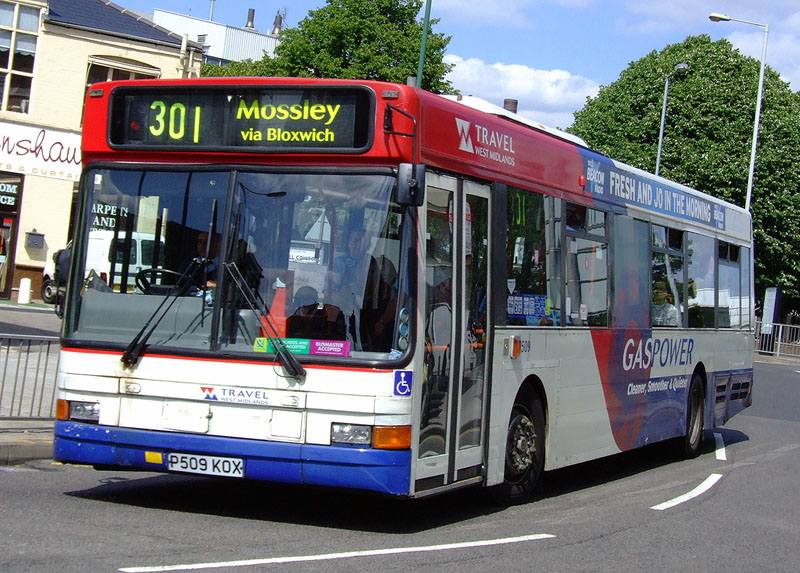
For the West Midlands, however, the immediate test will be whether the new arrangement can preserve the existing network while delivering the more affordable and reliable services promised by the government and regional authorities. Photo by Kmb gu657 at English Wikipedia, Wikimedia commons.