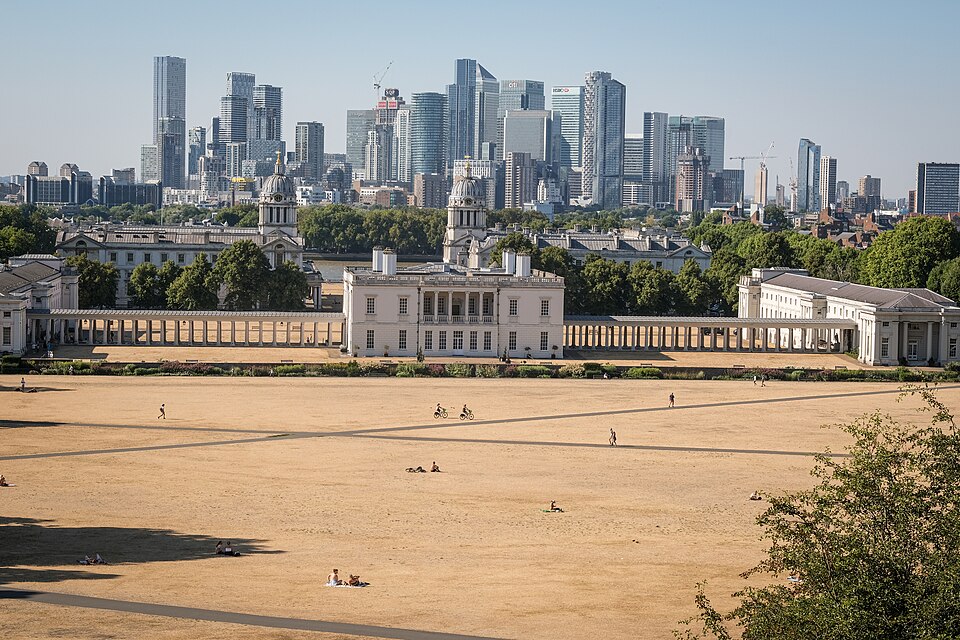
The Mayor of London, Sadiq Khan, has launched Heat Ready London – the capital's first city-wide plan to prepare for increasingly frequent and severe heatwaves – as soaring
temperatures highlight the growing risks posed by climate change.
Unveiled during London Climate Action Week, the new vision sets out how government, councils, businesses and communities can work together to protect Londoners, strengthen critical infrastructure and adapt the city to a hotter future.
The launch comes as London experiences record-breaking temperatures. Earlier this year, the capital recorded its hottest May day on record at 35.1°C, following the unprecedented 40°C heatwaves of 2022, which are estimated to have cost the city £1.5 billion through impacts on health, transport, emergency services, productivity and infrastructure.
Heat Ready London reveals the scale of the challenge facing the capital. Around one million homes are estimated to be at high risk of overheating, while more than 1,300 schools, 60 hospitals and 351 care homes are located in areas most vulnerable to extreme heat. Without action, London could experience up to three times as many heatwaves within the next two decades.
Extreme heat already places significant pressure on London's public services. Each summer, hot weather contributes to around 4,000 additional hospital attendances and an estimated 300 preventable deaths across the capital. Heatwaves also increase the risk of wildfires, transport disruption and energy demand, with scientists warning these impacts will become more frequent and severe as the climate continues to warm.
Heat Ready London sets out a long-term vision focused on five objectives:
Protect Londoners from the health impacts of extreme heat.
Prioritise support for those most vulnerable.
Adapt buildings, public spaces and green infrastructure to provide shade and cooling.
Strengthen the resilience of essential services and infrastructure.
Support London's economy and productivity in a changing climate.
To deliver these goals, the plan identifies 37 priority actions, including expanding public cooling spaces and drinking water access, retrofitting homes at greatest risk of overheating, increasing tree cover and green space, improving access to blue spaces, strengthening health and care preparedness, and improving the resilience of transport and other critical infrastructure.
The Mayor is already taking action through the London Plan, which requires new developments to reduce overheating through better building design. Transport for London continues to invest in a more heat-resilient transport network, including expanding air-conditioned Tube trains, improving station cooling and ventilation, and increasing water refill points across the network.
Heat Ready London also recognises that extreme heat is a social justice issue. Older people, young children, people with health conditions, rough sleepers and residents living in poorly insulated homes are among those most at risk. The Mayor is working with councils and partners to improve support for vulnerable Londoners while continuing to expand the city's network of free water refill points, cooling spaces and urban greening.
As one of the UK's first city-wide heat adaptation plans, Heat Ready London provides a blueprint for collective action to help ensure the capital remains safe, resilient and prepared for a hotter future.
Mayor of London, Sadiq Khan, said: “Rising temperatures are no longer a future threat - they are becoming a growing reality for Londoners. It is affecting our communities, from homes and high streets to schools, hospitals and care services.
“That is why I am proud to unveil Heat Ready London, London’s first ever heat plan. This is a new vision that will help tackle the huge obstacles we face with rising temperatures.
“No single organisation can address the scale of the challenge alone, so this is a call to action to our partners to use this framework to drive collective delivery so we can protect lives and strengthen the resilience of our city.
“We must act now. By working in partnership, we can ensure the benefits of climate action are shared by all Londoners and that those who are most vulnerable are protected as we build a greener and fairer London for everyone.”
Steps are already underway to ensure the effective delivery of Heat Ready London and strengthen cross sector collaboration to align priorities, pool resources and deliver interventions at scale.
Earlier this month, Deputy Mayor of London for Environment Mete Coban convened a roundtable with partners to agree priorities and identify where coordinated action can have the greatest impact. This roundtable marked the starting point of this next phase, including helping shape the governance and partnership arrangements.
Deputy Mayor of London for Environment, Mete Coban, said: “Hotter temperatures are becoming a growing reality in London.
“That’s why the Mayor, in partnership with London Councils, has developed Heat Ready London, setting a new benchmark for how cities across the UK can respond to heat risk and adapt to a warming climate.
“This is a matter of social justice - because high temperatures do not affect everyone equally. People living in poorly designed homes, people without access to green space and people with underlying health issues are hit hardest.
“The effective delivery of this work will depend on strong collaboration across sectors so Sadiq and I will continue to work closely with partners to ensure Heat Ready London is targeted, evidence-led, and responsive to inequality, while continuing to reflect the experiences of Londoners.”
Professor Emma Howard Boyd CBE, Chair, National Heat Risk Commission and former Chair of the London Climate Resilience Review said: “Extreme heat is already one of the most significant and rapidly escalating risks facing London, and with the temperatures we have seen this week, the urgency to act could not be clearer. I welcome the Mayor's leadership in responding to it.
“Heat Ready London turns the recommendations of the London Climate Resilience Review into a clear programme of action to protect communities and prepare the capital for a hotter future. Cooling our city — through trees, parks, shaded streets and cooler buildings — does more than bring temperatures down: it cleans our air, reduces flood risk and makes neighbourhoods better places to live.
“But extreme heat already hits hardest in the most deprived communities, and during periods of intense heat this inequality becomes even more dangerous. These benefits must be delivered quickly and fairly, with shade, green space and practical support targeted to where they are needed most — ensuring every Londoner can stay safe, cool and well in a changing climate.”
The London Fire Commissioner, Jonathan Smith, said: “Extreme heat is no longer an occasional challenge, it’s becoming an increasingly regular risk for London, as demonstrated just this week. Responding to this challenge requires a joint effort from the public and organisations across London, including taking steps to in advance to prevent or minimise the harm and damage caused.
“We’ve learnt from previous events, such as the summer of 2022, and invested in new equipment and training to help tackle wildfires and we will continue to improve our capability so that we are ready and prepared for future summers, as the threat from wildfires continues to increase.
“Heat Ready London recognises that adapting to a hotter climate requires a coordinated effort across all sectors. By working together to improve resilience and better protect those most at risk, we can help prevent emergencies before they happen and ensure London is better prepared for future heatwaves.”
Lilli Matson, Chief Safety, Health and Environment Officer at TfL, said: “This report highlights the increasing risks that extreme heat poses across London, including to critical infrastructure such as transport. The ongoing heatwave has underlined the importance of preparing for such conditions and their real-world impact on customers, staff and the transport network. We are working with other agencies, including Network Rail, the Greater London Authority and others to develop a coordinated approach and manage the adverse impact of higher temperatures on our network, from track and road surface resilience to customer comfort and staff safety.
“We are taking action to strengthen our resilience, including investing in cooling and ventilation, and adapting our infrastructure and operational responses. For example, every bus has a reflective roof and opening windows, while all new double-decker vehicles have air-cooling capability. 192 air-conditioned Tube trains cover 40 per cent of the network, and every Elizabeth line and London Overground train is air conditioned. Approximately a third of TfL’s estate is covered by vegetation that helps keep London cool, and almost 25,000 street trees provide shade.
As climate change continues to drive more frequent and intense heatwaves, we remain committed to ensuring the capital’s transport network can operate safely and reliably, while helping London become a more climate-resilient city.”
Cllr Paul Osborn, London Councils’ Executive Member for Transport and Environment, said: “Boroughs have a crucial role to play in protecting residents from extreme heat - keeping homes, buildings and streets cooler as temperatures rise, while making sure the most vulnerable Londoners are shielded from its worst effects.
"Heat Ready London marks a vital step in responding to the hotter summers we now face in London, and we will be actively working with the Greater London Authority and partners across the capital to turn that ambition into coordinated action that keeps our communities safe."
Dr Tom Coffey OBE, Mayoral Health Adviser and London GP: “Heat is no longer a distant concern. It is now the greatest risk to health from climate-change in the UK, and we are already seeing its impact here in London, including record temperatures, early heat alerts and rising heat-related deaths.
“As a GP, I see first-hand that heat doesn’t just affect those we traditionally think of as vulnerable, such as those with mental and physical health conditions - it can impact any of us. That's why Heat Ready London is so important, as it sets out clear actions to support Londoners, such as embedding heat risk in care pathways and driving the partnerships needed to meet this challenge together.
“In London we are reaching a tipping point and the time to come together is now - with health services, local government, communities and partners all working together to build a coordinated response to protect Londoners.”
Dr Alan Dangour, Director of Climate & Health at Wellcome, said: “Climate change is driving hotter summers and more frequent heatwaves, and London is more exposed to heat risk than anywhere else in the UK. Without action, the health impacts of climate change will only intensify - with groups like pregnant women, outdoor workers and older people most at risk. The Mayor’s vision - from public health guidance to preventative measures - provides an essential framework for the whole of society to act together to save lives and keep Londoners safe.” Photo by Alisdare Hickson, Wikimedia commons.