England’s most endangered wildlife is set to receive a historic lifeline, as the government announces a landmark £90 million investment aimed at reversing decades of ecological decline.
The funding package includes £60 million allocated over the next three years to expand the flagship Species Recovery Programme—more than double previous levels—and an additional £30 million dedicated to restoring biodiversity across the national forest estate. It marks the largest direct government investment ever made to protect threatened species in England.
The announcement comes alongside a new national campaign, “Wild Again: Restoring England’s Wildlife,” led by the Department for Environment, Food & Rural Affairs (Defra). The campaign will unify existing and future conservation efforts, placing species recovery at the heart of England’s environmental agenda.
Delivered by Natural England, the Species Recovery Programme supports a wide range of conservation actions—from habitat restoration and captive breeding to species reintroduction. These efforts are designed to rebuild fragile ecosystems, including ancient woodlands and rare chalk streams, while restoring landscapes rich in biodiversity.
Funding recipients for the 2026–2029 period are expected to be confirmed in May. Early indications suggest the programme will support a broad spectrum of species, from birds and mammals to insects, molluscs, and even marine life such as seahorses.
Environment Secretary Emma Reynolds described the funding as a turning point: a long-term commitment to bring wildlife “back from the brink” and secure nature for future generations.
Meanwhile, Tony Juniper emphasized that species decline is often reversible. He pointed to past successes—including the recovery of the red kite, beaver, and large blue butterfly—as proof that targeted conservation efforts can deliver measurable results.
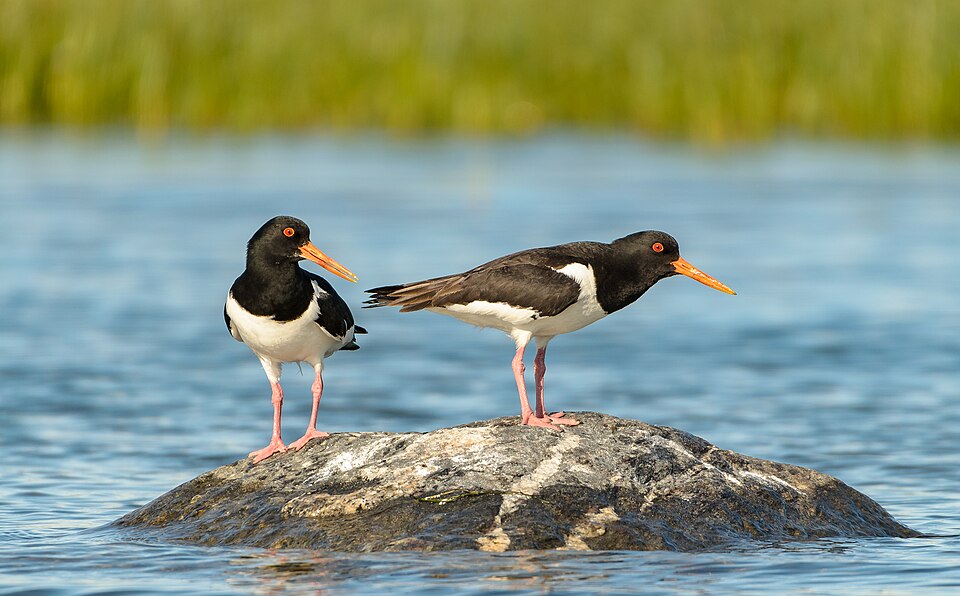
Over the past 30 years, the programme has supported more than 1,000 species and prevented at least 35 national extinctions. Between 2022 and 2024 alone, over 600 species benefited, including water voles, hazel dormice, and oystercatchers. Notable milestones include the first wild red-billed chough born in Kent in over two centuries, the reintroduction of black grouse in North Yorkshire, and the return of the large marsh grasshopper to the Norfolk Broads after an 85-year absence.
Despite these successes, England remains one of the most nature-depleted countries globally. Since 1970, wildlife populations have declined by roughly one-third, with one in six species currently at risk of extinction.
The new funding is central to meeting legally binding targets set out in the Environmental Improvement Plan—halting species decline by 2030 and reducing extinction risk by 2042.
This investment builds on broader environmental commitments, including £11.8 billion for nature-friendly farming, the creation of new national forests, and the reintroduction of wild beavers for the first time in centuries.
Wildlife protection policy in England
Wildlife conservation in England operates under a robust legal and policy framework that combines national legislation with international commitments.
At its core is the Environment Act 2021, which sets legally binding targets for biodiversity recovery and establishes long-term environmental governance. This includes requirements to halt species decline and improve habitats across the country.
Species and habitats are also protected under the Wildlife and Countryside Act 1981, one of the most important pieces of legislation safeguarding native flora and fauna. It makes it illegal to harm protected species or damage critical habitats.
In addition, England maintains a network of protected areas, including Sites of Special Scientific Interest (SSSIs) and National Nature Reserves, managed in part by Natural England.
Post-Brexit, the UK has retained many principles from former EU directives—such as habitat and species protection—while developing its own Environmental Improvement Plan to guide national action.
Recent policy trends emphasize:
- Nature recovery networks connecting habitats across landscapes
- Rewilding and species reintroduction (e.g., beavers)
- Agri-environment schemes rewarding farmers for biodiversity-friendly practices
- Climate and biodiversity integration, recognizing that ecosystem health is key to climate resilience
Together, these policies aim not just to prevent extinction, but to actively restore ecosystems—signaling a shift from conservation to full-scale nature recovery. Photo by Kristian Pikner, Wikimedia commons.