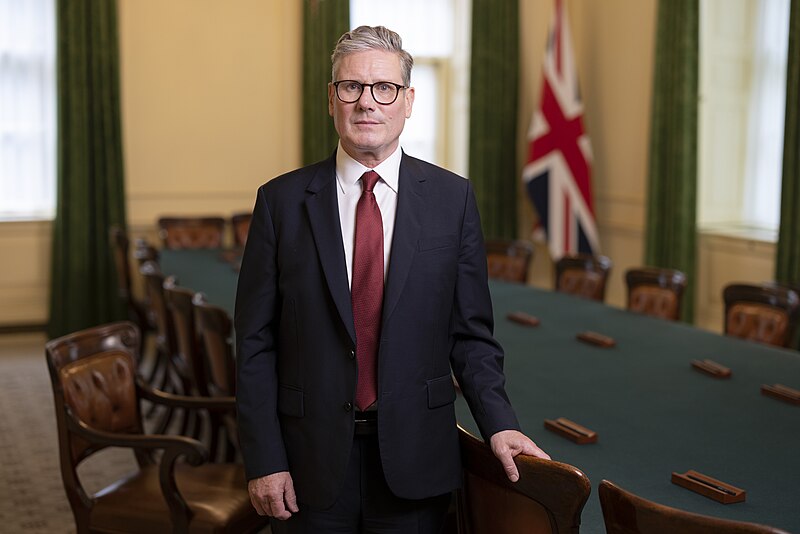
Sir Keir Starmer has played down questions about his leadership, insisting he expects to remain prime minister this time next year and rejecting suggestions that
forthcoming elections will amount to a verdict on his government.
In an exclusive interview with the BBC’s ‘Sunday with Laura Kuenssberg’, the prime minister said elections in Scotland, Wales and parts of England in May should not be seen as a “referendum” on his leadership, as Labour faces a challenging political backdrop.
Sir Keir has endured a difficult start to 2026, following a turbulent 2025 marked by slowing economic growth, weak poll ratings and renewed speculation about a possible leadership challenge.
In his New Year’s Day message, the prime minister pledged to “defeat the decline and division offered by others” and said the year ahead would deliver “positive change” that people could feel in their everyday lives.
Speaking to the BBC, Sir Keir said he remained focused on the mandate he received at the 2024 general election.
“I was elected in 2024 with a five-year mandate to change the country, and that’s what I intend to do, to be faithful to that mandate,” he said.
“And I will be judged, and I know I’ll be judged, when we get to the next election, on whether I’ve delivered on the key things that matter most to people.”
Parliament returns from the Christmas recess on Monday, with the prime minister expected to chair his first Cabinet meeting of 2026 the following day.
He is expected to tell ministers that the pressure on household finances remains acute, saying: “I know families across the country are still worried about the cost of living. There will be no let-up in our fight to make life better for them.”
Sir Keir also used the interview to underline his determination to stay in post, drawing a contrast with the frequent changes of leadership under the previous Conservative government.
“Under the last government, we saw constant chopping and changing of leadership, of teams. It caused utter chaos,” he said.
“It’s amongst the reasons that the Tories were booted out so effectively at the last election. Nobody wants to go back to that. It’s not in our national interest.”
He added: “We know from that evidence what happens if you go down that chaotic path, and I’m not going to take us back to that kind of chaos. I will be sitting in this seat by 2027 — and if this long-form interview works, we can try it again in January of next year as well.”
The comments come just over five months before elections to the Welsh Parliament, the Scottish Parliament and many English local authorities on 7 May, contests that could prove significant for Labour. The party currently governs in Wales and controls many urban councils in England where votes will be held.
In the run-up to Christmas, the government was hit by a series of awkward episodes, including briefings in early November suggesting Health Secretary Wes Streeting was involved in a plot to challenge Sir Keir’s leadership.
Mr Streeting dismissed those claims at the time as “self-defeating nonsense”.
That was followed by confusion ahead of the Budget over whether income tax rates would rise, and then the unprecedented early publication of the Office for Budget Responsibility’s response to Chancellor Rachel Reeves’ Budget before it was delivered in the Commons.
Conservative leader Kemi Badenoch accused the prime minister of expecting “gratitude” from voters, arguing that “it’s his decisions that have made the cost of living worse”.
“Labour have no plan to fix Britain and working families are paying the price,” she said. Photo by Prime Minister’s Office, Wikimedia commons.