The UK government has confirmed plans to introduce new legislation aimed at helping ordinary people secure financial backing to take on powerful organisations in court, following a period
of uncertainty triggered by a Supreme Court decision.
The move comes after the 2023 PACCAR ruling, which classified third-party litigation funding agreements as “Damages Based Agreements.” The judgment made it harder for claimants to obtain external funding and led to a decline in large collective legal actions.
Third-party litigation funding – where backers cover legal costs in exchange for a share of any damages won – has long helped level the playing field in complex civil cases, particularly when individuals face well-resourced corporate or institutional opponents.
Announcing the government’s intentions, the Ministry of Justice said it will bring forward measures clarifying that Litigation Funding Agreements are not Damages Based Agreements, a change designed to restore confidence and stability to the sector.
Minister for Courts and Legal Services, Sarah Sackman KC MP, said: “The Supreme Court ruling has left claimants in unacceptable limbo, denying them of a clear route to justice.
Without litigation funding, the Sub-postmasters affected by the Horizon IT scandal would never have had their day in court.
These are David vs Goliath cases, and this Government will ensure that ordinary people have the support they need to hold rich and powerful organisations to account. Justice should be available to everyone, not just those who can afford it”.
The minister also raised concerns that the PACCAR judgment had threatened the UK’s reputation as a world leader in commercial dispute resolution — a sector described as vital to economic growth. The UK’s legal services industry is estimated to be worth £42.6 billion annually and employs more than 380,000 people.
Alongside legislative reform, ministers plan to introduce safeguards to ensure funding arrangements remain fair and transparent for claimants and investors alike.
The announcement follows a wide-ranging review by the Civil Justice Council earlier this year, with the government stating it will continue to consider the review’s recommendations as reforms develop.
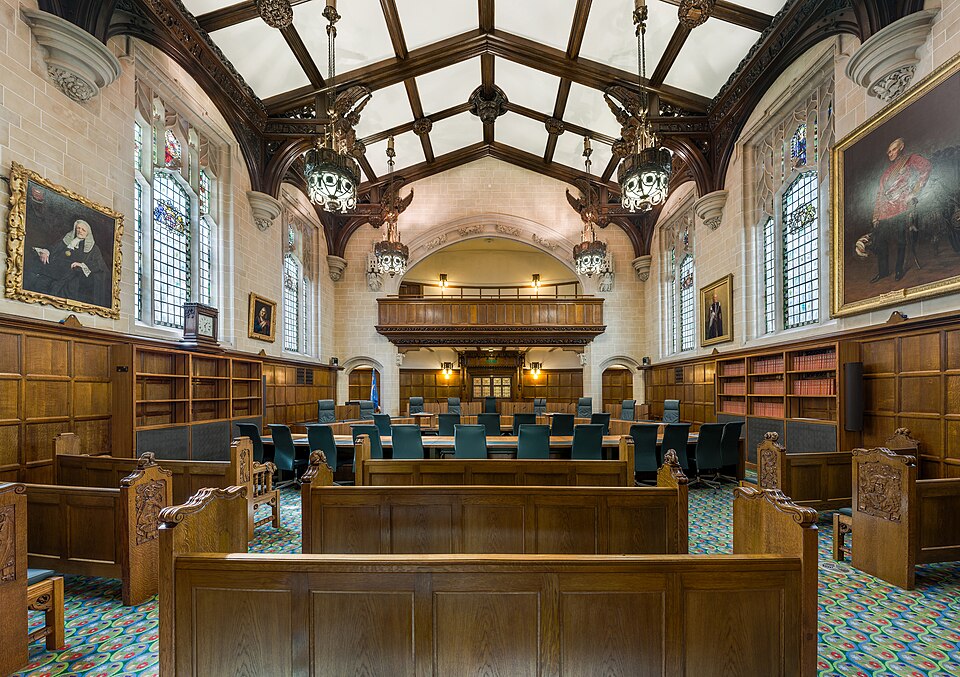
Officials say the overall goal is clear: to reopen the courtroom doors for claimants seeking collective redress against wealthy and powerful opponents. Photo by Diliff, Wikimedia commons.