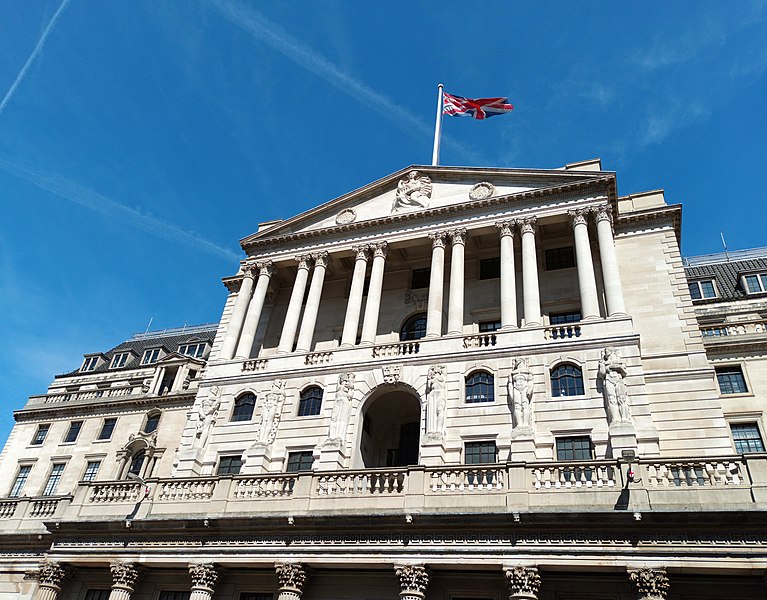
The Bank of England delivered a long-anticipated interest rate cut on Thursday, easing financial pressure on households and businesses but offering little comfort to those hoping for
rapid borrowing relief.
In a closely watched meeting, the Monetary Policy Committee voted 5–4 to trim the Bank Rate by 0.25 percentage points to 3.75%—its lowest level since early 2022. The decision follows sharper-than-expected declines in inflation, weakening economic momentum and indications that the labour market is beginning to cool.
The cut, however, came wrapped in a message of caution. Far from signalling the beginning of a rapid easing cycle, policymakers used every opportunity to underline the uncertainty ahead and to warn markets not to expect aggressive action.
Markets welcome relief, but optimism is muted
The reduction in the base rate offers some respite to millions of mortgage holders, particularly those approaching the end of fixed-term deals, and supports recent declines in wholesale funding costs and swap rates. For many borrowers, the psychological impact may be almost as important as the financial one: proof that the tightening phase is truly ending.
But financial markets reacted with restraint. Gilts sold off sharply, and analysts were quick to describe the cut not as a turning point, but as a “hawkish” move—a cut delivered reluctantly and paired with stern guidance against complacency.
Economists see a bank still on edge
James Bennett, CFA and UK Lead at BMI, described the move as a textbook “hawkish cut,” a rate reduction delivered with almost no shift in wider tone.
“The direction of travel for Bank Rate is lower,” Bennett said, “but only in a very gradual manner.”
The picture painted by the latest inflation data helped open the door: headline CPI dropped to 3.2% in November, down from 3.6% the month before. Food, drink, alcohol and tobacco prices all declined, adding to disinflationary momentum. The Bank also highlighted the Autumn Budget’s temporary dampening effect on inflation forecasts—knocking roughly 0.5 percentage points off price growth.
Yet policy officials remain uneasy. Wage growth continues to run ahead of pre-pandemic norms, inflation expectations are proving stubborn, and although hiring has cooled, there are few hard signs of widespread labour market distress.
Michael Saunders, Senior Economic Advisor at Oxford Economics and former MPC policymaker, believes the Bank acted out of necessity rather than enthusiasm.
“This was a cautious cut,” he said. “The language signals that further easing is possible, but it will be gradual and by no means assured.”
The slim vote margin underscores that caution. Four members argued that inflationary pressures remain too elevated to justify any reduction, and Governor Andrew Bailey—who cast the deciding vote—emphasised that future actions will depend wholly on incoming data.
Budget measures: helpful tailwind, not a deciding factor
The Bank of England acknowledged that fiscal measures introduced in the Autumn Budget will help lower inflation and offer a modest lift to growth in 2026. However, both Bennett and Saunders stress this was not a decisive element behind today’s move.
“These effects are temporary,” Saunders noted. “Policy decisions remain guided by the medium-term inflation outlook rather than short-term boosts.”
Bond markets price out future easing
The gilts market reacted swiftly—and starkly. Ten-year gilt yields jumped seven basis points immediately after the announcement, as investors moved to reduce expectations of future cuts.
Rather than celebrating the first reduction in nearly three years, traders trimmed back how much easing they expect in 2026, reflecting concerns that the Bank may halt its cycle well before reaching pre-inflation lows.
Bennett expects monetary policy to lose influence over longer-dated gilts in the coming year, as global supply pressures take centre stage. Rising issuance in major economies—including the United States, Germany and Japan—could keep long-term borrowing costs higher than the domestic economy alone might justify.
Implications for mortgage rates
Today’s move offers hope to thousands of borrowers experiencing affordability pressures. But even with the base rate moving lower, mortgage pricing remains at the mercy of global rate dynamics.
Long-term mortgage rates, which shadow multi-year gilt yields, may not fall significantly if international pressures continue pushing yields upwards. That leaves lenders limited room to reduce fixed-rate offerings—especially five- and ten-year products.
For households looking for relief, the message is frustrating: help is coming, but slowly.
Future rate path: a journey without acceleration
Forward guidance from economists suggests a long, measured descent.
BMI forecasts two more cuts next year—one around mid-2026 and another late in the year—followed by a possible single cut in 2027. Oxford Economics takes a slightly more optimistic view, predicting Bank Rate will slide to 3.25% by the end of next year, with potential reductions starting in April.
But both institutions share one central conclusion: the era of ultra-low interest rates is unlikely to return anytime soon. Positive real rates could well define the next stage of UK monetary policy, reshaping mortgage expectations and business investment patterns for years to come.
A new phase—but not a new world
The base rate is now firmly off its peak, marking an important psychological milestone after months of speculation and tightening fatigue. Yet the road ahead remains unclear, shaped by global forces, political risk, wage behaviour and structural inflation pressures.
For policymakers, the challenge is to walk a tightrope: lower rates enough to support growth—but not so far that inflation roars back.
For mortgage borrowers and financial markets, the message is equally complex: relief has arrived, but the era of easy money is not returning.
As the Bank cautiously steps away from peak rates, the United Kingdom enters a new stage in its fight against inflation—one defined not by decisive turns, but by incremental adjustment and persistent uncertainty. Photo by acediscovery, Wikimedia commons.