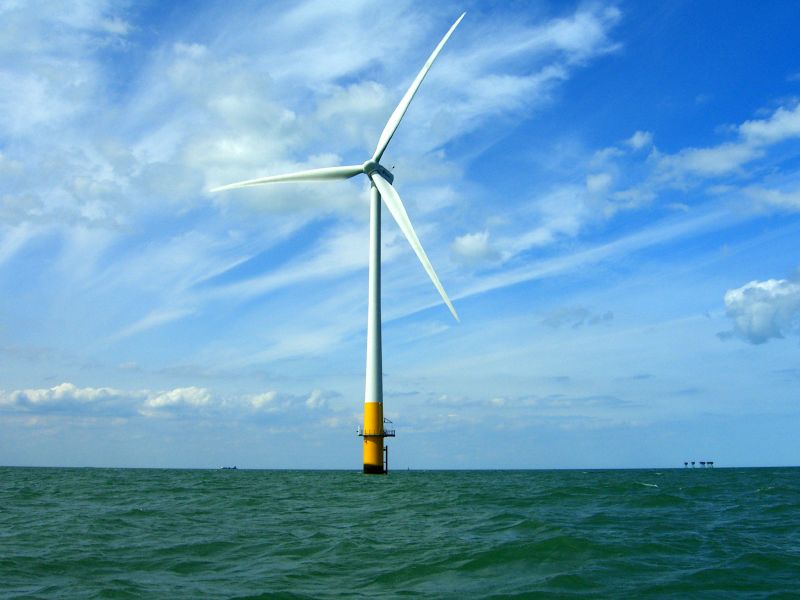
The UK Government has announced a major funding initiative designed to simultaneously accelerate the country’s offshore wind rollout and restore damaged marine ecosystems.
Revealed today (Wednesday 17 December), the Marine Recovery Fund is intended to unlock enough clean electricity to power the equivalent of two cities the size of London, strengthening Britain’s long-term energy security.
Under the scheme, offshore wind developers will pay into a government-run pot that will finance large-scale environmental work, including compensatory measures aimed at repairing and safeguarding marine habitats affected by infrastructure projects.
Britain’s seas support a rich array of wildlife, from internationally important seabird colonies to dolphins, porpoises and diverse fish populations. Officials say the fund will help expand existing Marine Protected Areas and establish new ones to strengthen seabed protection. Planned projects may also include efforts such as rat eradication on key islands to support seabird recovery and the creation of artificial offshore nest sites for species like kittiwakes.
The government estimates the initiative will allow up to 19 GW of new offshore wind capacity to move forward in the short term—energy that will be crucial to delivering clean power by 2030 and shielding households from fossil fuel price shocks.
Marine Minister Emma Hardy said: “We’re building the next generation of clean, homegrown power and boosting marine life through the Marine Recovery Fund.
Offshore wind is pivotal to achieving Net Zero by 2050 and driving growth as part of our Plan for Change. Driving nature recovery and protecting the ecosystems that call Britain’s seas home is not a trade-off against clean energy, but a condition of delivery.
This approach creates a win-win by unlocking clean power through faster decisions and protecting our seas and extraordinary wildlife”.
Offshore wind is central to the Government’s clean energy mission, forming a cornerstone of its Plan for Change, which aims to support economic growth, attract investment and deliver jobs across industrial regions.
RenewableUK’s Head of Offshore Wind Celestia Godbehere said: “As responsible developers, the offshore wind industry has been working closely with our colleagues at Defra and nature conservation organisations for many years to establish this groundbreaking fund and we’re very pleased to see this milestone achieved.
The Marine Recovery Fund, paid for by offshore wind farm developers, will enhance the protection of wildlife in our seas by enabling more co-ordinated measures to be taken over much wider areas of seabed, across multiple offshore wind projects being developed by different companies.
This system will also provide greater certainty and clarity for wind farm developers as we plan, build and operate projects generating clean power in harmony with our rich marine biodiversity”.
Katie-jo Luxton, director of conservation at the RSPB, said:
“Efforts to tackle climate change, restore the degraded marine environment and protect the wildlife that depends on it must go hand-in-hand.
The Marine Recovery Fund will support this approach by delivering large-scale measures to compensate for seabird loss caused by offshore development, potentially through a mix of actions at sea and on land that support seabirds where they feed and breed.
Seabirds are in crisis, with 62% of species in decline across the UK. We urgently need new offshore wind to decarbonise our energy system, but it adds to the pressure on marine wildlife through the risk of collisions and by disrupting feeding behaviour.
To turn the tide for seabirds we need climate and nature solutions to be delivered in tandem, and this new fund will have a key role to play”.
The Government argues the plan marks a major step towards a cleaner, more secure energy system—one that supports economic growth without sacrificing the health of Britain’s seas. Photo by Phil Hollman from London, UK, Wikimedia commons.