
Education

Environmentalists on Friday lashed out after Japan imported 2,000 tonnes of frozen whale meat from Iceland, in what they say is continued defiance of world opinion over the hunting of the mammals.
Packages containing meat from fin whales were unloaded Thursday from a vessel that had travelled from Iceland to Osaka, western Japan, said Junichi Sato of Greenpeace Japan.
The ship left Iceland in March carrying a cargo equivalent to almost all the whale meat imports from the north European country for the last six years, environment groups and news reports said.
An official at the port in Osaka confirmed the arrival of the ship.
"The ship, named Alma, arrived on May 7 and we were informed in advance that it would carry whale meat to be unloaded at Osaka port," he told AFP.
Greenpeace said it was puzzled by the size of the cargo.
"We don't know why Japan had to import such a huge volume of whale meat," accounting for about two thirds of the nation's annual consumption, Sato said.
"No matter what, we oppose such shipments," he added.

Hidden in the Twittersphere are nuggets of information that could prove useful to crime fighters -- even before a crime has been committed.
Researchers at the University of Virginia demonstrated tweets could predict certain kinds of crimes if the correct analysis is applied.
A research paper published in the scientific journal Decision Support Systems last month said the analysis of geo-tagged tweets can be useful in predicting 19 to 25 kinds of crimes, especially for offenses such as stalking, thefts and certain kinds of assault.
The results are surprising, especially when one considers that people rarely tweet about crimes directly, said lead researcher Matthew Gerber of the university's Predictive Technology Lab.
Gerber said even tweets that have no direct link to crimes may contain information about activities often associated with them.
"What people are tweeting about are their routine activities," Gerber told AFP. "Those routine activities take them into environments where crime is likely to happen.
"So if I tweet about getting drunk tonight, and a lot of people are talking about getting drunk, we know there are certain crimes associated with those things that produce crimes. It's indirect."
For the study, Gerber and his colleagues analyzed tweets from the city of Chicago tagged to certain neighborhoods -- measured by individual square kilometers -- and the city's crime database.
They then looked forward and were able to make useful predictions about areas where certain crimes were likely to occur -- something which could be helpful in deployment of police resources.
"This approach allows the analyst to rapidly visualize and identify areas with historically high crime concentrations," said the study.
"Future crimes often occur in the vicinity of past crimes, making hot-spot maps a valuable crime prediction tool."
In recent years, the idea of "predictive policing" has gained momentum, with police departments relying on "big data" analytics from companies such as IBM.
This research comes on the heels of other studies showing how tweets can be analyzed to predict elections, disease outbreaks and other important events.
- 'I send our algorithms' -
Gerber said Twitter data can be relatively easy to use because tweets are publicly available, and many of them are tagged with location information.
In addition, researchers, themselves, do not need to go into the high-crime areas to study the information.
Instead, "I send our algorithms to these locations and see what people are talking about," Gerber said.
"The computer algorithm learns the pattern and produces a prediction."

The heartache from the Heartbleed Internet flaw is not over, and some experts say the fix may lead to online disruption and confusion.
The good news is that most sites deemed vulnerable have patched their systems or are in the process of doing so.
The bad news is that Web browsers may be overloaded by the overhaul of security certificates, leading to error messages and impacting Web performance, said Johannes Ullrich of the SANS Internet Storm Center.
"A good percentage of the websites are patched," Ullrich told AFP.
The patches enable the Web operators to obtain new security certificates that demonstrate they can be trusted by Web browsers.
But Ullrich noted that for each patch, Web browsers must update their list of "untrusted" certificates or "keys" that would be rejected.
"For the fix, the website needs to obtain a new private key and the old key has to be revoked," he said. "Browsers will not trust the old keys."
Browsers may usually update dozens of keys on a daily basis, but because of Heartbleed, that may rise to tens of thousands.
If the verification process takes too long, Ullrich said, the browser may simply declare the site invalid or show an error message.
"People will see errors," he said. "They will see an invalid certificate. They can either accept the certificate or consider it invalid."
The big danger is that Internet users may become so confused or frustrated that they ignore the warnings or reconfigure their browsers to no longer perform the security check.
"If people turn off those lists, then a hacker could get in," Ullrich said.
With thousands of websites seeking new security credentials, "some certificate authorities and website administrators have been making careless mistakes," online security firm Netcraft noted.

Troubled smartphone maker BlackBerry will not launch its new models in Japan, reports said on Friday, effectively heralding a pull-out from a booming smartphone market where it is being beaten by Apple.
The Canada-based company, which is hoping its long-delayed BlackBerry 10 series will turn around flagging global fortunes, will not sell the handsets in the country, the Nikkei business daily said.
The report said BlackBerry's share of the Japanese market had slumped to 0.3 percent from about five percent in the past. The paper gave no time frame.
Domestic shipments of smartphones soared 40 percent on-year to hit an estimated 14 million in April-September but BlackBerry sales were believed to be only several tens of thousands, the paper said, without naming its sources.
Given the falling share, the company judged it too costly to develop a Japanese-language version of the new operating system, it said.
While BlackBerry helped create a culture of mobile users glued to smartphones nearly a decade ago, many of those customers have since moved on to Apple or Android-based phones.
The firm was until last week was known as Research in Motion (RIM) but rebranded itself with the launch of the BlackBerry 10 platform and Z10 and Q10 handsets.
The Wall Street Journal cited a spokeswoman for BlackBerry, who confirmed the new phone model would not be rolled out in Japan "at this time".

A third of final year primary school children are overweight or obese, figures suggest.
Last year 33.9% of year six pupils, aged 10 or 11, weighed more than they should - a slight increase from 33.4% the previous year.
The Health and Social Care Information Centre (HSCIC) said year six pupils in urban areas were more likely to be obese than those who live in towns and suburbs.
The percentage of children in reception who were overweight or obese was 22.6% in 2011/12, the same as the previous year, the figures from the National Child Measurement Programme show.
The programme, which checks more than one million children in England, measures the height and weight of children in reception, who are generally aged four and five, and Year 6 pupils.
The highest prevalence of overweight and obese children in reception was recorded in the north east of England. London recorded the highest rates in Year 6 pupils.
Schools or local authorities could have to foot the bill for millions of pounds in National Insurance (NI) contributions as a result of hiring supply teachers via recruitment agencies which use off-shore firms, the taxman has warned.
Such companies do not have to pay employer's NI contributions because they are based off-shore.
But according to HM Revenue & Customs (HMRC), this arrangement could leave "the end client or the employment businesses" liable to foot the bill.
An HMRC spokesman said: "These kinds of arrangements are not compliant with tax and National Insurance legislation and the end client, or the employment businesses, may be liable for any underpaid tax and National Insurance.
"Employers have a legal responsibility to operate PAYE and should be questioning very closely anyone offering quick-fix tax and National Insurance arrangements.
"We are actively pursuing a growing number of investigations against these types of arrangements, and have already successfully pursued a number of companies for tax, National Insurance and interest where they were not playing by the rules."
ISS, based in the Channel Islands, pays the salaries of more than 24,000 temporary agency workers in the UK, mostly supply teachers, according to an investigation by BBC Five Live.
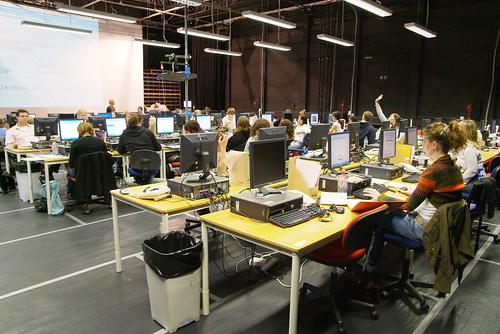
Applications by English students to UK universities have risen slightly this year, official figures show.
The latest Ucas statistics show that almost 600 more students have applied to start courses in 2013, compared to 2012.
In total, 36,051 students living in England have already applied, compared to 35,455 who applied for courses starting this autumn - an increase of 1.7%.
Students have been able to submit applications for next year for all universities from early September, and those applying for medical courses and Oxford and Cambridge had to apply by October 15.
The figures give the number of people who applied for courses with an October 15 deadline.
This is the first time that Ucas has published the data this way. In previous years, the figures have included the numbers of people that have applied so far for other university courses, which have a January deadline.
A large number of independent schools have pledged to open their doors to talented pupils from non-privileged backgrounds if the Government agrees to pay part of their fees.
The high-performing institutions said they wanted to admit bright children regardless of family income, arguing the move would be the "single biggest policy step" towards boosting social mobility.
A total of 80 independent day schools are in support of a state-funded Open Access scheme that would see them match fee subsidies from the Government with money from their own bursary funds.
The programme, in which parents pay a sliding scale of fees according to their means, has been piloted at the Belvedere School in Liverpool over a seven-year period.
Headmasters from 44 independent schools have thrown their weight behind the scheme in a letter to The Times.
The signatories said: "As heads of some of the most successful independent day schools in the country, we would like to admit pupils on merit alone, irrespective of whether their families can afford fees.
"We have a proud history of educating a wide social-mix and we are determined to extend that opportunity.
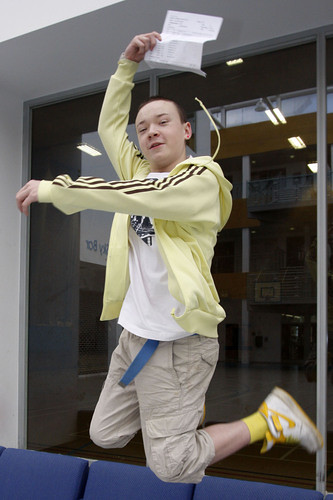
The number of state schools offering international GCSEs instead of the traditional exams has jumped by more than 300% in two years, according to new figures.
So-called IGCSEs in subjects such as English, history and biology are proving particularly popular with schools, according to data published by University of Cambridge International Examinations (CIE), which offers the qualifications.
In total, 400 state schools are now teaching IGCSEs compared to 97 in 2010 and 220 last year, the figures show.
Rising numbers of private schools are also using the exams - 500 this year, up from 302 two years ago and 350 in 2011. Overall, UK schools made 50,000 IGCSE entries this year, the exam board said.
CIE said that the rise is down to the Government's decision in June 2010 to open up and fund IGCSEs in the state sector. The exams have long been favoured by many private schools, who argue that they are tougher than traditional GCSEs.
CIE said that they have seen a big increase in demand for subjects like English language and English literature, as well as history and biology. This may be due to the Government's introduction of the English Baccalaureate, which is awarded to pupils who gain at least a C at GCSE in English, maths, science, a foreign language and either history or geography, the board said.
IGCSEs in these subjects count towards the E Bacc.
Peter Monteath, UK schools manager for CIE, said that the "linear" structure of IGCSEs, which means pupils sit exams at the end, rather than throughout the course, is proving popular.
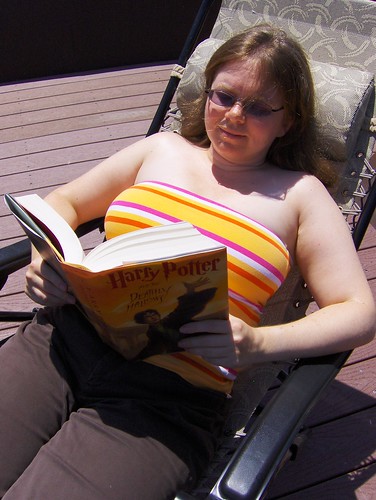
Teachers who pick texts that appeal to girls, a lack of books in the home and an expectation that they should be playing outside are all turning boys off reading, new research suggests.
Boys' lack of achievement in reading is not down to "biological differences". Instead there are key factors which lead to them lagging behind girls, according to a report by the Boys Reading Commission.
It says girls are more likely to be given books and taken to the library, while society's expectations and peer pressure can put some boys off. The report also warns that there is a danger that female teachers will unconsciously choose books that are more attractive to girls.
The commission, set up by the all-party parliamentary literacy group, investigated the reasons why boys remain behind girls in reading.
Figures show that at age seven, 7% more girls than boys are reading at the level expected of the age group, the report says. By age 11, this gap has widened to 8% and by GCSE level it has increased even further, with 14% more girls than boys achieving at least a C in their English exam.
At the same time, a study by the National Literacy Trust (NLT) for the commission has found that boys are much less likely to enjoying reading than girls. The report concludes that there are three factors which are associated with boys' under-performance.
It says that the gender gap begins in the home before children start school, with some evidence suggesting that parents encourage girls to read more.
Category
Sport
Former police chief among officers investigated over Maccabi Tel Aviv fans ban
 Former police chief among officers investigated over Maccabi Tel Aviv fans ban
Nick Kyrgios suspended after cocaine test as Australian tennis star admits ‘huge mistake’
 Nick Kyrgios suspended after cocaine test as Australian tennis star admits ‘huge mistake’
Fraud arrest follows security disruption at Birmingham European Athletics Championships
 Fraud arrest follows security disruption at Birmingham European Athletics Championships
Asher-Smith matches European medal record as Hunt completes golden treble
 Asher-Smith matches European medal record as Hunt completes golden treble
OG Anunoby brings NBA champion’s backing to Mayor’s £2m plan to transform London basketball courts
 OG Anunoby brings NBA champion’s backing to Mayor’s £2m plan to transform London basketball courts
London launches bid to bring 2029 World Athletics Championships back to the capital
 London launches bid to bring 2029 World Athletics Championships back to the capital
Serbia and Sweden withdraw support for Infantino's FIFA re-election
 Serbia and Sweden withdraw support for Infantino's FIFA re-election
Wales withdraws support for Infantino’s FIFA re-election bid
 Wales withdraws support for Infantino’s FIFA re-election bid
Netherlands win FIFA Fair Play Award after disciplined World Cup campaign
 Netherlands win FIFA Fair Play Award after disciplined World Cup campaign
Sinner overcomes Zverev to retain Wimbledon title after epic Centre Court battle
 Sinner overcomes Zverev to retain Wimbledon title after epic Centre Court battle
Education
-
 Jewish studies in Europe at a crossroads: an interview with Oleg Kozerod
Interview with Oleh Kozerod, Researcher at the Kuras Institute of Political and Ethnic Studies of the National Academy of Sciences of UkraineRead More...
Jewish studies in Europe at a crossroads: an interview with Oleg Kozerod
Interview with Oleh Kozerod, Researcher at the Kuras Institute of Political and Ethnic Studies of the National Academy of Sciences of UkraineRead More... -
 England’s education overhaul puts local leaders at the centre of jobs and skills reform
Government brings mayors, employers, schools and colleges together to reshape technical education and connect young people with regional job opportunitiesRead More...
England’s education overhaul puts local leaders at the centre of jobs and skills reform
Government brings mayors, employers, schools and colleges together to reshape technical education and connect young people with regional job opportunitiesRead More... -
 London’s school run transformed as car journeys fall and active travel soars
A decade of policies introduced under Mayor Sadiq Khan has significantly changed how children travel to school, with new Transport for London figures showing a sharp fall in schoolRead More...
London’s school run transformed as car journeys fall and active travel soars
A decade of policies introduced under Mayor Sadiq Khan has significantly changed how children travel to school, with new Transport for London figures showing a sharp fall in schoolRead More... -
 UK families to save thousands as free school meals and breakfast clubs expand
Millions of children will gain access to free school meals this term as the government rolls out a wider package aimed at cutting the cost of sending children to school.Read More...
UK families to save thousands as free school meals and breakfast clubs expand
Millions of children will gain access to free school meals this term as the government rolls out a wider package aimed at cutting the cost of sending children to school.Read More... -
 Malaysia’s new Chevening cohort set to strengthen UK–Malaysia ties
Twenty Malaysian professionals and emerging leaders are preparing to begin postgraduate studies in the United Kingdom after securing places on the prestigious Chevening scholarshipRead More...
Malaysia’s new Chevening cohort set to strengthen UK–Malaysia ties
Twenty Malaysian professionals and emerging leaders are preparing to begin postgraduate studies in the United Kingdom after securing places on the prestigious Chevening scholarshipRead More... -
 GCSE results deliver strongest-ever rise in top maths grades
More than 6,000 additional pupils secure grade 7 or above in maths as overall GCSE performance edges higherRead More...
GCSE results deliver strongest-ever rise in top maths grades
More than 6,000 additional pupils secure grade 7 or above in maths as overall GCSE performance edges higherRead More... -
 Climate change and ageing: why health systems face a new global risk
Climate change is emerging as a major challenge for ageing societies, with extreme weather, pressure on healthcare systems and economic disruption increasingly interacting to shapeRead More...
Climate change and ageing: why health systems face a new global risk
Climate change is emerging as a major challenge for ageing societies, with extreme weather, pressure on healthcare systems and economic disruption increasingly interacting to shapeRead More... -
 Children to get free bus travel across England during August
Children aged five to 15 will be able to travel for free on most local buses in England throughout August, under a government scheme aimed at helping families reduce the cost of summerRead More...
Children to get free bus travel across England during August
Children aged five to 15 will be able to travel for free on most local buses in England throughout August, under a government scheme aimed at helping families reduce the cost of summerRead More... -
 Applications open for postgraduate student loans in England and Wales
Applications for postgraduate student finance for the 2026/27 academic year have opened for students in England and Wales.Read More...
Applications open for postgraduate student loans in England and Wales
Applications for postgraduate student finance for the 2026/27 academic year have opened for students in England and Wales.Read More... -
 Clean air campaigner Rosamund Adoo-Kissi-Debrah awarded honorary doctorate
Clean air campaigner Rosamund Adoo-Kissi-Debrah has received an honorary doctorate from the University of Southampton in recognition of her work to improve air quality following theRead More...
Clean air campaigner Rosamund Adoo-Kissi-Debrah awarded honorary doctorate
Clean air campaigner Rosamund Adoo-Kissi-Debrah has received an honorary doctorate from the University of Southampton in recognition of her work to improve air quality following theRead More...

Media
-
 Prince Harry faces millions in legal costs after Daily Mail case defeat
Prince Harry and other high-profile figures could be ordered to pay millions of pounds towards the legal costs of the publisher of the Daily Mail after losing a major privacy case.30 July 2026Read More...
Prince Harry faces millions in legal costs after Daily Mail case defeat
Prince Harry and other high-profile figures could be ordered to pay millions of pounds towards the legal costs of the publisher of the Daily Mail after losing a major privacy case.30 July 2026Read More... -
 Netflix overtakes BBC as UK viewers' top TV choice, Ofcom finds
Netflix has overtaken the BBC as the first destination for television viewing in the UK, according to Ofcom's latest annual Media Nations report, highlighting the growing dominance of29 July 2026Read More...
Netflix overtakes BBC as UK viewers' top TV choice, Ofcom finds
Netflix has overtaken the BBC as the first destination for television viewing in the UK, according to Ofcom's latest annual Media Nations report, highlighting the growing dominance of29 July 2026Read More... -
 Former BBC reporter wins £20,000 over illegal access to phone records
A former BBC journalist has been awarded £20,000 in compensation after a tribunal ruled that Northern Ireland's police force and the UK's domestic intelligence agency unlawfully obtained24 July 2026Read More...
Former BBC reporter wins £20,000 over illegal access to phone records
A former BBC journalist has been awarded £20,000 in compensation after a tribunal ruled that Northern Ireland's police force and the UK's domestic intelligence agency unlawfully obtained24 July 2026Read More... -
 Prince Harry, Elton John lose privacy case against Daily Mail publisher
Prince Harry and a group of high-profile British figures have lost their privacy lawsuit against the publisher of the Daily Mail, marking a major setback in the Duke of Sussex's long-running07 July 2026Read More...
Prince Harry, Elton John lose privacy case against Daily Mail publisher
Prince Harry and a group of high-profile British figures have lost their privacy lawsuit against the publisher of the Daily Mail, marking a major setback in the Duke of Sussex's long-running07 July 2026Read More...

Culture
-
 Oasis set to return in 2027 with massive 38-date global tour
Oasis are extending their long-awaited comeback with an ambitious 38-date tour scheduled for 2027, taking the iconic Britpop group across the UK, Ireland, continental Europe and theRead More...
Oasis set to return in 2027 with massive 38-date global tour
Oasis are extending their long-awaited comeback with an ambitious 38-date tour scheduled for 2027, taking the iconic Britpop group across the UK, Ireland, continental Europe and theRead More... -
 UK moves to keep Stanley Spencer’s landmark resurrection painting
The British government has stepped in to prevent a major early work by Stanley Spencer from leaving the country, giving museums and galleries a limited window to secure the paintingRead More...
UK moves to keep Stanley Spencer’s landmark resurrection painting
The British government has stepped in to prevent a major early work by Stanley Spencer from leaving the country, giving museums and galleries a limited window to secure the paintingRead More... -
 London’s record summer of live music delivers £3.4bn boost
London has enjoyed a record-breaking summer of live music, with millions of fans attending concerts across the capital as some of the world’s biggest artists took to its stadiums, arenasRead More...
London’s record summer of live music delivers £3.4bn boost
London has enjoyed a record-breaking summer of live music, with millions of fans attending concerts across the capital as some of the world’s biggest artists took to its stadiums, arenasRead More... -
 Government blocks export of rare Anglo-Saxon artefact in bid to keep national treasure in UK
The UK government has imposed a temporary export ban on an exceptionally rare Anglo-Saxon metal mount, giving museums and galleries time to raise funds to keep the historicRead More...
Government blocks export of rare Anglo-Saxon artefact in bid to keep national treasure in UK
The UK government has imposed a temporary export ban on an exceptionally rare Anglo-Saxon metal mount, giving museums and galleries time to raise funds to keep the historicRead More... -
 Jan van Eyck’s portraits to unite in landmark National Gallery exhibition
An unprecedented gathering of works by one of the Northern Renaissance’s greatest masters will bring Jan van Eyck’s portraiture into focus at the National Gallery this winter, with all 10 ofRead More...
Jan van Eyck’s portraits to unite in landmark National Gallery exhibition
An unprecedented gathering of works by one of the Northern Renaissance’s greatest masters will bring Jan van Eyck’s portraiture into focus at the National Gallery this winter, with all 10 ofRead More... -
 Europol sounds alarm over more violent museum heists across Europe
Museum robberies are taking a more dangerous turn across Europe, with organised criminal groups increasingly using heavy tools, explosives and other forms of force to steal valuableRead More...
Europol sounds alarm over more violent museum heists across Europe
Museum robberies are taking a more dangerous turn across Europe, with organised criminal groups increasingly using heavy tools, explosives and other forms of force to steal valuableRead More... -
 London marks UNESCO day with call for action, memory and justice on the legacy of the transatlantic slave trade
City Hall brings together community leaders, artists, young Londoners and historians to honour those affected by the transatlantic slave trade and celebrate the strength of African andRead More...
London marks UNESCO day with call for action, memory and justice on the legacy of the transatlantic slave trade
City Hall brings together community leaders, artists, young Londoners and historians to honour those affected by the transatlantic slave trade and celebrate the strength of African andRead More... -
 Honiara welcomes a global showcase of wildlife photography
Some of the world’s most striking wildlife photographs have arrived in the Solomon Islands, as the British High Commission and the Solomon Islands National Art Gallery open anRead More...
Honiara welcomes a global showcase of wildlife photography
Some of the world’s most striking wildlife photographs have arrived in the Solomon Islands, as the British High Commission and the Solomon Islands National Art Gallery open anRead More... -
 Britain’s festival season stages a cautious comeback as fans pay for more
Britain’s battered music festival industry is showing tentative signs of recovery, with several major events selling out faster than expected as organisers reshape their offer aroundRead More...
Britain’s festival season stages a cautious comeback as fans pay for more
Britain’s battered music festival industry is showing tentative signs of recovery, with several major events selling out faster than expected as organisers reshape their offer aroundRead More... -
 British Week in Paraguay marks a decade with nine days of culture, food and music
Asunción is preparing for the 10th edition of British Week, a nine-day programme showcasing British culture and connections across Paraguay.Read More...
British Week in Paraguay marks a decade with nine days of culture, food and music
Asunción is preparing for the 10th edition of British Week, a nine-day programme showcasing British culture and connections across Paraguay.Read More... -
 Stefan Zweig’s London refuge marked with blue plaque 90 years after Austrian writer fled Hitler
A London address that once offered refuge to one of Austria’s most celebrated writers has been formally marked in honour of Stefan Zweig, the Jewish novelist and essayist who fled theRead More...
Stefan Zweig’s London refuge marked with blue plaque 90 years after Austrian writer fled Hitler
A London address that once offered refuge to one of Austria’s most celebrated writers has been formally marked in honour of Stefan Zweig, the Jewish novelist and essayist who fled theRead More... -
 Bloomsbury keeps profit outlook unchanged as AI partnerships boost early-year trading
Bloomsbury Publishing has maintained its full-year financial outlook after reporting a solid start to the new fiscal year, supported by continued income from artificial intelligence licensingRead More...
Bloomsbury keeps profit outlook unchanged as AI partnerships boost early-year trading
Bloomsbury Publishing has maintained its full-year financial outlook after reporting a solid start to the new fiscal year, supported by continued income from artificial intelligence licensingRead More... -
 Salman Rushdie warns free speech is under threat as London honours his literary legacy
Author Salman Rushdie has warned that freedom of speech is facing growing threats around the world, saying the right to express dissenting views is under increasing pressure even inRead More...
Salman Rushdie warns free speech is under threat as London honours his literary legacy
Author Salman Rushdie has warned that freedom of speech is facing growing threats around the world, saying the right to express dissenting views is under increasing pressure even inRead More...

British Queen celebrates
Most Read
- Teen held after US woman killed in London stabbings
- Heave-ho Harry! Prince prepares to join the walking wounded in ice trek to North Pole
- Football: Farhad Moshiri adamant Everton deal above board
- "Master of English Style". Interview with Designer Lydia Dart
- Letter to the Financial Times from Lord Mayor Alderman Michael Bear