
Education

Hong Kong's teachers say they are living in fear as the city's democracy protests rumble on, with some not daring to discuss the movement and others anxious they

New learning processes are improving fast. Online education, which seemed fantastic 5-10 years ago, is becoming a common thing. Thanks to it, we can get training
Education is becoming an increasingly crucial component of contemporary European life. New skills and higher qualifications become necessary elements of the

Q: We met at the European Conference of Iranian Studies in Berlin, a reputable and high-profile event. Please tell us about your Center for European Democracy

The European Medicines Agency, which is moving from Britain to Amsterdam because of Brexit, on Wednesday lost a court battle to cancel the lease on its London

Charles Darwin, Mr. Evolution himself, didn't know what to make of the fossils he saw in Patagonia so he sent them to his friend, the renowned paleontologist Richard Owen.
Owen was stumped too. Little wonder.
"The bones looked different from anything he knew," said Michael Hofreiter, senior author of a study published Tuesday in Nature Communications that finally situates in the tree of life what Darwin called the "strangest animal ever discovered".
"Imagine a camel without a hump, with feet like a slender rhino, and a head shaped like a saiga antelope," Hofreiter, a professor at the University of Potsdam, told AFP.
Macrauchenia patachonica -- literally, "long-necked llama" -- also had a long rubbery snout and with its nostrils high on the skull just above its eyes.

Analysis of a bear bone found in an Irish cave has provided evidence of human existence in Ireland 2,500 years earlier than previously thought, academics announced Sunday.
For decades, the earliest evidence of human life in Ireland dated from 8,000 BC.
But radiocarbon dating of a bear's knee bone indicated it had been butchered by a human in about 10,500 BC -- some 12,500 years ago and far earlier than the previous date.
"This find adds a new chapter to the human history of Ireland," said Marion Dowd, an archaeologist at the Institute of Technology Sligo who made the discovery along with Ruth Carden, a research associate with the National Museum of Ireland.
The knee bone, which is marked by cuts from a sharp tool, was one of thousands of bones first found in 1903 in a cave in County Clare on the west coast of Ireland.
It was stored in the National Museum of Ireland since the 1920s, until Carden and Dowd re-examined it and applied for funding to have it radiocarbon dated -- a technique developed in the 1940s -- by Queen's University Belfast.
The team sent a second sample to the University of Oxford to double-check the result. Both tests indicated the bear had been cut up by a human about 12,500 years ago.
The new date means there was human activity in Ireland in the Stone Age or Palaeolithic period, whereas previously, scientists only had evidence of humans in Ireland in the later Mesolithic period.
"Archaeologists have been searching for the Irish Palaeolithic since the 19th century, and now, finally, the first piece of the jigsaw has been revealed," Dowd said.
Three experts further confirmed that the cut marks on the bone had been made when the bone was fresh, confirming they dated from the same time as the bone.
The results were revealed in a paper published in the journal Quaternary Science Reviews.
As well as pushing back the date of human history in Ireland, the find may have important implications for zoology, as scientists have not previously considered that humans could have influenced extinctions of species in Ireland so long ago.
"From a zoological point of view, this is very exciting," Carden said. "This paper should generate a lot of discussion within the zoological research world and it's time to start thinking outside the box? or even dismantling it entirely!"
The National Museum of Ireland noted that approximately two million more specimens are held in its collections and could reveal more secrets.

In a milestone for artificial intelligence, a computer has beaten a human champion at a strategy game that requires "intuition" rather than brute processing power to prevail, its makers said Wednesday.
Dubbed AlphaGo, the system honed its own skills through a process of trial and error, playing millions of games against itself until it was battle-ready, and surprised even its creators with its prowess.
"AlphaGo won five-nil, and it was stronger than perhaps we were expecting," said Demis Hassabis, the chief executive of Google DeepMind, a British artificial intelligence (AI) company.
A computer defeating a professional human player at the 3,000-year-old Chinese board game known as Go, was thought to be about a decade off.
The clean-sweep victory over three-time European Go champion Fan Hui "signifies a major step forward in one of the great challenges in the development of artificial intelligence -- that of game-playing," the British Go Association said in a statement.
The two-player game is described as perhaps the most complex ever designed, with more configurations possible than there are atoms in the Universe, Hassabis says.
Players take turns placing stones on a board, trying to surround and capture the opponent's stones, with the aim of controlling more than 50 percent of the board.
There are hundreds of places where a player can place the first stone, black or white, with hundreds of ways in which the opponent can respond to each of these moves and hundreds of possible responses to each of those in turn.
"But as simple as the rules are, Go is a game of profound complexity. There are 1,000,000,000,000,000,000,000,000,000,000,000,000,000,000,000,000,000,000,000,000,000,000,000,000,000,000,000,000,000,000,000,000,000,
000,000,000,000,000,000,000,000,000,000,000,000,000,000,000,000,000,000,000,000,000,000,000,000 possible positions," Hassabis explained in a blog.
Such a search base is "too enormous and too vast for brute force approaches to have any chance," added his colleague David Silver, who co-authored the paper in the science journal Nature.
This Christmas, as consumers around the world hope Santa will give them a smartphone, TV or tablet computer, few people know that the lowly carrot inspired the liquid crystals at the core of such hi-tech gadgets.
And the world's leading supplier of liquid crystals is a German company, the world's oldest chemicals and pharmaceuticals maker, Merck KGaA in the western city of Darmstadt.
Merck claims it produces "more than 60 percent" of all liquid crystals sold worldwide, far ahead of Japanese rivals JNC and DIC and emerging competitors from China.
"The millions of people who own a smartphone, a flat-screen television or a computer have no idea that these contain liquid crystals," said Horst Stegemeyer, scientist and author of several books on the subject.
"And around 80 percent of all fundamental research on liquid crystals is still done at Merck", which also pioneered most of the innovations in the field, Stegemeyer told AFP.
The applications for liquid crystals include, say, the security holograms on banknotes, but by far the biggest are the high-definition screens that dominate today's consumer electronics industry.
It was the Austrian botanist Friedrich Reinitzer and the German physicist Otto Lehmann who discovered liquid crystals in 1888 when they were experimenting with the natural substances found in carrots and came across a strange phenomenon: some of the substances appeared to have not just one, but two different melting points.
At the first melting point, the substance melted into a cloudy liquid, and at the second the cloudiness suddenly disappeared, giving way to a clear transparent liquid, a new state of matter that was termed "liquid crystal".
- 'What to do with it?' -


The plague wiped out millions of people beginning in the sixth century and through medieval times, but a study Thursday suggests the illness may have existed thousands of years earlier.
A DNA analysis of human teeth from Europe and Asia showed the bacterium that causes the plague was detectable some 3,000 years earlier than previously documented.
The study in the journal Cell suggests that this bacterium, known as Yersinia pestis, was common, though it may have caused a slightly different but still devastating kind of illness.
"We found that the Y. pestis lineage originated and was widespread much earlier than previously thought, and we narrowed the time window as to when it developed," said senior study author Eske Willerslev of the Center for GeoGenetics at the University of Copenhagen.
"This study changes our view of when and how plague influenced human populations and opens new avenues for studying the evolution of diseases."
The bacterium is blamed for three massive outbreaks, beginning with the Justinian Plague which started in 541 AD and killed more than 25 million people over the next two centuries.
After that came the Black Death which began in China in 1334 and spread along the great trade routes to Europe where it killed around half the population.
The Third Pandemic, also known as the Modern Plague, emerged in China in the 1850s and killed some 10 million people.
Until now, scientists did not have direct molecular evidence for this bacterium from skeletal material older than 1,500 years.
The new evidence suggests that the plague "may have been responsible for major population declines believed to have occurred in the late 4th and early 3rd millennium BC," said a statement from the University of Cambridge.
Category
Sport

Sarina Wiegman commits to England until 2029 after back-to-back European titles
 Sarina Wiegman commits to England until 2029 after back-to-back European titles
Rybakina pulls out of Wuhan Open as foot injury forces break from tennis
 Rybakina pulls out of Wuhan Open as foot injury forces break from tennis
Manchester United turns Old Trafford turf into a piece of club history for fans
 Manchester United turns Old Trafford turf into a piece of club history for fans
Former police chief among officers investigated over Maccabi Tel Aviv fans ban
 Former police chief among officers investigated over Maccabi Tel Aviv fans ban
Nick Kyrgios suspended after cocaine test as Australian tennis star admits ‘huge mistake’
 Nick Kyrgios suspended after cocaine test as Australian tennis star admits ‘huge mistake’
Fraud arrest follows security disruption at Birmingham European Athletics Championships
 Fraud arrest follows security disruption at Birmingham European Athletics Championships
Asher-Smith matches European medal record as Hunt completes golden treble
 Asher-Smith matches European medal record as Hunt completes golden treble
OG Anunoby brings NBA champion’s backing to Mayor’s £2m plan to transform London basketball courts
 OG Anunoby brings NBA champion’s backing to Mayor’s £2m plan to transform London basketball courts
London launches bid to bring 2029 World Athletics Championships back to the capital
 London launches bid to bring 2029 World Athletics Championships back to the capital
Education
-
 Ofsted launches independent review pilot to strengthen fairness in school inspections
England’s schools will have access to a new independent complaints review process under a pilot scheme announced by Ofsted, giving state-funded schools an additional route toRead More...
-
 Nearly half of workers and students miss days due to flu-like illness, UK study finds
Almost half of people in employment or education who experienced flu-like symptoms missed work or school, highlighting the significant impact seasonal respiratory illnesses can have onRead More...
-
 Oxford holds global university crown for record 11th consecutive year
The University of Oxford has retained its position as the world’s highest-ranked university for an unprecedented 11th consecutive year, according to the Times Higher Education (THE)Read More...
-
 Jewish students face rising antisemitism on UK campuses, report finds
Antisemitic incidents at universities across Britain have risen sharply since the Hamas-led attacks on Israel in October 2023, according to a new report from the Community Security TrustRead More...
-
 UK schools to receive new support to confront misogyny and harmful online influences
Schools across England are set to receive a new package of guidance and resources designed to help teachers tackle misogyny, promote respectful relationships and address harmfulRead More...
-
 England to recruit 1,000 youth workers in biggest youth services expansion for a generation
The government is to fund the recruitment and training of 1,000 new youth workers across England as part of a major expansion of services aimed at helping young people who are at riskRead More...
-
 London schools see sharp fall in exclusions as Inclusion Charter strengthens safety and belonging
New evidence suggests that efforts to improve inclusion and prevent violence are contributing to safer and more supportive school environments across London, with suspension andRead More...
-
 £22.5m programme to expand enrichment opportunities for children in more than 400 schools
Hundreds of thousands of young people in disadvantaged communities across England are set to gain greater access to sport, music, arts, debating, volunteering and outdoor activitiesRead More...
-
 Jewish studies in Europe at a crossroads: an interview with Oleg Kozerod
Interview with Oleh Kozerod, Researcher at the Kuras Institute of Political and Ethnic Studies of the National Academy of Sciences of UkraineRead More...
-
 England’s education overhaul puts local leaders at the centre of jobs and skills reform
Government brings mayors, employers, schools and colleges together to reshape technical education and connect young people with regional job opportunitiesRead More...

Media
-
 Tommy Robinson found guilty of harassing two British journalists
British far-right activist Tommy Robinson has been convicted of harassing two journalists from the Daily Mail over their reporting on his activities during the wave of riots that swept the28 October 2026Read More...
-
 Publishers and advertisers urge EU and UK to block Meta’s new AI content terms
Digital publishers and advertising companies have called on competition regulators in the European Union and the United Kingdom to suspend Meta Platforms’ new commercial terms,22 October 2026Read More...
-
 BBC and Channel 4 explore deeper partnership as broadcasters seek major savings
The BBC and Channel 4 have begun preliminary discussions with the UK government about expanding their commercial cooperation, potentially bringing parts of the two public08 October 2026Read More...
-
 King Charles responds to new claims by Princess Diana’s brother over Diana’s funeral
King Charles III has responded publicly to allegations made by Charles Spencer, the younger brother of the late Princess Diana, concerning the events surrounding her funeral in 1997.17 September 2026Read More...
-
 Prince Harry faces millions in legal costs after Daily Mail case defeat
Prince Harry and other high-profile figures could be ordered to pay millions of pounds towards the legal costs of the publisher of the Daily Mail after losing a major privacy case.30 July 2026Read More...

Culture
-
 Diwali celebrations at Trafalgar Square cancelled due to storm warnings
London’s annual Diwali celebration at Trafalgar Square has been cancelled at short notice because of forecast storms and safety concerns, organisers announced on Saturday.Read More...
-
 London to celebrate Diwali with free festival of music, dance and culture in Trafalgar Square
Trafalgar Square will become the centre of London’s Diwali celebrations on Sunday, 25 October, as the capital prepares to welcome thousands of residents and visitors for a free festivalRead More...
-
 England’s national museums to keep free admission for all visitors
Government rules out charges for international tourists as museums receive further investmentRead More...
-
 UK museums given three months to keep rare Renaissance bronze in Britain
British museums and galleries have been given a limited window to secure a rare Renaissance sculpture valued at more than £4.6 million, after the Government temporarily halted itsRead More...
-
 Oasis set to return in 2027 with massive 38-date global tour
Oasis are extending their long-awaited comeback with an ambitious 38-date tour scheduled for 2027, taking the iconic Britpop group across the UK, Ireland, continental Europe and theRead More...
-
 UK moves to keep Stanley Spencer’s landmark resurrection painting
The British government has stepped in to prevent a major early work by Stanley Spencer from leaving the country, giving museums and galleries a limited window to secure the paintingRead More...
-
 London’s record summer of live music delivers £3.4bn boost
London has enjoyed a record-breaking summer of live music, with millions of fans attending concerts across the capital as some of the world’s biggest artists took to its stadiums, arenasRead More...
-
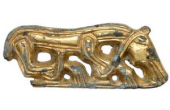 Government blocks export of rare Anglo-Saxon artefact in bid to keep national treasure in UK
The UK government has imposed a temporary export ban on an exceptionally rare Anglo-Saxon metal mount, giving museums and galleries time to raise funds to keep the historicRead More...
-
 Jan van Eyck’s portraits to unite in landmark National Gallery exhibition
An unprecedented gathering of works by one of the Northern Renaissance’s greatest masters will bring Jan van Eyck’s portraiture into focus at the National Gallery this winter, with all 10 ofRead More...
-
 Europol sounds alarm over more violent museum heists across Europe
Museum robberies are taking a more dangerous turn across Europe, with organised criminal groups increasingly using heavy tools, explosives and other forms of force to steal valuableRead More...
-
 London marks UNESCO day with call for action, memory and justice on the legacy of the transatlantic slave trade
City Hall brings together community leaders, artists, young Londoners and historians to honour those affected by the transatlantic slave trade and celebrate the strength of African andRead More...
-
 Honiara welcomes a global showcase of wildlife photography
Some of the world’s most striking wildlife photographs have arrived in the Solomon Islands, as the British High Commission and the Solomon Islands National Art Gallery open anRead More...
-
 Britain’s festival season stages a cautious comeback as fans pay for more
Britain’s battered music festival industry is showing tentative signs of recovery, with several major events selling out faster than expected as organisers reshape their offer aroundRead More...

British Queen celebrates
Most Read
- Teen held after US woman killed in London stabbings
- Heave-ho Harry! Prince prepares to join the walking wounded in ice trek to North Pole
- Football: Farhad Moshiri adamant Everton deal above board
- "Master of English Style". Interview with Designer Lydia Dart
- Letter to the Financial Times from Lord Mayor Alderman Michael Bear