Researchers say they have uncovered a long-forgotten geometric code woven into some of Britain’s most famous historic buildings, including landmarks in Oxford.
Heritage consultants James Wenn and James Syrett believe the key lies in the rhombic dodecahedron — a 12-sided, diamond-faceted form found naturally in certain
crystals. They have traced the shape’s influence across centuries of British architecture, from Oxford and Cambridge colleges to Westminster Abbey, the Old Bailey, the Houses of Parliament and numerous country houses.
The findings, they say, offer a new way of interpreting architectural design and suggest a shared symbolic language once embedded in the built environment.
“A rhombic dodecahedron is essentially a cube covered in pyramids,” Mr Wenn said. He pointed to the coronation of King Charles III in 2023, noting that the screen shielding the monarch was designed as a perfect cube set precisely within the square of the Abbey floor — a detail he believes reflects the rediscovered code. By contrast, he said, the screen used at Queen Elizabeth II’s coronation in 1953 did not follow the same geometric principle.
The research began in 2019, when Mr Syrett showed Mr Wenn a garnet crystal. Its natural form — a rhombic dodecahedron — helped explain why Anglo-Saxons favoured garnets in jewellery and, the pair argue, why the same geometry appears in Anglo-Saxon church towers and other structures as a symbol of harmony.
According to the researchers, widespread understanding of the shape’s significance largely disappeared during the First World War. Mr Syrett said the aristocratic classes, who traditionally preserved such knowledge, were disproportionately killed in the trenches.
“It was an industrial war machine that chewed them up,” he said.
He added that the rise of modernism after the war further erased the tradition. Avant-garde movements such as Futurism and Dadaism explicitly rejected the old social and artistic order, he said, seeking to “start afresh on everything”.
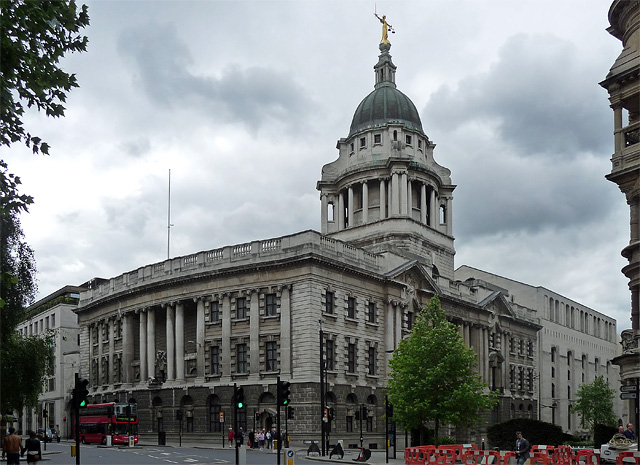
Support for the research has come from prominent figures including Oxford mathematician Professor Marcus du Sautoy, who described the work as “an intellectual version of metal detectorists uncovering a treasure trove of wonders.” Photo by Central Criminal Court, Old Bailey by Stephen Richards, Wikimedia commons.