The United Kingdom and Germany have agreed to intensify cooperation on defence technology, military equipment and industrial development following high-level talks in London, with
joint projects aimed at improving military readiness and strengthening NATO’s deterrence capabilities.
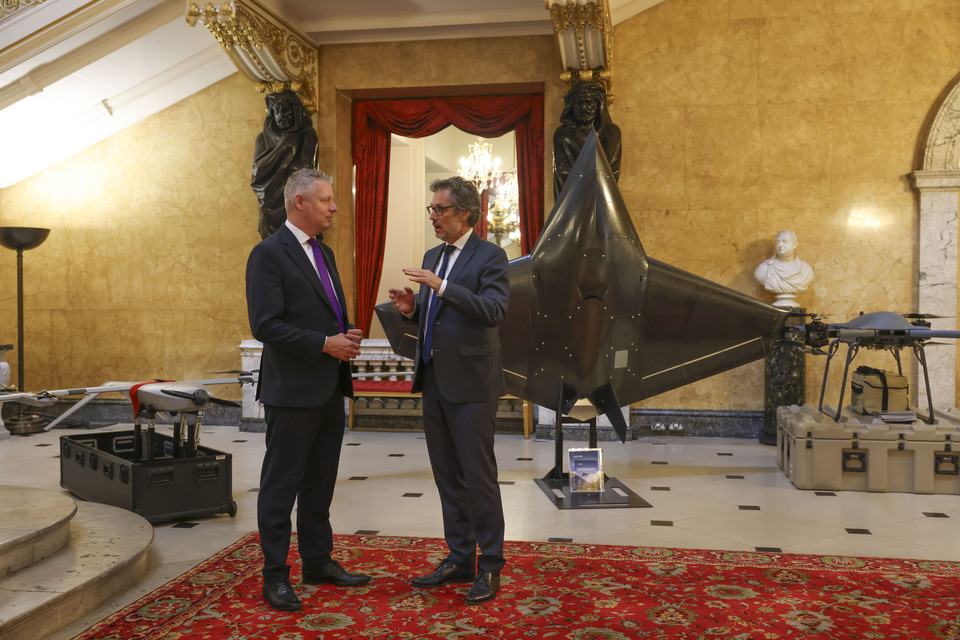
The discussions took place at Lancaster House, where UK Minister for Defence Readiness and Industry Luke Pollard hosted Germany’s State Secretary for Armament, Innovation and Cyber, Jens Plötner, for a meeting of the UK-Germany Ministerial Group on Equipment and Capability Cooperation (MECC).
Senior government officials, military representatives and defence industry leaders from both countries reviewed ongoing joint programmes and explored opportunities to expand collaboration across air, land, maritime, cyber and space capabilities.
The meeting forms part of wider efforts by the two NATO allies to develop a more integrated and resilient defence industrial base, capable of responding to changing security challenges and delivering advanced technologies to their armed forces.
Pollard said Germany remained one of Britain's closest defence partners, adding that closer cooperation should translate into practical military capabilities and new opportunities for companies operating in the defence sector.
He also stressed the importance of the two countries strengthening their armed forces, industrial capacity and resilience as security threats continue to evolve.
Long-range strike capability among key priorities
One of the central items on the agenda was the Deep Precision Strike programme, a joint UK-German initiative focused on developing long-range strike capabilities. The project reflects a shared objective of addressing critical military capability gaps and contributing to NATO's broader deterrence posture.
The latest talks build on the Trinity House Agreement, signed in October 2024, which established a framework for expanded bilateral cooperation in several defence and security domains. The partnership also falls under the broader Kensington Treaty, signed in July 2025, which provides the strategic foundation for closer relations between London and Berlin.
Cooperation has gained further momentum following the British Prime Minister's visit to Berlin on 8 October. During that visit, the two governments agreed to deepen collaboration in space and establish a new UK-Germany Counter-Hybrid Partnership designed to improve their ability to withstand and respond to hybrid threats.
Industry leaders discuss opportunities for cooperation
Following the official meeting, Pollard and Plötner attended a panel discussion at the German Embassy in London, bringing together policymakers and representatives of the defence industry to assess progress and identify further areas for joint work.
The discussion included Dr Philipp Kerth, co-founder and chief executive of German defence technology company Hypersonica, and Katherine Williams, Rolls-Royce's Vice President for UK and International Government Relations.
The participation of industry representatives highlighted the role of private-sector expertise, technological innovation and cross-border partnerships in delivering future defence capabilities.
For both governments, closer industrial cooperation is intended to support the development of modern military systems while reinforcing the technological and manufacturing capacity needed to sustain defence readiness over the longer term.
The MECC meeting is part of a broader programme of UK-German engagement ahead of the EU-UK summit. Both countries are continuing to develop their bilateral security relationship as part of wider efforts to reinforce European and Euro-Atlantic defence cooperation.
The partnership places particular emphasis on innovation, industrial resilience and coordinated military development, with the aim of ensuring that the UK and Germany can contribute effectively to NATO's collective defence and respond to emerging security challenges. Photo by gov.uk