The United Kingdom and Portugal have taken a significant step forward in marine science cooperation, as National Oceanography Centre (NOC) and ARDITI formalised a partnership that blends
cutting-edge technology with long-term scientific collaboration in the North Atlantic.
At the heart of the agreement is the transfer of two advanced Autosub Long Range (ALR) autonomous underwater vehicles, developed in the UK and acquired by ARDITI for €4.3 million. The deal, supported by the British Embassy Lisbon, marks a milestone in exporting British marine robotics to public research institutions abroad.
A new chapter for deep-sea exploration
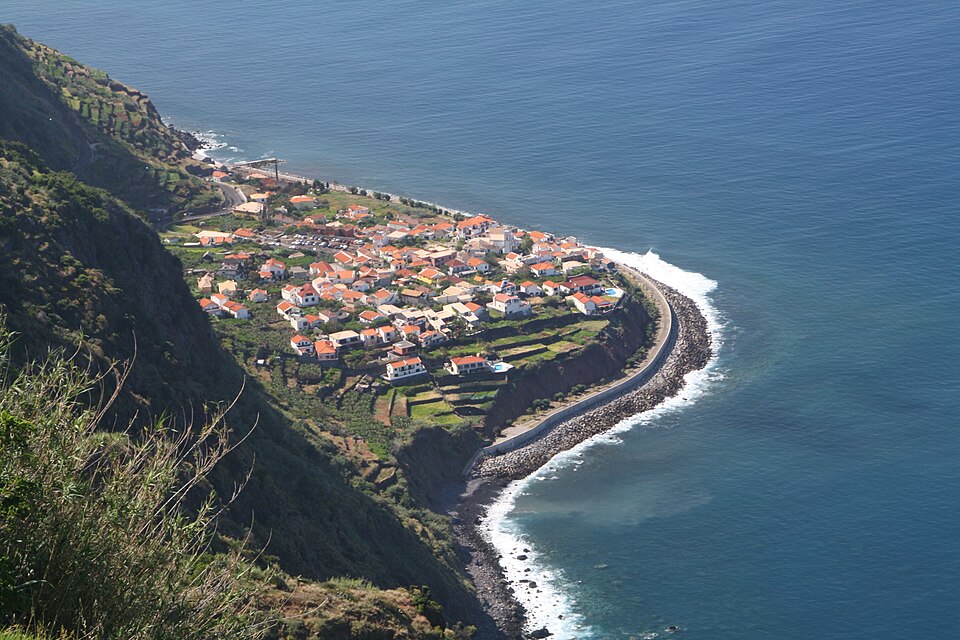
The deployment of these vehicles around Madeira—a region known for its access to ultra-deep Atlantic waters—positions the island as an emerging hub for ocean research and testing.
Designed for endurance and flexibility, the ALR systems can operate for extended periods and carry a range of modular sensors. One vehicle is capable of diving to 1,500 metres, enabling detailed oceanographic and biogeochemical studies. The second, built for depths of up to 6,000 metres, will focus on deep-sea mapping—an area still largely unexplored.
Both systems run on open-source software, allowing seamless integration into ARDITI’s existing fleet, which includes uncrewed surface vessels and traditional research ships. Operations will be coordinated through the Ocean Observatory of Madeira, further strengthening the island’s scientific infrastructure.
Science diplomacy in action
The partnership was officially highlighted during an event aboard the RRS Discovery in Madeira on 24 October, where UK representatives presented their technological capabilities to regional leaders, scientists, and the local British community.
This builds on earlier engagement, including a high-level marine research roundtable held in Lisbon in February 2025. That meeting brought together British and Portuguese researchers ahead of the UN Ocean Conference, setting the stage for deeper collaboration.
Looking ahead, the British Embassy plans to host an Ocean Monitoring Workshop in 2026, aimed at identifying further joint research and innovation opportunities.
Strategic impact and safeguards
Beyond the immediate scientific benefits, the agreement signals a broader shift in how UK-developed technology is shared globally. For NOC, this is the first time its ALR systems have been sold directly to a public research agency rather than through commercial channels—opening a new pathway for international partnerships.
The collaboration also includes security provisions to prevent sensitive technologies from being shared with high-risk states, ensuring both research integrity and national interests are protected. The initiative is backed by the Natural Environment Research Council, part of UK Research and Innovation.
A long-standing UK–Portugal relationship
This agreement reflects a deeper historical connection between the two nations. The UK and Portugal share one of the world’s oldest diplomatic alliances, dating back to the Treaty of Windsor. Over centuries, this partnership has evolved from military and trade cooperation into modern collaboration across science, education, and innovation.
In recent years, both countries have strengthened ties in areas such as renewable energy, ocean governance, and climate research—fields where Atlantic geography gives them shared strategic interests. Madeira, in particular, has become a focal point for joint initiatives due to its location and access to deep-sea environments.
Looking forward
Through shared missions, technical exchange, and coordinated research planning, the NOC–ARDITI partnership is expected to deliver high-quality marine data that will support both regional ocean management and global scientific understanding.
More broadly, it reinforces the UK’s position as a leader in autonomous marine systems while highlighting how international cooperation—rooted in centuries-old ties—continues to drive innovation in the modern era. Photo by Dreizung, Wikimedia commons.