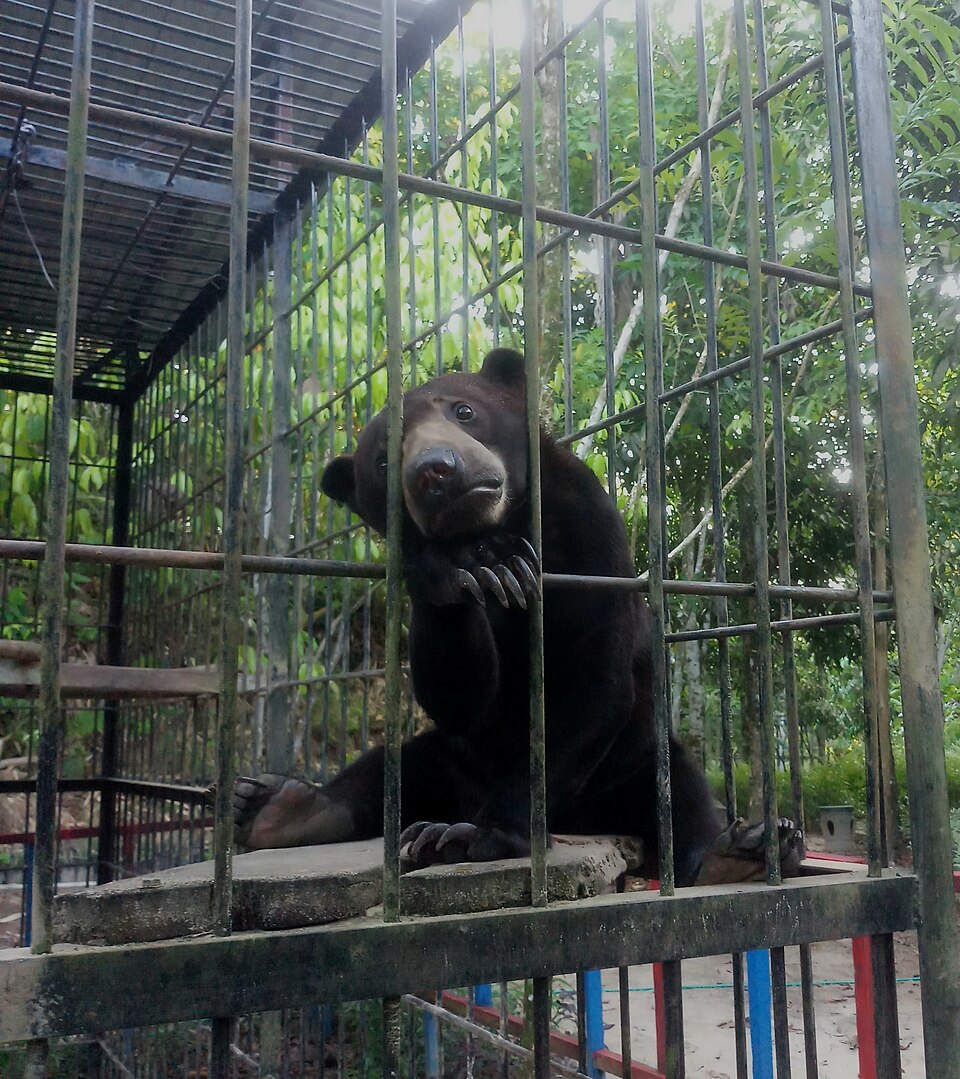
South Korea will formally end its long-criticized bear bile farming industry this week, marking a major shift in animal welfare policy, though nearly 200 bears remain in
captivity as authorities work through compensation and relocation disputes.
The Ministry of Climate, Energy and Environment announced Tuesday that breeding, possession of bears and extraction of their bile will be banned starting Jan. 1. The move follows revisions to the country’s animal protection law, which introduce prison sentences of up to two or five years for violations.
South Korea is one of the few countries that has permitted bear bile farming, primarily involving Asiatic black bears, also known as moon bears. The bile has traditionally been used in medicine or consumed as a product believed to boost vitality and stamina.
The practice has steadily declined over the past two decades amid growing skepticism over its medical benefits, the availability of cheaper alternatives and rising public concern over animal cruelty.
Agreement to phase out the industry
The ban stems from a 2022 agreement among government officials, bear farmers and animal rights groups to end bear bile farming by 2026. Under the arrangement, animal rights organizations oversee the purchase of bears from farmers, while the government is responsible for providing facilities to house them.
So far this year, 21 bears have been relocated to a government-run sanctuary in South Jeolla Province. However, 199 bears remain on 11 farms nationwide, as negotiations continue over compensation, according to officials, activists and farmers.
The Environment Ministry said farmers will be granted a six-month grace period, but extracting bile during that time will be subject to punishment. The government has pledged financial support to help farmers care for bears until they are transferred.
Farmers criticize compensation
Some farmers argue the compensation offered is inadequate. Kim Kwang-soo, who raises 78 bears in the southern city of Dangjin, said other farmers sold their animals at deeply discounted prices due to financial pressure. He said he has not sold any of his bears.
Bear farming began in South Korea in the early 1980s, when bears were imported from Malaysia and other Southeast Asian countries. The industry has since drawn international condemnation for keeping bears in small, barren cages for most of their lives before slaughter.
About 1,000 bears were kept on farms in 2014. Kim said many farmers later sterilized their bears in exchange for government compensation. Others died naturally or were killed due to poor management, including attacks by other bears housed in the same enclosures.
Calls for expanded sanctuaries
Animal rights groups welcomed the government’s decision but urged it to expand protection facilities to accommodate rescued bears.
The government says its South Jeolla sanctuary can hold up to 49 bears, though activists argue the number should be capped at 30 to ensure proper care. Plans for a second government-run facility, initially scheduled to open in April, have been delayed until 2027 due to flood damage.
Kang Jae-won, an activist with the Korea Animal Welfare Association, said groups are also exploring partnerships with overseas zoos to relocate some of the rescued bears. Photo by Nina Lsera, Wikimedia commons.