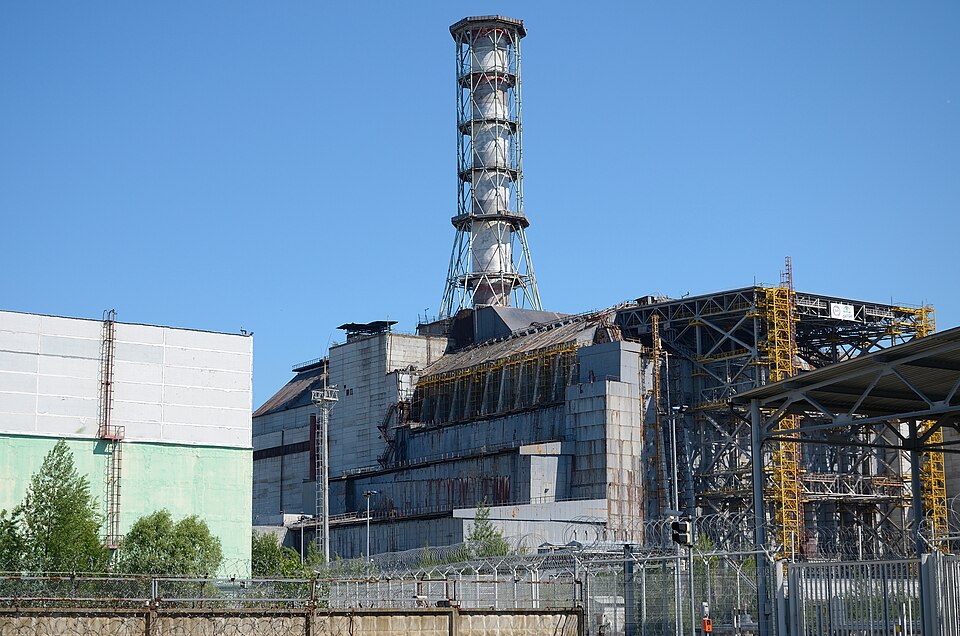
Britain has pledged £17 million to support essential repairs at Ukraine’s Chornobyl nuclear power plant after a Russian drone attack damaged the facility’s protective shelter last year,
raising concerns over long-term nuclear safety and environmental protection.
The funding, announced on 15 October by the UK government, will contribute to an international assistance package coordinated by the European Bank for Reconstruction and Development (EBRD), in cooperation with the Ukrainian government and G7 partners. The initiative aims to restore critical safety systems at the site and prevent further deterioration of infrastructure designed to contain radioactive materials.
The damaged protective structure plays a vital role in limiting the risk of radioactive contamination. British funding will help repair its confinement and ventilation systems, which are essential to maintaining safe operating conditions and preserving the shelter’s intended lifespan. Without timely intervention, corrosion and structural deterioration could compromise its effectiveness, putting decades of international investment at risk and potentially creating serious environmental and safety challenges.
The announcement comes as Russia continues its attacks on Ukraine’s energy infrastructure. Between 5 and 11 October, Russian forces reportedly carried out more than 200 strikes against electricity facilities and another 17 attacks on oil and gas installations. Six further attacks on energy infrastructure were recorded after US President Donald Trump announced a ceasefire on Sunday.
On 13 October, Russia launched a major ballistic missile assault involving 39 missiles, with much of the attack directed at energy infrastructure. The strikes reportedly left approximately 600,000 people without electricity, underlining the continuing vulnerability of Ukraine’s critical infrastructure.
UK Chancellor John Healey said Britain’s commitment to Ukraine would remain firm for as long as Russia’s full-scale invasion continued. He stressed that London was working both to restrict the financial resources sustaining Russia’s military campaign and to support Ukraine’s recovery from the damage caused by the war.
Foreign Secretary Ed Miliband reiterated the government’s determination to stand alongside Ukraine, arguing that cooperation with international partners was essential to strengthening the country’s security, increasing the costs of Russian aggression and achieving a just and lasting peace.
The latest contribution builds on Britain’s established involvement in nuclear safety at Chornobyl. The UK was among the founding donors to the International Chornobyl Cooperation Account (ICCA) in 2020, when the account assumed responsibility for supporting safety measures in the Chornobyl Exclusion Zone. With total contributions of €8 million, Britain is the fund’s third-largest individual donor, behind Norway and France.
The new funding also follows a broader package of British assistance announced during the Foreign Secretary’s recent visit to Kyiv, his first since taking office. Last week, Miliband unveiled £54 million in winter support, including £20 million for energy assistance intended to help maintain electricity supplies and keep Ukrainian homes warm during the colder months.
On 14 October, Prime Minister Keir Starmer hosted Ukrainian President Volodymyr Zelenskyy at Downing Street and called on international allies to intensify pressure on Moscow. The meeting reinforced London’s position that support for Ukraine must continue alongside measures aimed at weakening Russia’s capacity to sustain its military operations.
Britain says it has provided almost £25 billion in total support to Ukraine, including more than £770 million in energy-related assistance. Its sanctions regime against Russia has also targeted more than 3,500 individuals, companies and vessels, with over 3,300 designations introduced since the start of the full-scale invasion in 2022.
The £17 million commitment is intended to help safeguard the Chornobyl site against the lasting consequences of the war while protecting nuclear safety infrastructure that remains important to Ukraine and the wider European region. Photo by Bkv7601, Wikimedia commons.