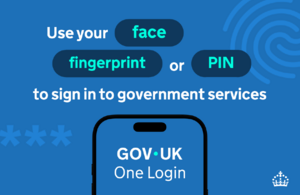
Millions of people across the UK are set to gain access to a faster and more secure way of signing into government services as passkeys are rolled out across GOV.UK One Login.
The technology is being extended to more than 23 million users, allowing people to authenticate themselves with a fingerprint, facial recognition or a device PIN rather than relying on traditional passwords and two-step verification codes.
The government says passkeys can make the sign-in process significantly quicker. In some cases, accessing an account with a passkey can take up to eight times less time than entering a username, password and verification code.
The expansion follows an initial trial in which more than 300,000 people successfully created and used passkeys. The technology has already gained traction, with almost one in every 10 daily GOV.UK One Login sign-ins now completed using a passkey.
The wider rollout is also expected to reduce government spending on authentication messages. Officials estimate that the growing use of passkeys is already saving taxpayers almost £600 a day in SMS costs.
Beyond convenience, ministers are highlighting the technology's potential to strengthen protection against online fraud. Unlike passwords, passkeys are cryptographically linked to a particular device and website, making them far more difficult for criminals to steal, guess or reuse.
The approach is designed to reduce the effectiveness of phishing attacks, in which criminals attempt to trick users into entering passwords or security codes on fake websites.
Importantly, GOV.UK One Login does not receive or store the biometric information used to unlock a passkey. A user's fingerprint or facial-recognition data remains on their own device, while the passkey is accessed through the device's existing security mechanisms.
Digital Government Minister Stephanie Peacock said the change would remove some of the most frustrating elements of accessing public services, particularly the need to recover forgotten passwords or wait for authentication codes by text.
She argued that the move would combine greater convenience with stronger protection against fraud and cybercrime.
GOV.UK One Login is increasingly being used as a single gateway to public services, including tax-related services, State Pension information, childcare support and other government functions.
The National Cyber Security Centre has backed passkeys as a more secure alternative to conventional passwords. NCSC Director for National Resilience Jonathon Ellison said the technology could make government accounts more resistant to phishing while reducing the opportunities available to criminals seeking stolen login credentials.
The NCSC is encouraging people to adopt passkeys not only for GOV.UK One Login but wherever the technology is supported by digital services.
Despite the nationwide expansion, passkeys will remain optional. Users who prefer conventional authentication can continue signing in with a password.
For those who choose the new system, however, the government is effectively shifting online access toward the same security features already used by millions of people to unlock their smartphones — turning a fingerprint, facial scan or PIN into a faster gateway to essential public services.