The UK government is stepping up efforts to tackle illegal vehicle number plates, funding a new national roads policing operation designed to help police identify offenders, share
intelligence and disrupt organised crime groups using England’s roads.
The new National Roads Policing Coordination Centre (NRPCC) will coordinate work between police forces, bringing together data, intelligence and technology to improve the detection of vehicles linked to criminal activity.
The initiative is being backed by the Department for Transport as part of the government’s wider road safety programme.
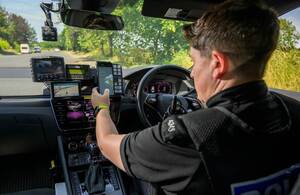
Among the technologies being tested are specialist goggles capable of identifying number plates that have been deliberately altered to prevent automatic recognition by roadside cameras.
Illegal or deliberately obscured registration plates are used for a range of offences, from avoiding speeding and parking penalties to facilitating more serious crimes. Police say criminals involved in organised crime can use them to transport illegal goods while making vehicles harder to trace.
Vehicles fitted with plates that cannot be properly identified by automatic number plate recognition systems can also be more difficult to locate when stolen or when they are connected to serious criminal investigations.
The government said improving the ability of police to identify such vehicles should allow officers to intervene more quickly and strengthen efforts to tackle crime both on the roads and in communities.
The initiative forms part of the government's new Road Safety Strategy, the first major strategy of its kind in more than a decade. Ministers say the broader programme is intended to prevent thousands of deaths and serious injuries on Britain's roads.
As part of the strategy, the government has already consulted on tougher penalties for motorists using illegal number plates, changes to number-plate standards and measures to strengthen enforcement.
Roads Minister Justin Madders said the government was combining additional policing resources with new technology to tackle motorists and criminals attempting to evade detection.
“Illegal number plates are used for crimes from evading parking charges to drug trafficking,” Madders said, adding that the new measures were intended to make roads and streets safer.
Illegal registration plates can take several forms. Cloned plates use the registration number of another legitimate vehicle, while so-called ghost plates can incorporate transparent material designed to prevent cameras from reading the registration. Some vehicles are also driven without registration plates altogether.
Drivers found displaying an incorrectly formatted or otherwise illegal number plate can face fines of up to £1,000.
Chief Superintendent Marc Clothier, deputy national coordinator for the NRPCC, said the centre would focus on the most significant threats to road safety while strengthening the police response to criminal activity connected to the road network.
He said a recent operation targeting ghost plates demonstrated the value of intelligence-led enforcement, while also allowing officers to educate motorists about complying with number-plate requirements.
Clothier said government funding would provide an opportunity to improve coordination, consistency and cooperation between police forces, government agencies and organisations involved in road safety.
Policing and Crime Minister Sarah Jones said illegal number plates should not be viewed as a minor offence because they can help criminals avoid detection and transport illicit goods.
The government, she said, wanted to ensure police had the tools and information needed to tackle serious and organised crime while improving road safety.
The programme also builds on work by the Driver and Vehicle Standards Agency (DVSA) and the Driver and Vehicle Licensing Agency (DVLA), which are cooperating with police forces to identify and take action against illegal number plates.
The agencies are also supporting investigations into businesses suspected of illegally producing or supplying registration plates, as well as assisting police during roadside enforcement operations.
The government says the closer integration of policing, vehicle-registration data and new detection technology will make it harder for offenders to exploit Britain's road network. Photo by gov.uk