Transport accessibility in London is set to take another step forward, as Transport for London (TfL) confirms plans to assess five additional Underground stations for step-free access.
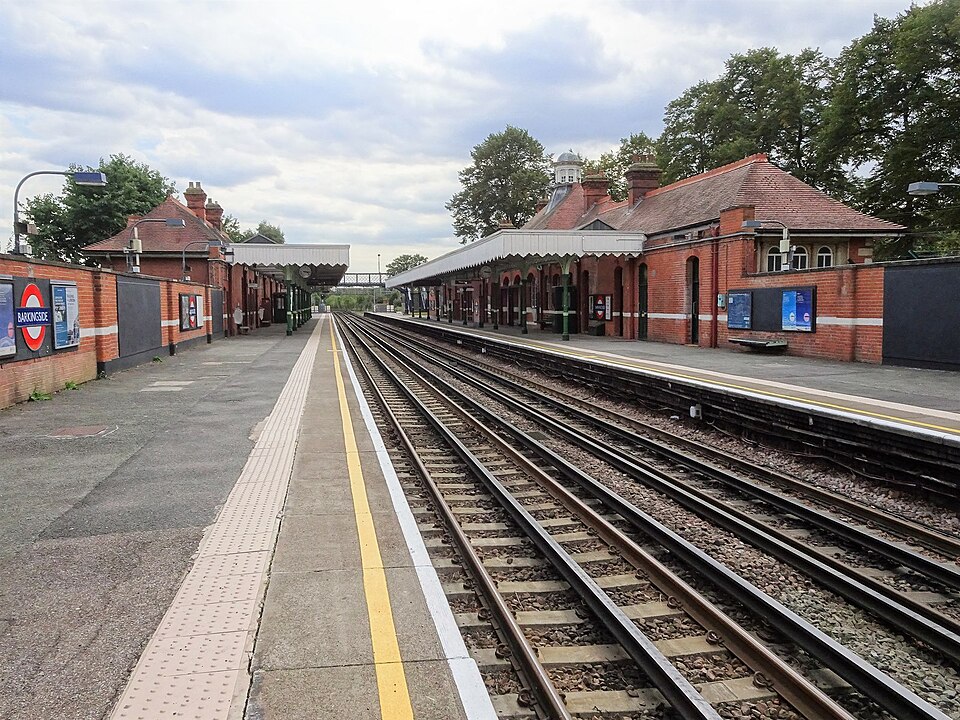
The stations—Barkingside Underground station, Brent Cross Underground station, Preston Road Underground station, Queensbury Underground station, and Totteridge & Whetstone Underground station—will undergo feasibility studies to determine how lifts or other step-free solutions could be introduced.
The move forms part of a broader strategy led by the Greater London Authority and the Mayor’s office to make the capital’s transport system more inclusive. Currently, more than one-third of Tube stations offer step-free access, a figure that has steadily increased in recent years.
Recent progress highlights the pace of change. Colindale Underground station became the 94th fully step-free station in December 2025. Work at Northolt Underground station is expected to finish in summer 2026, while Leyton Underground station is scheduled for completion in spring 2027.
According to Seb Dance, the expansion reflects a commitment to equity across the city. He emphasized that accessible transport is essential to ensuring all Londoners can benefit from what the city offers.
TfL’s Chief Customer and Strategy Officer, Alex Williams, noted that feasibility studies are a crucial first step. These assessments examine engineering constraints, costs, and potential passenger benefits before projects move forward.
Local leaders have also welcomed the development. In northeast London, Jo Blackman described the inclusion of Barkingside as “great news,” highlighting the impact step-free access could have for families, older residents, and people with disabilities. Meanwhile, Muhammed Butt stressed that accessible transport should be considered a basic right rather than a luxury.
A programme dependent on funding
The five stations were selected from a wider list of 30 potential candidates, with TfL applying criteria such as passenger demand, feasibility, and local development priorities. However, officials caution that delivery timelines remain uncertain.
Much depends on funding. TfL increasingly relies on partnerships with government, developers, and local authorities to deliver accessibility upgrades. Recent step-free schemes at stations like Knightsbridge Underground station and Paddington Underground station have benefited from such collaborations.
The bigger picture: The Tube in 2025–2026
The push for accessibility comes during a period of broader transformation across the London Underground.
Between 2025 and 2026, the network has been navigating several overlapping challenges and opportunities:
- Post-pandemic ridership recovery: Passenger numbers have largely rebounded, though commuting patterns remain more flexible, with off-peak travel growing faster than traditional rush hours.
- Modernisation pressures: Ageing infrastructure continues to require significant investment, particularly on deep-level lines where retrofitting lifts is technically complex and costly.
- Sustainability goals: TfL is aligning upgrades with environmental targets, including energy efficiency and reduced emissions.
- Financial constraints: Following years of funding uncertainty, long-term investment planning remains a key issue, directly affecting how quickly accessibility projects can be delivered.
At the same time, accessibility has become a central metric of progress rather than a secondary goal. Advocacy groups have increasingly pushed for faster timelines, arguing that large parts of the network still exclude passengers with mobility challenges.
Looking ahead
With around 40 stations already in feasibility or design stages—and now five more under review—London’s step-free programme continues to expand. But the gap between ambition and delivery remains tied to funding and engineering realities.
For passengers, however, each newly accessible station marks a tangible improvement—one that brings the capital closer to a fully inclusive transport network. Photo by Barkingside Underground station, Greater London by Nigel Thompson, Wikimedia commons.