
Media

Precious scrolls blackened by the eruption of the Vesuvius volcano in AD 79 may become readable again, thanks to 21st century technology, scientists said on Tuesday.
Hundreds of papyrus scrolls believed to have been authored by Greek philosophers were found in the Roman town of Herculaneum, which was hit in the same eruption that destroyed the town of Pompeii.
Whereas Pompeii was buried under a thick layer of ash, nearby Herculaneum met a somewhat different fate -- it was exposed to a roiling blast of volcanic gas.
The furnace-like heat burned its citizens alive and turned the writings into pitch-black, brittle rolls.
The carbonised manuscripts, part of the only library to have survived from the classical world, were found 260 years ago in the ruins of a huge villa believed to have been owned by a wealthy Roman statesman, Calpurnius Piso Caesoninus.
Now stored at the National Library of Naples, they are so fragile that the slightest touch can cause them to crumble.
Adding to the problem is that the letters on the papyrus were written in ink made from soot. On the blackened background, they are nearly invisible to the naked eye.
So many papyri have been damaged or destroyed in attempts to pierce their secrets that archaeologists abandoned the quest in frustration.
But, in a study published in the journal Nature Communications, Italian researchers offer hope that the enigmatic texts may be revealed for the first time in nearly 2,000 years.
- 'Readable within a decade' -
"It's always hard to make a precise prediction, but with resources, the scrolls should be readable within the next decade," lead scientist Vito Mocella told AFP.
Mocella, who works at the Institute for Microelectronics and Microsystems (IMM) in Naples, led a team to probe the scrolls non-invasively using X-ray phase-contrast tomography -- a scanner also used in medicine to image soft tissue.
The technique exploits the fact that different materials absorb X-rays differently.
The researchers wrote a purpose-made algorithm to process the signals returned from the beams, seeking to tease out contrasts between the papyrus and the inked letters.
They tested their innovation on pieces of a scroll that had been unrolled in fragments in 1986.
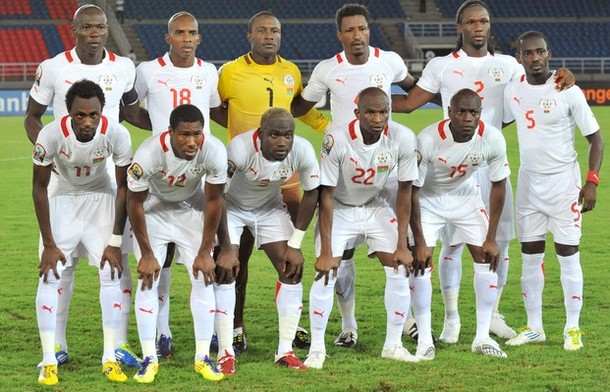
Africa Cup of Nations hosts Equatorial Guinea will be pressed to get off to a winning start when they face Congo Brazzaville in the tournament's opening game in Group A on Saturday.
The curtain-raiser to the competition in the country's largest city Bata will be followed later in the day by a meeting of the group's other two sides, Burkina Faso and Gabon, who clash again after doing battle in qualifying.
Equatorial Guinea rescued this year's tournament by agreeing to act as hosts after the late withdrawal of Morocco due to Ebola fears, and their fans will now expect Nzalang Nacional to match the exploits of three years ago, when they beat all the odds to reach the last eight of the same competition on home soil.
Nevertheless, they were initially disqualified from the competition for fielding an ineligible player, and their build-up has been somewhat chaotic, with Argentine Esteban Becker only named as the country's new coach last week in place of Andoni Goikoetxea, whose contract expired recently and was not renewed.

Jihadist groups tied to the men who attacked France's Charlie Hebdo magazine and a Paris kosher supermarket are waging an increasingly sophisticated propaganda campaign targeting Western recruits, experts say.
Organisations ranging from the Islamic State (IS) group in Iraq and Syria to Al-Qaeda and even the Somali Al-Shebab group have sought to exploit the anonymity and reach of the Internet to attract Western members.
They urge recruits to come to the battlefield, but also encourage them to carry out violence at home.
Jihadist groups have targeted Western recruits for decades, but the Internet has revolutionised their approach, according to Clint Watts, a senior fellow at the Foreign Policy Research Institute.
"Thirty years ago it took a long time to get everyone to Afghanistan" where jihadists were fighting Soviet troops, he said.
"Now they propagate through social media, that's why it can happen so quickly, they can rapidly ramp up recruitment."
The three men involved in the France attack appear to be linked to different jihadist groups.
The two brothers who targeted Charlie Hebdo were linked to Al-Qaeda in the Arabian Peninsula (AQAP), which is based in Yemen.
The third attacker appears to have pledged allegiance to IS.
Jihadists use a variety of media for their message.
Since 2010, AQAP has produced the English-language "Inspire" magazine, released periodically in PDF format with articles expounding on its ideology and instructing readers on how to carry out attacks.
In recent issues it singled out France as a target and put Charlie Hebdo's editor-in-chief Stephane Charbonnier, who was killed in last week's attack, on a "Most Wanted" list.
Al-Nusra Front, Al-Qaeda's Syrian affiliate, publishes slickly produced video, as well as photos and statements, through official accounts on Twitter and the video-sharing website YouTube.
And Somalia's Al-Shebab has frequently used Twitter to reach out to potential followers.
But perhaps no group has harnessed the power of the Internet as effectively as IS, which eschewed the password-protected forums preferred by Al-Qaeda in favour of popular social media sites.
It quickly established a presence on Facebook and Twitter and even allows its fighters to converse publicly with potential recruits on question-and-answer sites like Ask.fm.
"Islamic State has really honed its media strategy," said Charlie Winter, a researcher at the Quilliam Foundation, a counter-extremist think tank.
"It has a standardised format, which makes it easy to identify as official Islamic State propaganda. It is very productive, it has an output rate of four or five videos a week," he said.
The group also relies on "a wide, decentralised network of people who are almost obsessive in their need to share things" to distribute its material, Winter added.
IS and its backers also use high-profile methods, like this week's hacking of the Pentagon's Central Command Twitter feed, to gain notice.
Experts say foreign recruits play a key role in jihadist outreach.
Most prominent jihadist groups now advertise their operations in Western languages and often feature videos of Westerners describing life on the battlefield.
"They are a way to get through to a population that might otherwise be difficult to reach," Winter said.

European coast guards on Friday secured a cargo ship with 450 migrants on board, which was drifting off the coast of Italy in rough seas. The vessel was towed to Crotone port, FRANCE 24 has learned.
A dramatic, hours-long rescue mission in choppy waters ended Friday morning, when the Italian navy took control of the 73-metre-long (240-foot-long) Sierra Leone-registered Ezadeen, which had been abandoned by its crew off the southwestern coast of Italy.
Six coast guard officers were lowered from a helicopter onto the deck of the vessel, according to an Italian naval official.
FRANCE 24 has learned that the Ezadeen was towed to the Italian port of Crotone.
Earlier Friday, the AP reported that an Icelandic coast guard ship, part of a new European patrol force to aid migrants at sea, was responsible for towing the cargo vessel to Italy.
Crewless ship with children and pregnant women on board
Children and pregnant women were among the migrants, most of whom were believed to be Syrian, according to Italian Coast Guard Cmdr. Filippo Marini. The Sierra-Leone-flagged cargo ship apparently set sail from Turkey, he said.
A migrant on board the drifting vessel had called for help saying, “we're without crew, we're heading toward the Italian coast and we have no one to steer,'' Marini told reporters.
Prior to losing power, the almost 50-year-old ship had been moving at a brisk seven knots and had been spotted by a coast guard plane 80 miles offshore shortly after nightfall.
The Ezadeen is the second cargo ship full of migrants to be abandoned while still sailing this week. Days earlier, the Italian Coast Guard in a daring attempt, lowered officials onto another, Moldovan-flagged cargo vessel so they could take control of the ship, which was only a few miles from crashing into the Italian coast.
More than 170,000 migrants were intercepted or needed rescue by the Italian navy, coast guard and air force patrols last year. This apparently new technique by smugglers of abandoning a ship after setting it on a crash course complicates rescue efforts, Marini told Italian state radio, "but the important thing is there are lives to be saved.''
The migrant boat dramas have come as Italy grapples with the aftermath of the Norman Atlantic ferry disaster in which at least 13 people died following an onboard fire that erupted before dawn on Sunday in waters off Albania.
They also come after a record year for people fleeing conflict and poverty in the Middle East, Africa and Asia attempting to reach Europe by sea.
.jpg)
The primary general immediate flight from the UK to China outside London takes off on Monday, as Cathay Pacific dispatches its Manchester-Hong Kong administration.
It is an iconic issue. In gathered southeast England, moves to stretch limit are in halt. The UK's enormous commonplace airplane terminals, in the mean time, are caught up with boosting long-separation flights, opening up immediate courses to the billions-solid fare markets of Asia.
Stanley Chan, of Chi Yip, a gathering that runs and supplies Chinese shops and restaurants over the UK, said the Manchester flight — which takes 12 hours and will run four times each week — will help grow the business. "Some time recently, holders needed to stay overnight in Frankfurt, Paris or Amsterdam. Time is cash.
"In the event that we can discover items the Chinese need, we will fare and offer there. They have had a considerable measure of sustenance outrages and it is a boundless business sector."
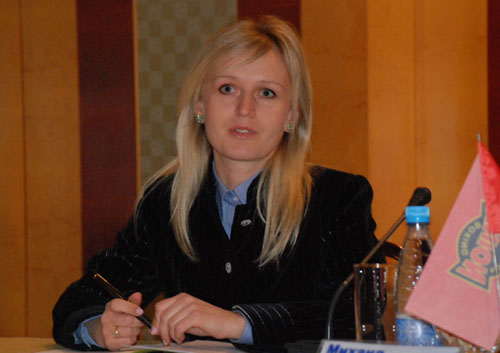
The initiative group of sports journalists launched a campaign "Knock terrorism out - save Ukraine!" in support of the volunteer battalions and the Ukrainian army, who are bravely fighting to the East of this country with externally supported the illegal armed groups and the occupation by Russian warriors.
The promotion is available to all comers, which are able to hit a punching bag. One of the sports projectile not - come any substitute, from wood to a sparring partner. Fists, feet, head - improvisation is encouraged. And, of course, no sexual discrimination among participants, the organizers also expect girls!
The project was already joined by former world and European champion in Boxing Alina Shaternikova. The first athlete of the representatives of the Ukrainian Boxing supported the campaign by writing a short video, thereby completing the mandatory part of it. Alina, who is also Vice-President of the National League of professional Boxing Ukraine, worked the combination on the bag - it, by design, a symbol of terror and war, which are now taking place in the East. Your participation in the promotion Shaternikova without the slightest hesitation showed citizenship and expressed towards those who unleashed the armed conflict in Ukraine, and on the conscience of anyone responsible for hundreds of thousands of victims in this confrontation.
Supported the initiative and world champion 2011 in the amateurs, bronze medalist of the Olympic games in London, and now a promising boxer-professional Taras Shelestyuk. The athlete, as Shaternikova, sent financial help to the needs of the Ukrainian soldiers, and passed the baton to his colleagues from the already legendary national team of Ukraine in Boxing - Alexander Usik, Alexander Cloves, Eugene Hitrovo, Vasyl Lomachenko, Denis Berenice and Paul-Ogneslaw Ishchenko.

As the morning sun rises over the golden dunes of Erg Chebbi in the Sahara, men and women dig holes for tourists who want to bury themselves in the sand.
Decades ago, tribal nomads settled here, living a traditional desert existence that has now had to adapt to changing circumstance.
The dunes of Merzouga tower over the small community in southeastern Morocco, where the Berber Ait Atta tribe now makes a brisk living from tourism.
The formerly nomadic tribesmen have for years been running hotels and restaurants in Merzouga, a key stop on the Moroccan tourist trail on the edge of a sea of sand dunes.
Now they're even turning to the sands themselves to attract visitors.
For around 10 minutes visitors are buried neck-deep in the hot sand for therapy said to cure those who suffer from rheumatism, lumbago, polyarthritis and some skin disorders.
The therapy has the same effect as a sauna session, helping purge the body of poisonous toxins, according to those tribesmen such as Abdessalam Sadoq who now work in wellness tourism.
"We offer every type of tourism here, but especially for health," he said.
Making a living was not always easy for the descendants of the Ait Atta nomads, and over the decades the sons and daughters of those who roamed the desert on camels have had to attune themselves to more modern ways.
The Ait Atta once accumulated riches from trans-Saharan commerce, but now all that remains of this past is a road sign pointing towards Timbuktu, a mere 52 days away by camel.
Their way of life ended after Morocco became a French protectorate in 1912, with the development of mining in the region, the emergence of urban centres and demarcation of the nearby border with Algeria.
Once-nomadic tribes had to find a new livelihood, and turned to cultivating date palms and tourism in the second half of the past century.
Visitors in search of a cure do not come only from abroad: many Moroccans also firmly believe in the power of the desert.

They're not just for sharing any more: Facebook and Twitter are now looking to play a bigger role in shopping.
Both major social networks have unveiled plans to start using "buy" buttons on their sites, which could start having an impact on "social shopping" in the coming holiday season.
The idea of using social networks such as Facebook to promote e-commerce has been around for some time, but so far has failed to deliver much. Facebook had some short-lived programs for "digital gifts" and another program selling virtual goods via Facebook games.
"Social commerce," stemming from reviews or referrals from social networks, is expected to hit $15 billion by 2015, according to the research firm Invesp.
Some analysts see a natural connection between social networks and shopping, since users often discuss products and brands in the messages.
"Sharing is a fairly reliable indicator of what people are going to buy," says Andy Stevens, head of strategy and research for Share This, a company which produces a sharing button for websites and analyzes social media trends.
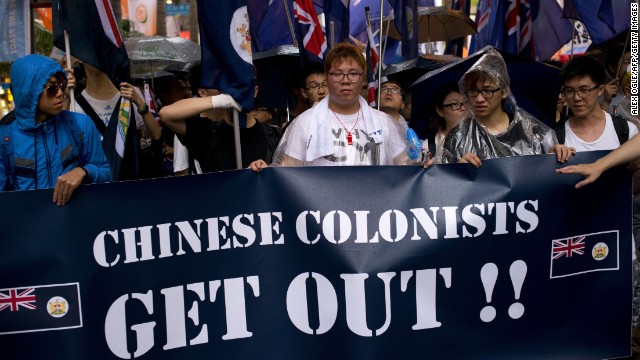
Flag raising ceremony - The focus for many protesters this morning is a flag raising ceremony in the Wanchai district where a number of senior city officials are expected to attend as part of the National Day celebrations.
Hundreds of demonstrators are already converging on the area, trying to make their way into Golden Bauhinia Square where the ceremony takes place.
The annual ceremony is often targeted by pro-democracy activists. But never has it taken place before against a backdrop of continued street protests and sit-ins by tens of thousands of demonstrators.

As Iraqi forces struggle to pin back the Islamic State group on the ground, Baghdad is taking its war against the jihadists to the airwaves with a television comedy series.
The usually elusive Abu Bakr al-Baghdadi features prominently in the show, whose promoters argue that ridiculing the jihadist supremo can help dent his aura of almost supernatural villainy.
The fear factor -- fed by online videos of mass executions, beheadings and abductions -- has been a key aspect of IS strategy, often handing it victory before the battle had even started.
The goal of the show is "to remove this phobia that has taken root in a lot of people's minds", chief supervisor Thaer Jiyad told AFP on the set between two scenes.
But if the show is Baghdad's new weapon in the war against IS, then its very first shots were a friendly fire blunder that sparked controversy even as the series premiered on Saturday.
The trailer that Iraqiya state TV had been showing several times a day for weeks plays on a belief widely held in Iraq that IS was created by the CIA, Israel and Gulf monarchies to sow chaos.
With the United States now leading an aerial bombing campaign which also involves several Gulf countries against IS in Iraq and Syria, the Iraqi Media Network production company had to order a last-minute reshoot.
The first version of the trailer, which is still widely available on the Internet, opens with a cartoon-like devil character brandishing a fork leading a column of jihadist fighters through the desert.
He is met with open arms by an ostensibly American character in full cowboy attire who leads him into a tent for an arranged marriage.
- 'State of Superstition' -
The bride is a Jewish princess -- a large star of David hangs around her neck to make that clear -- who is escorted to her nuptial nest by a woman whose sunglasses and bright green pantsuit are an unmistakeable reference to Qatar's first lady Sheikha Mozah.
She and the cowboy were dropped from the new version of the opening clip for the series, whose title loosely translates as "State of Superstition" and is a play on the Arabic word for caliphate.
The Joker of Batman fame, Dracula and a dwarf are among the random mix of characters in the background, all dancing to the series' catchy theme song, a parody of a known IS anthem.
The next scene shows the result of the union between the Jewish bride and the devil.
"The egg hatched, a little IS-ling emerged," the song goes.
The Baghdadi figure that grows out of the shell then leads a choir of officers from Saddam Hussein's ex-ruling Baath party into reciting his programme of blood-letting for Iraq with the refrain: "O beheader, where are you?"
Category
Sport
Manchester United turns Old Trafford turf into a piece of club history for fans
 Manchester United turns Old Trafford turf into a piece of club history for fans
Former police chief among officers investigated over Maccabi Tel Aviv fans ban
 Former police chief among officers investigated over Maccabi Tel Aviv fans ban
Nick Kyrgios suspended after cocaine test as Australian tennis star admits ‘huge mistake’
 Nick Kyrgios suspended after cocaine test as Australian tennis star admits ‘huge mistake’
Fraud arrest follows security disruption at Birmingham European Athletics Championships
 Fraud arrest follows security disruption at Birmingham European Athletics Championships
Asher-Smith matches European medal record as Hunt completes golden treble
 Asher-Smith matches European medal record as Hunt completes golden treble
OG Anunoby brings NBA champion’s backing to Mayor’s £2m plan to transform London basketball courts
 OG Anunoby brings NBA champion’s backing to Mayor’s £2m plan to transform London basketball courts
London launches bid to bring 2029 World Athletics Championships back to the capital
 London launches bid to bring 2029 World Athletics Championships back to the capital
Serbia and Sweden withdraw support for Infantino's FIFA re-election
 Serbia and Sweden withdraw support for Infantino's FIFA re-election
Wales withdraws support for Infantino’s FIFA re-election bid
 Wales withdraws support for Infantino’s FIFA re-election bid
Netherlands win FIFA Fair Play Award after disciplined World Cup campaign
 Netherlands win FIFA Fair Play Award after disciplined World Cup campaign
Education
-
 Oxford holds global university crown for record 11th consecutive year
The University of Oxford has retained its position as the world’s highest-ranked university for an unprecedented 11th consecutive year, according to the Times Higher Education (THE)Read More...
Oxford holds global university crown for record 11th consecutive year
The University of Oxford has retained its position as the world’s highest-ranked university for an unprecedented 11th consecutive year, according to the Times Higher Education (THE)Read More... -
 Jewish students face rising antisemitism on UK campuses, report finds
Antisemitic incidents at universities across Britain have risen sharply since the Hamas-led attacks on Israel in October 2023, according to a new report from the Community Security TrustRead More...
Jewish students face rising antisemitism on UK campuses, report finds
Antisemitic incidents at universities across Britain have risen sharply since the Hamas-led attacks on Israel in October 2023, according to a new report from the Community Security TrustRead More... -
 UK schools to receive new support to confront misogyny and harmful online influences
Schools across England are set to receive a new package of guidance and resources designed to help teachers tackle misogyny, promote respectful relationships and address harmfulRead More...
UK schools to receive new support to confront misogyny and harmful online influences
Schools across England are set to receive a new package of guidance and resources designed to help teachers tackle misogyny, promote respectful relationships and address harmfulRead More... -
 England to recruit 1,000 youth workers in biggest youth services expansion for a generation
The government is to fund the recruitment and training of 1,000 new youth workers across England as part of a major expansion of services aimed at helping young people who are at riskRead More...
England to recruit 1,000 youth workers in biggest youth services expansion for a generation
The government is to fund the recruitment and training of 1,000 new youth workers across England as part of a major expansion of services aimed at helping young people who are at riskRead More... -
 London schools see sharp fall in exclusions as Inclusion Charter strengthens safety and belonging
New evidence suggests that efforts to improve inclusion and prevent violence are contributing to safer and more supportive school environments across London, with suspension andRead More...
London schools see sharp fall in exclusions as Inclusion Charter strengthens safety and belonging
New evidence suggests that efforts to improve inclusion and prevent violence are contributing to safer and more supportive school environments across London, with suspension andRead More... -
 £22.5m programme to expand enrichment opportunities for children in more than 400 schools
Hundreds of thousands of young people in disadvantaged communities across England are set to gain greater access to sport, music, arts, debating, volunteering and outdoor activitiesRead More...
£22.5m programme to expand enrichment opportunities for children in more than 400 schools
Hundreds of thousands of young people in disadvantaged communities across England are set to gain greater access to sport, music, arts, debating, volunteering and outdoor activitiesRead More... -
 Jewish studies in Europe at a crossroads: an interview with Oleg Kozerod
Interview with Oleh Kozerod, Researcher at the Kuras Institute of Political and Ethnic Studies of the National Academy of Sciences of UkraineRead More...
Jewish studies in Europe at a crossroads: an interview with Oleg Kozerod
Interview with Oleh Kozerod, Researcher at the Kuras Institute of Political and Ethnic Studies of the National Academy of Sciences of UkraineRead More... -
 England’s education overhaul puts local leaders at the centre of jobs and skills reform
Government brings mayors, employers, schools and colleges together to reshape technical education and connect young people with regional job opportunitiesRead More...
England’s education overhaul puts local leaders at the centre of jobs and skills reform
Government brings mayors, employers, schools and colleges together to reshape technical education and connect young people with regional job opportunitiesRead More... -
 London’s school run transformed as car journeys fall and active travel soars
A decade of policies introduced under Mayor Sadiq Khan has significantly changed how children travel to school, with new Transport for London figures showing a sharp fall in schoolRead More...
London’s school run transformed as car journeys fall and active travel soars
A decade of policies introduced under Mayor Sadiq Khan has significantly changed how children travel to school, with new Transport for London figures showing a sharp fall in schoolRead More... -
 UK families to save thousands as free school meals and breakfast clubs expand
Millions of children will gain access to free school meals this term as the government rolls out a wider package aimed at cutting the cost of sending children to school.Read More...
UK families to save thousands as free school meals and breakfast clubs expand
Millions of children will gain access to free school meals this term as the government rolls out a wider package aimed at cutting the cost of sending children to school.Read More...

World News
-
 Trump unlikely to receive Nobel Peace Prize as his influence shapes debate over 2026 laureate
US President Donald Trump is unlikely to receive this year’s Nobel Peace Prize, according to experts who say his confrontation with Iran and increasingly strained relationship withRead More...
Trump unlikely to receive Nobel Peace Prize as his influence shapes debate over 2026 laureate
US President Donald Trump is unlikely to receive this year’s Nobel Peace Prize, according to experts who say his confrontation with Iran and increasingly strained relationship withRead More... -
 Alcohol consumption patterns show wide differences across Europe
Alcohol consumption in the European Union remained relatively infrequent for a large share of the population in 2025, although drinking habits varied considerably by age, gender andRead More...
Alcohol consumption patterns show wide differences across Europe
Alcohol consumption in the European Union remained relatively infrequent for a large share of the population in 2025, although drinking habits varied considerably by age, gender andRead More... -
 Etna ash cloud forces Catania Airport to suspend arrivals
Flights to Catania Airport in Sicily were halted on Saturday after fresh volcanic ash from Mount Etna, combined with unfavourable weather conditions, disrupted operations at one of Italy’sRead More...
Etna ash cloud forces Catania Airport to suspend arrivals
Flights to Catania Airport in Sicily were halted on Saturday after fresh volcanic ash from Mount Etna, combined with unfavourable weather conditions, disrupted operations at one of Italy’sRead More... -
 Russia and Germany resume high-level contact at UN after four-year freeze
Russia and Germany have held their first face-to-face foreign ministerial talks since the start of Moscow’s full-scale invasion of Ukraine, reopening a narrow channel of directRead More...
Russia and Germany resume high-level contact at UN after four-year freeze
Russia and Germany have held their first face-to-face foreign ministerial talks since the start of Moscow’s full-scale invasion of Ukraine, reopening a narrow channel of directRead More... -
 Security tightened around US-used RAF Fairford amid Iran tensions
Security has been significantly strengthened around RAF Fairford in Gloucestershire, where the United States maintains a major military presence, with armed police, roadblocks andRead More...
Security tightened around US-used RAF Fairford amid Iran tensions
Security has been significantly strengthened around RAF Fairford in Gloucestershire, where the United States maintains a major military presence, with armed police, roadblocks andRead More...

Culture
-
 England’s national museums to keep free admission for all visitors
Government rules out charges for international tourists as museums receive further investmentRead More...
England’s national museums to keep free admission for all visitors
Government rules out charges for international tourists as museums receive further investmentRead More... -
 UK museums given three months to keep rare Renaissance bronze in Britain
British museums and galleries have been given a limited window to secure a rare Renaissance sculpture valued at more than £4.6 million, after the Government temporarily halted itsRead More...
UK museums given three months to keep rare Renaissance bronze in Britain
British museums and galleries have been given a limited window to secure a rare Renaissance sculpture valued at more than £4.6 million, after the Government temporarily halted itsRead More... -
 Oasis set to return in 2027 with massive 38-date global tour
Oasis are extending their long-awaited comeback with an ambitious 38-date tour scheduled for 2027, taking the iconic Britpop group across the UK, Ireland, continental Europe and theRead More...
Oasis set to return in 2027 with massive 38-date global tour
Oasis are extending their long-awaited comeback with an ambitious 38-date tour scheduled for 2027, taking the iconic Britpop group across the UK, Ireland, continental Europe and theRead More... -
 UK moves to keep Stanley Spencer’s landmark resurrection painting
The British government has stepped in to prevent a major early work by Stanley Spencer from leaving the country, giving museums and galleries a limited window to secure the paintingRead More...
UK moves to keep Stanley Spencer’s landmark resurrection painting
The British government has stepped in to prevent a major early work by Stanley Spencer from leaving the country, giving museums and galleries a limited window to secure the paintingRead More... -
 London’s record summer of live music delivers £3.4bn boost
London has enjoyed a record-breaking summer of live music, with millions of fans attending concerts across the capital as some of the world’s biggest artists took to its stadiums, arenasRead More...
London’s record summer of live music delivers £3.4bn boost
London has enjoyed a record-breaking summer of live music, with millions of fans attending concerts across the capital as some of the world’s biggest artists took to its stadiums, arenasRead More... -
 Government blocks export of rare Anglo-Saxon artefact in bid to keep national treasure in UK
The UK government has imposed a temporary export ban on an exceptionally rare Anglo-Saxon metal mount, giving museums and galleries time to raise funds to keep the historicRead More...
Government blocks export of rare Anglo-Saxon artefact in bid to keep national treasure in UK
The UK government has imposed a temporary export ban on an exceptionally rare Anglo-Saxon metal mount, giving museums and galleries time to raise funds to keep the historicRead More... -
 Jan van Eyck’s portraits to unite in landmark National Gallery exhibition
An unprecedented gathering of works by one of the Northern Renaissance’s greatest masters will bring Jan van Eyck’s portraiture into focus at the National Gallery this winter, with all 10 ofRead More...
Jan van Eyck’s portraits to unite in landmark National Gallery exhibition
An unprecedented gathering of works by one of the Northern Renaissance’s greatest masters will bring Jan van Eyck’s portraiture into focus at the National Gallery this winter, with all 10 ofRead More... -
 Europol sounds alarm over more violent museum heists across Europe
Museum robberies are taking a more dangerous turn across Europe, with organised criminal groups increasingly using heavy tools, explosives and other forms of force to steal valuableRead More...
Europol sounds alarm over more violent museum heists across Europe
Museum robberies are taking a more dangerous turn across Europe, with organised criminal groups increasingly using heavy tools, explosives and other forms of force to steal valuableRead More... -
 London marks UNESCO day with call for action, memory and justice on the legacy of the transatlantic slave trade
City Hall brings together community leaders, artists, young Londoners and historians to honour those affected by the transatlantic slave trade and celebrate the strength of African andRead More...
London marks UNESCO day with call for action, memory and justice on the legacy of the transatlantic slave trade
City Hall brings together community leaders, artists, young Londoners and historians to honour those affected by the transatlantic slave trade and celebrate the strength of African andRead More... -
 Honiara welcomes a global showcase of wildlife photography
Some of the world’s most striking wildlife photographs have arrived in the Solomon Islands, as the British High Commission and the Solomon Islands National Art Gallery open anRead More...
Honiara welcomes a global showcase of wildlife photography
Some of the world’s most striking wildlife photographs have arrived in the Solomon Islands, as the British High Commission and the Solomon Islands National Art Gallery open anRead More... -
 Britain’s festival season stages a cautious comeback as fans pay for more
Britain’s battered music festival industry is showing tentative signs of recovery, with several major events selling out faster than expected as organisers reshape their offer aroundRead More...
Britain’s festival season stages a cautious comeback as fans pay for more
Britain’s battered music festival industry is showing tentative signs of recovery, with several major events selling out faster than expected as organisers reshape their offer aroundRead More... -
 British Week in Paraguay marks a decade with nine days of culture, food and music
Asunción is preparing for the 10th edition of British Week, a nine-day programme showcasing British culture and connections across Paraguay.Read More...
British Week in Paraguay marks a decade with nine days of culture, food and music
Asunción is preparing for the 10th edition of British Week, a nine-day programme showcasing British culture and connections across Paraguay.Read More... -
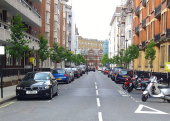 Stefan Zweig’s London refuge marked with blue plaque 90 years after Austrian writer fled Hitler
A London address that once offered refuge to one of Austria’s most celebrated writers has been formally marked in honour of Stefan Zweig, the Jewish novelist and essayist who fled theRead More...
Stefan Zweig’s London refuge marked with blue plaque 90 years after Austrian writer fled Hitler
A London address that once offered refuge to one of Austria’s most celebrated writers has been formally marked in honour of Stefan Zweig, the Jewish novelist and essayist who fled theRead More...

British Queen celebrates
Most Read
- Teen held after US woman killed in London stabbings
- Heave-ho Harry! Prince prepares to join the walking wounded in ice trek to North Pole
- Football: Farhad Moshiri adamant Everton deal above board
- "Master of English Style". Interview with Designer Lydia Dart
- Letter to the Financial Times from Lord Mayor Alderman Michael Bear