The Rector of the University of Glasgow has rejected allegations of antisemitism and support for Hamas during a hearing before medical regulators, insisting his words
have been misunderstood and politically weaponised.
Dr Ghassan Abu-Sitta, a plastic surgeon and prominent Palestinian activist, appeared on Tuesday before a Fitness to Practice panel of the Medical Practitioners Tribunal Service (MPTS) in Manchester. He is facing allegations relating to social media posts and an article he wrote for a Lebanese newspaper.
Dr Abu-Sitta, who was born in Kuwait, trained at the University of Glasgow and lives in London with his wife and three sons, told the tribunal he had been racially profiled as “inherently violent” because he is Arab and Palestinian. He accused the legal advocacy group UK Lawyers for Israel of attempting to “destroy” his life and suggested the case against him was politically motivated.
He denied all allegations, arguing that anyone familiar with the “nuance” of Arabic language and political culture would understand that he was not endorsing violence, terrorism or antisemitism.
The tribunal heard that Dr Abu-Sitta had travelled to Manchester from Lebanon, where he had been treating people injured in conflict. His lawyer, Zac Sammour, said his client was continuing humanitarian medical work while the case proceeds.
Central to the allegations are two tweets reposted by Dr Abu-Sitta in 2023 and an article he wrote for the Lebanese newspaper ‘Al Akhbar’ in March 2018.
In the article, Dr Abu-Sitta referred to the “martyrdom” of Ahmad Nasr Jarrar, describing him as a “hero” of the Nablus operation and stating that “the people have no weapon left but revolutionary violence.” Jarrar was believed to be a member of Hamas and was suspected of involvement in a drive-by shooting in which a rabbi was killed in the West Bank city of Nablus.
Representing the General Medical Council (GMC), Ros Emsley Smith said that to the “ordinary reader” the language used would be interpreted as praising an act of terrorism.
“The murder of a rabbi — the very embodiment of the Jewish religion — would be seen as supportive of that act,” she told the panel. She added that the use of terms such as “martyr” and “hero” amounted to a celebration of violence and, in context, “meets the definition of antisemitism.”
Ms Emsley Smith argued that Dr Abu-Sitta had “overstepped the boundary of legitimate political speech and entered the realms of professional misconduct.”
The GMC also raised concerns about two reposted tweets. One congratulated Hamas and the Popular Front for the Liberation of Palestine (PFLP) on the anniversary of their founding. Another referred to “martyrs” associated with the PFLP, including individuals linked to early suicide attacks.
Ms Emsley Smith said the matter had been referred to the GMC by UK Lawyers for Israel.
Dr Abu-Sitta told the tribunal that he reposted the tweets because he found them “intellectually and culturally interesting,” not because he endorsed violence. He said one repost was intended to highlight what he described as a contradiction between Hamas, an Islamist movement, and the PFLP, a Marxist-Leninist organisation.
According to Dr Abu-Sitta, such contrasts are widely discussed within Arab political discourse and would be “obvious” to those familiar with the cultural and linguistic context.
“I have not asked anyone to commit violence,” he said. “That implication is imposed on me because of my colour, my Arab and Palestinian identity.”
He accused UK Lawyers for Israel of engaging in what he described as racialised assumptions about Palestinians. “They assume that if an Arab Palestinian speaks, they must mean violence,” he told the panel.
Dr Abu-Sitta also said his public profile rose sharply after October 17, 2023, when he was working at Al-Ahli Hospital in Gaza and survived a missile strike that he said killed 483 people. The cause and death toll of the explosion remain disputed.
He told the tribunal that following the incident he was interviewed by international media outlets and became a prominent public voice on the Gaza conflict. He said he has since acted as a witness to both the International Criminal Court and the International Court of Justice.
“That is why we are here,” he told the hearing.
Dr Abu-Sitta currently serves as Rector of the University of Glasgow, a position elected solely by students to represent them within the university’s governance structures. He is not a member of university staff and does not speak on behalf of the institution.
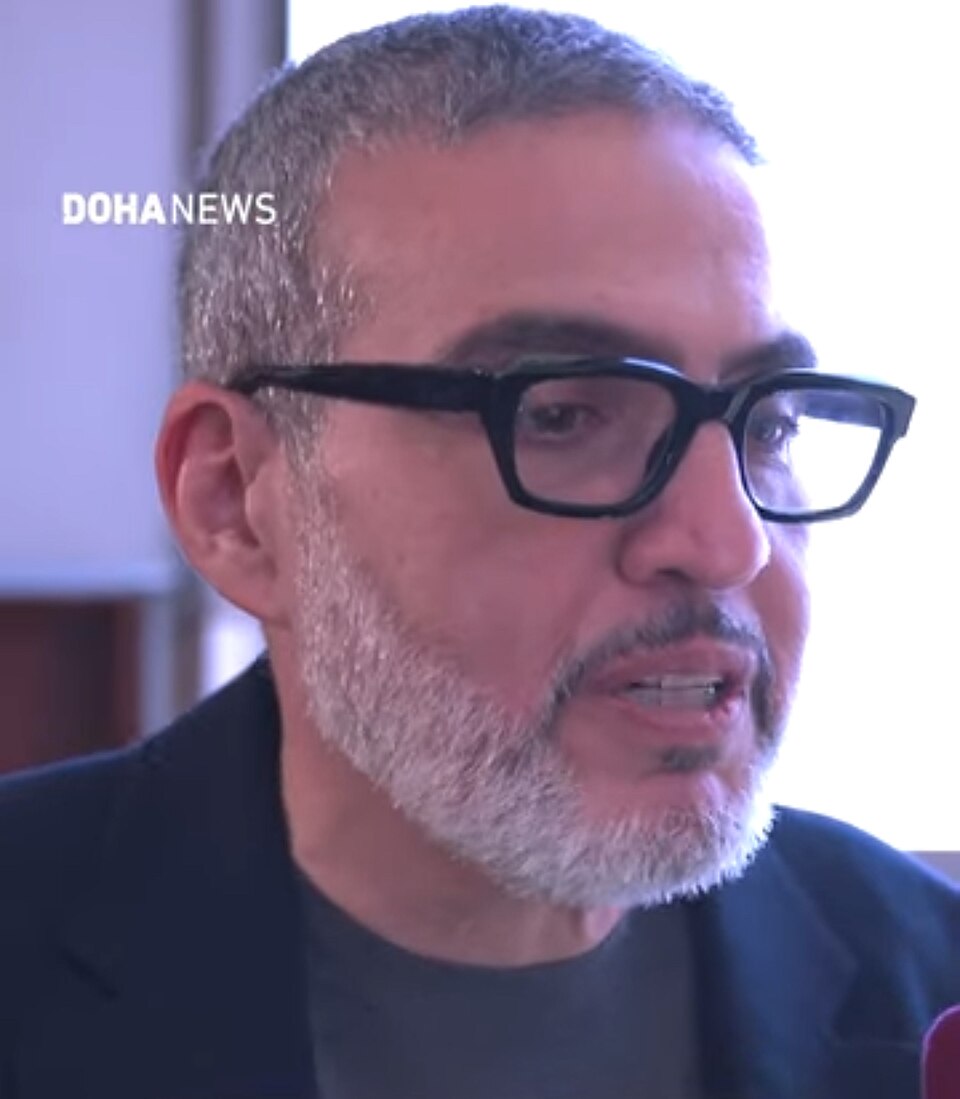
The hearing continues on Wednesday. Photo by Doha News Official, Wikimedia commons.