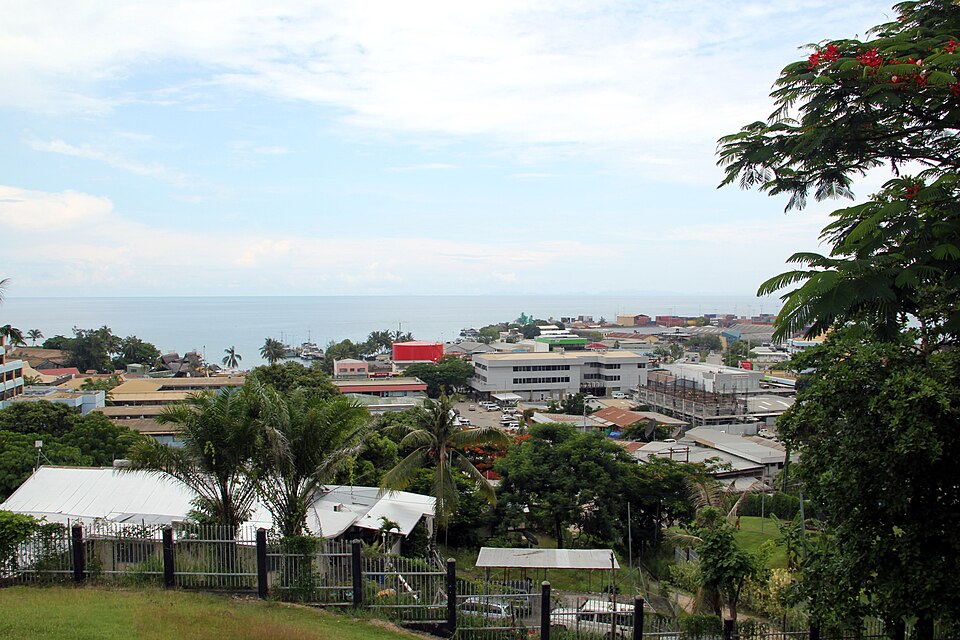
A new UK-backed initiative is seeking to reshape the way forest resources and carbon markets are managed in the Solomon Islands, with a strong emphasis on customary land rights, local
leadership and ensuring that communities benefit directly from protecting their forests.
The RISE programme — standing for Rights, Integrity, Safeguards and Equity in carbon markets — was formally launched in Honiara on 25 August. The initiative aims to strengthen governance around forest-carbon projects while helping develop a carbon market that can generate sustainable economic opportunities for communities without encouraging further forest loss.
The programme is designed around the principle that people who own and care for forest land should have a meaningful role in decisions over how those resources are used and how financial benefits are distributed.
RISE supports community-owned forest-carbon projects and promotes standards intended to ensure that carbon-market development respects customary ownership and provides fair returns to local landowners.
The initiative is being led in Solomon Islands by Live and Learn Solomon Islands, working alongside Live and Learn International, Nakau and the Plan Vivo Foundation.
Speaking at the launch, British High Commissioner Paul Turner said protecting forests was closely linked to the country's cultural identity as well as its environmental future.
“Forestry is part of the identity of the people of Solomon Islands,” Turner said, stressing the need for stronger efforts to protect the country's remaining forests. He added that the project could give communities a practical financial incentive to conserve their natural environment.
The High Commissioner also highlighted broader efforts by the UK and Solomon Islands governments to improve governance of the country's natural resources, including both forestry and mining.
Turner pointed to the experience of the logging industry as a warning and said there was concern that mistakes made in the past could be repeated in the mining sector. Strengthening oversight and ensuring local communities have a greater stake in natural-resource management, he argued, would be essential to avoiding that outcome.
Carbon markets could provide one mechanism for achieving this by allowing communities to generate income from conserving forests rather than clearing them.
A key objective of RISE is therefore to help ensure that national carbon-market policies recognise customary land ownership and establish arrangements under which financial and other benefits are shared fairly with the people who own and protect the land.
Nakau Policy and Advocacy Coordinator Sebastian Thomas said well-designed carbon markets could help transform responsible forest management into long-term economic opportunities.
He said effective carbon-market systems had the potential to connect conservation with sustainable livelihoods and the development of regenerative businesses.
The launch brought together senior government officials, international partners, civil-society organisations and community representatives. Those attending included Permanent Secretary of the Ministry of Environment, Climate Change, Disaster Management and Meteorology David Hiriasia, representatives from the Prime Minister’s Office and Ministry of Forestry and Research, as well as officials from the British and New Zealand high commissions.
The gathering also underlined the importance of cooperation between government, communities, NGOs and other stakeholders in developing carbon policies that are locally led and grounded in landowners' rights.
RISE is being introduced this month across Solomon Islands, Papua New Guinea and Indonesia. The three-country programme will facilitate the exchange of evidence and experience while supporting advocacy for carbon initiatives that give local communities a central role in protecting forests and managing the benefits generated by conservation.
For the Solomon Islands, the programme comes as the country considers how to develop its emerging carbon market while protecting one of its most important natural and cultural assets. The initiative's central challenge will be to ensure that economic opportunities created by carbon conservation strengthen — rather than undermine — the rights and livelihoods of the communities that have traditionally managed the country's forests. Photo by Kahunapule Michael Johnson from Pukalani, Hawaii, United States of America, Wikimedia commons.