Migrants who crossed into Spain's North African enclave of Ceuta this week have begun returning to Morocco, saying hunger, exhaustion and hostility left them disillusioned about their
chances of building a new life in Europe.
Many of those returning told Reuters they had been encouraged to attempt the crossing after seeing videos on social media showing large groups of people reaching Ceuta.
Some said they had expected to be able to travel onwards to mainland Spain, but instead found themselves unable to leave the enclave.
"We came to make progress, not to be fooled," said Brahim, a bakery worker from Fez who left his job and crossed the border after watching videos of other migrants doing the same.
"I thought I'd build a better future there. But I was surprised in Ceuta."
Brahim said he survived for three days on water because he could not afford food on the Spanish side.
"How come a tuna sandwich was being sold for 100 dirhams ($10.75)?" he said.
'Ceuta was like a prison'
In Fnideq, the Moroccan city next to Ceuta, streets leading towards the border were largely deserted on Saturday, in contrast with the thousands who had gathered there earlier in the week.
Young men were seen leaving the area on foot or taking taxis away from the border.
Several migrants described struggling to find food and water after shops and supermarkets closed during the influx. Some said they spent hours outside in wet clothes after crossing the sea.
"Ceuta was like a prison - nothing to do there. Everything was closed," said a Moroccan worker at the Tanger Med port who had crossed into Ceuta.
Some migrants also alleged that residents in El Principe, a predominantly Moroccan neighbourhood of Ceuta, had attacked or chased them away. Reuters said it could not independently verify those claims.
Spain's Interior Ministry said two people had suffered minor injuries in separate knife attacks and that police had arrested one suspect. It said there had been no deaths from knife attacks in Ceuta since Thursday.
Ceuta slowly returns to normal
Across the border, life in Ceuta was gradually returning to normal on Saturday.
Some cafes reopened, although many shops remained closed. Police patrols were highly visible across the city.
"We've taken the initiative to open because, ultimately, life has to return to its normal rhythm, but our safety and that of our staff always comes first," said Marina Castaño, 24, whose family owns two cafes.
An aid worker at a migrant reception centre said the facility was full and could not accommodate more people. The worker estimated that thousands of migrants were still in the enclave.
Some residents said they were frightened by the sudden arrival of so many migrants, while also expressing sympathy for them.
"You feel overwhelmed and, at the same time, helpless," said Tito, a hardware shop owner whose business remained closed.
"Those young people, they're being completely exploited. They're being used as bargaining chips."
Among those still hoping to remain in Spain was Mohamed Ahmed, a 43-year-old Sudanese migrant who said a truck had dropped him and other migrants near the border.
He said he then spent four hours swimming to reach Ceuta.
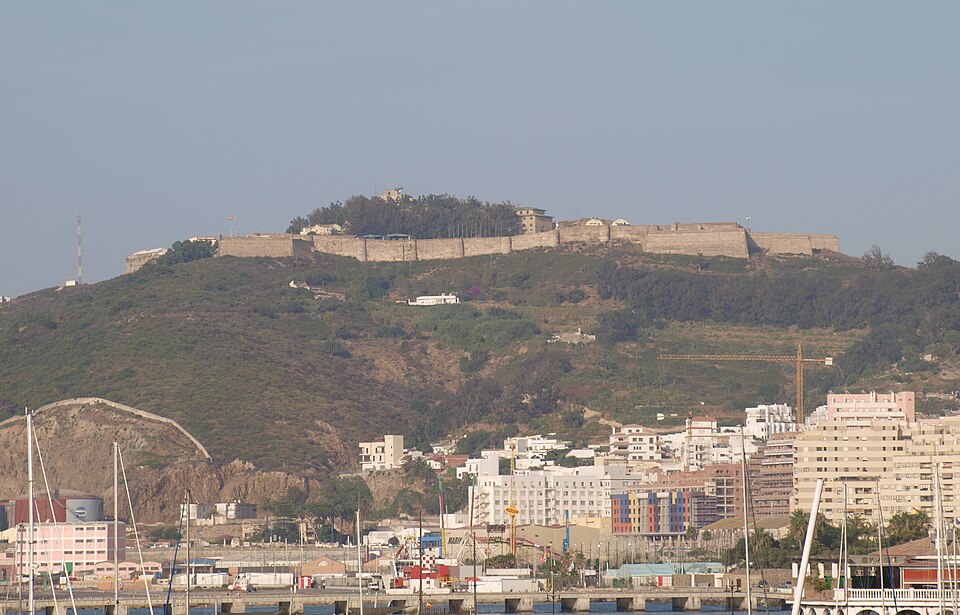
Despite being stopped by police from taking the road towards a migrant reception centre, he said he remained determined to stay in Spain. Photo by User:DMY, Wikimedia commons.