Two new specialist French police units have been deployed along Northern France's coastline under a strengthened UK-France border security agreement, as both governments step up
efforts to curb illegal Channel crossings and disrupt people-smuggling networks.
The deployment, announced as part of a landmark bilateral deal, brings 125 additional officers and reservists to key crossing hotspots ahead of the summer season, when attempted small-boat journeys typically increase.
The operation includes the arrival of the Compagnie de Marche, a specialist unit tasked with preventing launch attempts, and a newly established riot-control team designed to tackle increasingly aggressive tactics used by smuggling gangs and migrant groups.
Officials say the units will conduct targeted patrols, disperse groups preparing to cross, seize equipment and work alongside enhanced surveillance assets including drones, helicopters, aircraft and camera systems.
Prime Minister Keir Starmer said:
“Working in lockstep with our closest partners is the only way to make real progress in tackling the shared challenge of illegal migration.
These elite units are just one element of the landmark deal between our countries that is taking our collaboration to the next level.
Operations like this meant that almost half of all attempted crossings were halted by the French last month – so we’re boosting them further to continue to drive down crossings”.
According to the UK government, French authorities prevented nearly half of all attempted Channel crossings last month, prompting further investment in frontline enforcement measures.
The Compagnie de Marche unit consists of 75 officers who will be deployed flexibly throughout the summer based on intelligence assessments of likely crossing activity. Government figures suggest the unit was linked to around 20% of all prevented small-boat incidents in 2025.
Alongside it, a permanent 50-officer Compagnie Républicaine de Sécurité (CRS) unit has been established to maintain public order on beaches and respond to crowd-control incidents. Officers have been specially trained in riot management and are expected to play a key role in countering evolving smuggling tactics.
Home Secretary Shabana Mahmood said:
“We are putting the pressure exactly where it needs to be – on French beaches, targeting the criminal gangs and stopping launches before they can happen.
The Compagnie de Marche has already played a significant role in preventing illegal crossings. With these officers surged across the summer months, alongside the deployment of a new specialist riot unit, we are going even further to restore order and control at our borders”.
The deployment follows a series of coordinated international operations targeting organised immigration crime across Europe. In a recent investigation involving the UK's National Crime Agency, German Federal Police and the French National Police, authorities in Germany seized dozens of boats and engines believed capable of transporting more than 2,000 migrants across the Channel.
The enhanced policing measures form part of a wider UK-France agreement worth up to £660 million. Under the deal, £500 million will be invested in enforcement operations in Northern France, with an additional £160 million available if new tactics prove effective.
The agreement also introduces a results-based funding model, under which additional funding can be withdrawn if performance targets are not met after the first year.
The government says the new arrangements will increase frontline law enforcement capacity by more than 40% and complement wider international efforts, including returns agreements with France and Iraq, a new treaty with Germany, and expanded law enforcement cooperation across the Western Balkans.
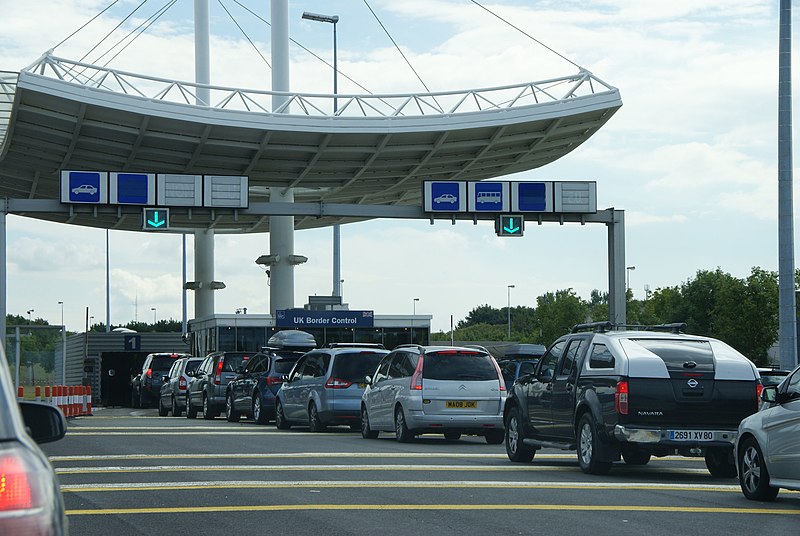
The announcement comes as the UK reports nearly 70,000 illegal migrant removals since the last election and a 50% increase in disruption activity against people-smuggling gangs over the past year. Last week, two men were sentenced under the Border Security Act after becoming the first small-boat pilots convicted under the legislation. Photo by Chris Sampson, Wikimedia commons.