The UK government has formally confirmed that Russian opposition leader Alexei Navalny was poisoned while in prison, following extensive laboratory analysis that detected a rare and lethal
toxin in samples taken from his body.
The announcement was made as ministers gathered at the Munich Security Conference, marking two years since news of Navalny’s death in a remote Siberian penal colony stunned the international community. British authorities say the findings point conclusively to state involvement and represent a serious breach of international law.
According to the UK, tests carried out in cooperation with partners in Sweden, France, Germany and the Netherlands identified epibatidine — a powerful neurotoxin naturally found in the skin of Ecuadorian dart frogs — in Navalny’s body. Experts say the substance is not found in Russia and cannot be produced by dart frogs kept in captivity, leaving no plausible innocent explanation for its presence.
British officials have concluded that only the Russian state had the means, motive and opportunity to deploy such a toxin against Navalny during his imprisonment. The UK has now reported the findings to the Organisation for the Prohibition of Chemical Weapons (OPCW), accusing Moscow of a flagrant violation of the Chemical Weapons Convention.
“This was a brutal and calculated act,” the UK government said, describing Navalny’s death as part of a wider pattern of repression and intimidation by the Kremlin. Officials warned that Russia’s continued development and use of banned chemical agents poses a direct threat to international security.
The case echoes previous incidents, including the 2018 poisoning of Sergei and Yulia Skripal with Novichok in Salisbury, as well as allegations of chemical weapons use by Russian forces during the war in Ukraine. The UK says these actions undermine Russia’s claim that it fully dismantled its chemical weapons programme in 2017.
Foreign Secretary Yvette Cooper, speaking in Munich, said the UK had pursued the truth of Navalny’s death “with fierce determination” since his widow, Yulia Navalnaya, first announced his passing at the same conference two years ago.
“Only the Russian government had the capability to carry out this attack,” Cooper said. “By using this poison, the Kremlin showed both the despicable tools at its disposal and the fear it has of political opposition.”
Cooper added that the UK and its allies would continue to hold Russia accountable, stressing that covert weapons programmes would not go unnoticed or unchallenged.
Despite the risks, the UK reaffirmed its support for Russian civil society, journalists and human rights defenders, saying Navalny’s legacy remains a powerful symbol of resistance against authoritarianism.
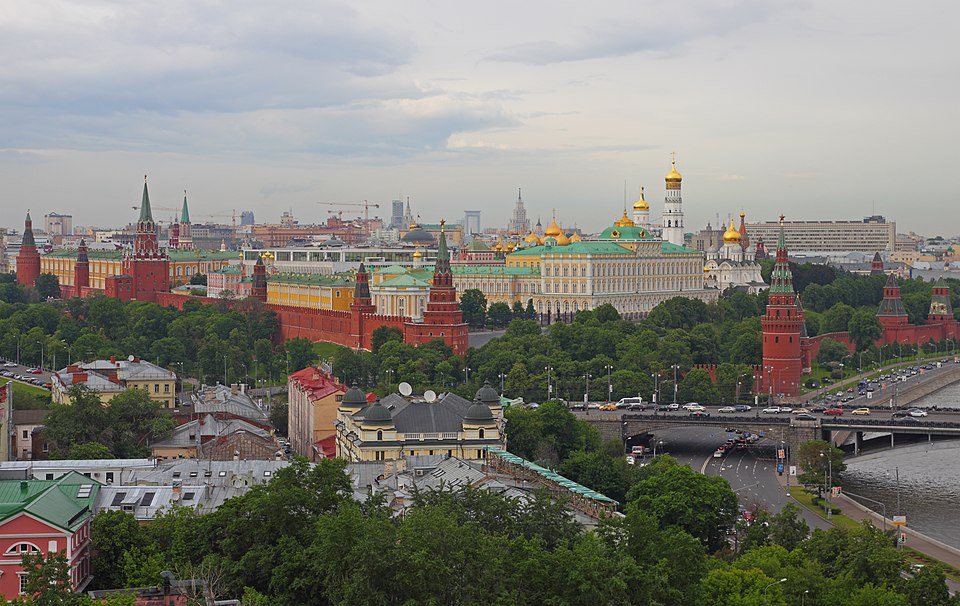
As international scrutiny intensifies, British officials made clear that they intend to expose and confront any further violations of chemical weapons treaties — and ensure that Navalny’s death is neither forgotten nor ignored. Photo by A.Savin, Wikipedia.