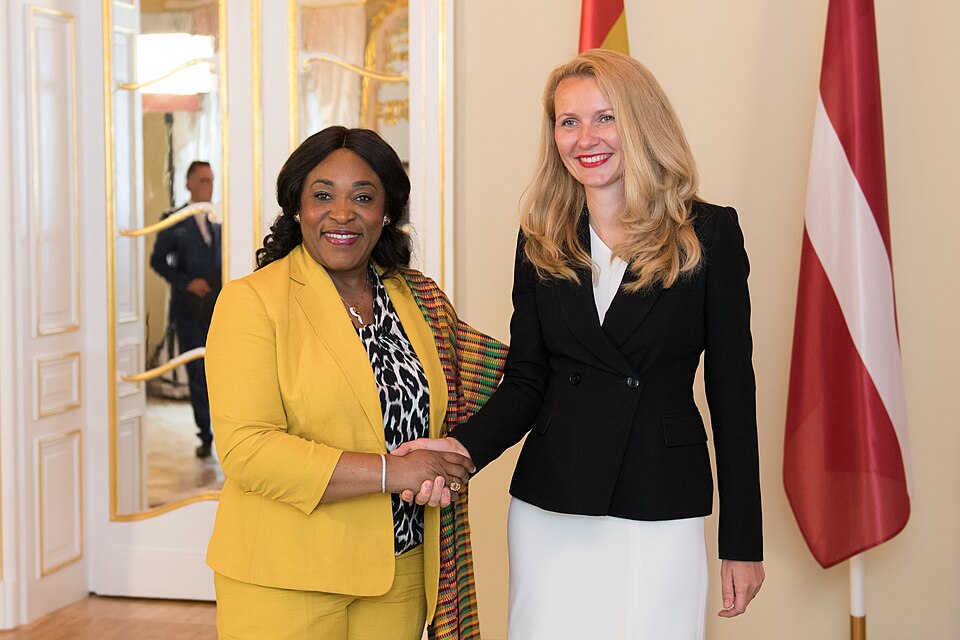
The head of the Commonwealth says member nations are edging closer to formal discussions on reparations for the transatlantic slave trade, signalling what could
be a significant shift in a long-running and politically sensitive debate.
Speaking to Reuters on Wednesday, Commonwealth Secretary-General Shirley Botchwey said she expects progress toward negotiations among the organisation’s 56 member states, many of which were once part of the British Empire.
The Commonwealth, now led by Britain’s King Charles III, spans around 2.7 billion people and includes countries such as Australia, India, 21 African nations, and Caribbean states including Jamaica and Barbados.
“There’s some movement toward getting parties around the table to decide on the way forward,” Botchwey said. “The different forms of reparations — and how to deal with this going forward — will be discussed.”
Botchwey, a former foreign minister of Ghana, has publicly supported calls for reparations from Britain and said her role is to help member states pursue redress collectively.
Any talks, she said, would likely be multilateral and involve regional blocs such as the Caribbean Community (CARICOM) and the African Union.
Pressure for redress intensifies
Between the 15th and 19th centuries, at least 12.5 million Africans were forcibly taken from their homes and sold into slavery by European traders. Britain transported an estimated 3.2 million enslaved people, making it the second-largest participant in the trade after Portugal.
Momentum around reparations has grown in recent years. The African Union designated reparations as its theme of the year in 2023 and has been working toward a unified position among its member states.
CARICOM has also advanced a 10-point reparations plan that includes demands such as debt forgiveness and development support. Britain has rejected financial compensation, a stance shared by most former colonial powers.
Botchwey acknowledged the UK’s position but stressed that reparations need not be limited to direct payments.
“Reparations do not have to be only financial,” she said. “Once the parties sit together, they can come to a mutual understanding.”
King Charles’ role in the Commonwealth
King Charles has previously spoken of his “profound regret” over slavery and supported research into the British monarchy’s historical involvement in the trade. However, the UK government has consistently ruled out financial reparations.
The monarch has also faced scrutiny over his younger brother, Prince Andrew, following renewed attention on Andrew’s ties to convicted U.S. sex offender Jeffrey Epstein. Buckingham Palace recently said it would cooperate with any police inquiry after reports alleged Andrew may have shared confidential trade documents with Epstein. Andrew was removed from royal duties and stripped of titles by the King.
Despite these issues, Botchwey praised Charles’ leadership within the Commonwealth.
“He has been a great asset,” she said. “I’m grateful for the work the King does to ensure the relevance of the Commonwealth and to add value to what we do.”
As calls for historical accountability grow louder, the coming months may determine whether long-discussed reparations move from principle to negotiation. Photo by Saeima, Wikimedia commons.