A new independent investigation has found that Credit Suisse maintained far more bank accounts linked to Nazis than the Swiss bank had ever publicly
acknowledged — and that it directly supported escape networks that helped war criminals flee Europe after World War II.
The findings emerged from an audit of UBS, the Swiss banking giant that acquired Credit Suisse in 2023. Investigators uncovered evidence that Credit Suisse held at least 890 accounts potentially connected to Nazis, including 628 individual account holders and 262 legal entities, according to testimony delivered Tuesday before the U.S. Senate Judiciary Committee.
“What the investigation has found to date shows that Credit Suisse’s involvement was more extensive than was previously known,” said Neil Barofsky, the independent lawyer overseeing the inquiry. “It underscores the importance of continuing to engage in research efforts about this horrific era of modern history.”
Beyond the sheer number of accounts, the investigation found that Credit Suisse played a role in supporting the so-called “ratlines”— secret networks that helped Nazis escape Europe, many of them resettling in Argentina. Barofsky testified that the bank opened and maintained accounts for Argentina’s Immigration Office, which were allegedly used to facilitate these escapes.
According to Barofsky, Credit Suisse funds were used to pay bribes, obtain fraudulent travel documents, and cover living expenses and transportation for fugitives, including individuals directly involved in the Holocaust.
The investigation also identified previously unreported cases of forced property sales involving Jewish owners during the Holocaust. In addition, Credit Suisse was found to have held accounts for the German Foreign Office, an institution deeply involved in the deportation of Jews during the Nazi era.
Argentina declassified more than 1,800 documents related to the ratlines in May of last year at the request of the Simon Wiesenthal Center, named after the famed Nazi hunter. Barofsky said his research into Credit Suisse’s role in those escape networks is still ongoing.
The revelations mark a potentially explosive new chapter in the long-running scrutiny of Credit Suisse’s wartime conduct. Jewish organizations have long accused the bank not only of helping finance Nazi Germany, but of retaining assets looted from Jews well after the war ended.
In 1999, Credit Suisse agreed to pay $1.25 billion to Jewish groups and Holocaust survivors to settle claims that it withheld funds from Jewish account holders. Two decades later, in 2020, the Simon Wiesenthal Center accused the bank of concealing information about accounts held by Nazis who fled to South America.
Credit Suisse hired Barofsky in 2021 to investigate its historical record, but abruptly dismissed him in 2022 — a move that drew sharp criticism from U.S. lawmakers. Senator Chuck Grassley, now chair of the Senate Judiciary Committee, accused the bank of obstructing the truth, saying, “When it comes to investigating Nazi matters, righteous justice demands that we must leave no stone unturned.”
After UBS took over Credit Suisse in 2023, Barofsky was rehired.
Tuesday’s Senate hearing grew tense when Barofsky alleged that the bank continues to interfere with his work. He said he has been denied access to 150 documents tied to a 1998 restitution settlement between UBS and Holocaust survivors — records he believes may identify additional Nazi-linked account holders.
Robert Karofsky, president of UBS Americas, countered that releasing the documents could violate attorney-client privilege and fall outside the scope of Barofsky’s mandate.
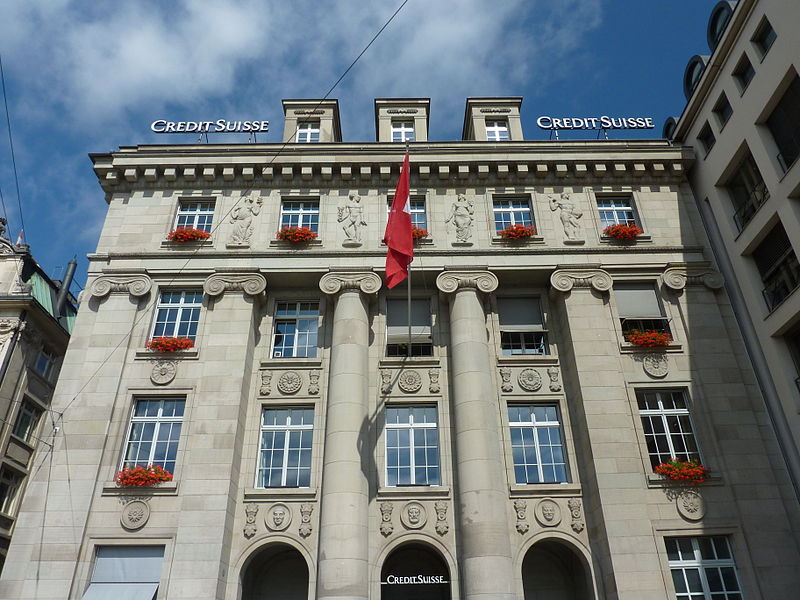
Barofsky disagreed, warning that without full access, his investigation cannot be considered complete. Photo by James Steakley, Wikimedia commons.