Germany and France have issued a blunt warning to Washington, saying Europe will not bow to pressure after U.S. President Donald Trump threatened higher tariffs on European imports
unless the United States is allowed to purchase Greenland.
Speaking on Monday after a joint meeting in Berlin, German Finance Minister Lars Klingbeil and French Finance Minister Roland Lescure stressed that economic threats between long-standing allies were unacceptable and would be met with a united European response.
“Germany and France agree: we will not allow ourselves to be blackmailed,” Klingbeil said, underlining the firmness of Europe’s position. Lescure echoed the sentiment, calling tariff threats between allies of more than two centuries “obviously unacceptable.”
Tariff threats escalate Greenland dispute
Trump said on Saturday that the United States would roll out progressively higher tariffs on imports from European allies until Washington is permitted to buy Greenland, Denmark’s vast and strategically important Arctic territory. The remarks have sharply escalated tensions between the U.S. and the European Union, reviving concerns about trade warfare across the Atlantic.
In response, EU leaders are preparing to discuss countermeasures at an emergency summit in Brussels on Thursday. Among the options on the table is a previously approved package of tariffs on €93 billion ($107.7 billion) worth of U.S. goods. These measures, currently suspended, could automatically come into force on February 6 if no agreement is reached.
“We Europeans must make it clear: the limit has been reached,” Klingbeil said. “Our hand is extended, but we are not prepared to be blackmailed.”
Anti-Coercion Instrument under consideration
Another option being actively discussed is the EU’s so-called Anti-Coercion Instrument, a powerful but so far untested tool designed to deter economic pressure from third countries. The mechanism would allow the EU to restrict access to public tenders, curb investments or banking activities, and limit trade in services — an area where the United States enjoys a surplus, particularly in digital services.
Lescure said France wanted the EU to seriously examine this option, even if it remains primarily a deterrent. “We hope, of course, that deterrence will prevail,” he said, adding that France wants the transatlantic relationship to return to one “based on negotiation rather than threats and blackmail.”
Both ministers stressed they were not seeking escalation, warning that a trade conflict would damage economies on both sides of the Atlantic.
Europe pushes back against claims of weakness
Tensions intensified further after U.S. Treasury Secretary Scott Bessent suggested on Sunday that European “weakness” justified U.S. control of Greenland in the interest of global stability.
“Our objective in the coming days, weeks and years is to politely but firmly convince Scott Bessent that he is wrong,” Lescure said. He added that Europe must accelerate reforms to strengthen its technological capabilities and productivity to demonstrate its resilience and competitiveness.
Klingbeil also rejected claims that Europe lacks strength, pointing to the EU’s scale and influence. With 27 member states and around 450 million citizens, he said, Europe must continue to build economic, political and security power so that “no one would even suspect Europe is weak.”
“This is about the integrity and sovereignty of a country,” Klingbeil said. “As Europeans, we must clearly put up a stop sign and say: we are not going down this road.”
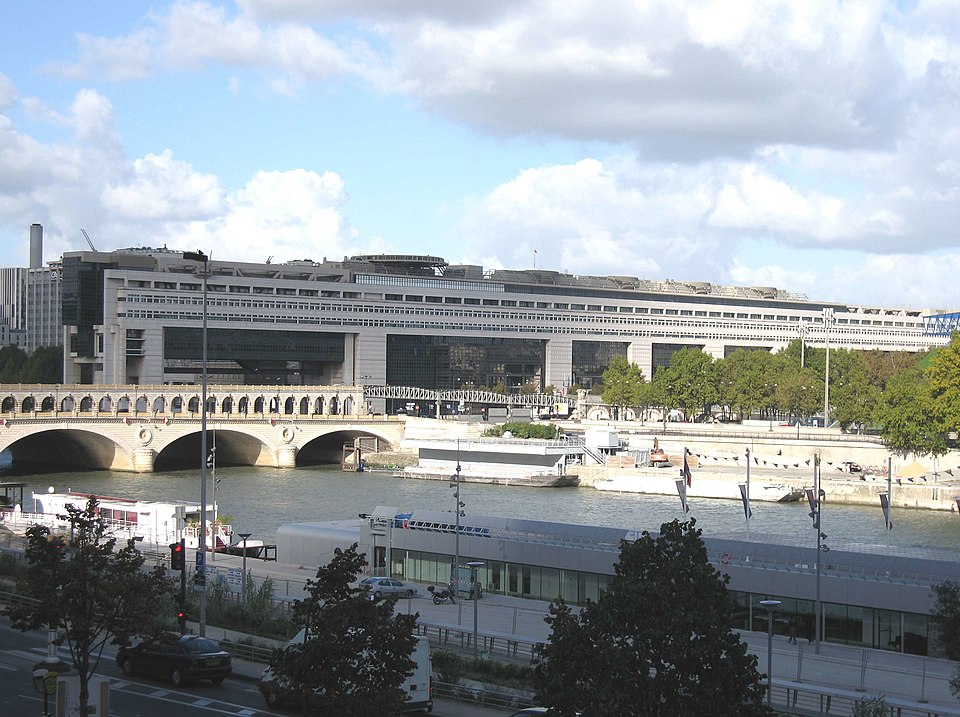
As Brussels weighs its next steps, the message from Berlin and Paris is clear: Europe is willing to negotiate, but it will not yield to economic coercion. Photo by Pline, Wikimedia commons.