Qatar has become the single largest foreign source of funding for American colleges and universities, according to newly released data from the U.S. Department of
Education that sheds fresh light on the scale of overseas money flowing into higher education.
The information appears in a new public portal launched on Jan. 2, which compiles disclosures required under Section 117 of the Higher Education Act of 1965. The law mandates that federally funded colleges report, twice a year, any gifts or contracts from foreign sources totaling $250,000 or more within a calendar year.
The data shows that Qatari entities have provided roughly $6.6 billion to U.S. institutions—more than any other foreign country. Germany followed with $4.4 billion, while England ($4.3 billion), China ($4.1 billion), Canada ($4 billion) and Saudi Arabia ($3.9 billion) rounded out the top contributors.
Rep. Tim Walberg (R-Mich.), chairman of the House Education and Workforce Committee, warned that the influx of foreign money raises serious concerns.
“Our college campuses are being flooded with foreign cash, but every single dollar given by our adversaries comes with strings attached,” Walberg told JNS. He argued that hostile nations may use financial relationships to gain influence, steal research or undermine free speech. “Enough is enough,” he said, praising the Trump administration for making foreign funding disclosures more accessible and transparent.
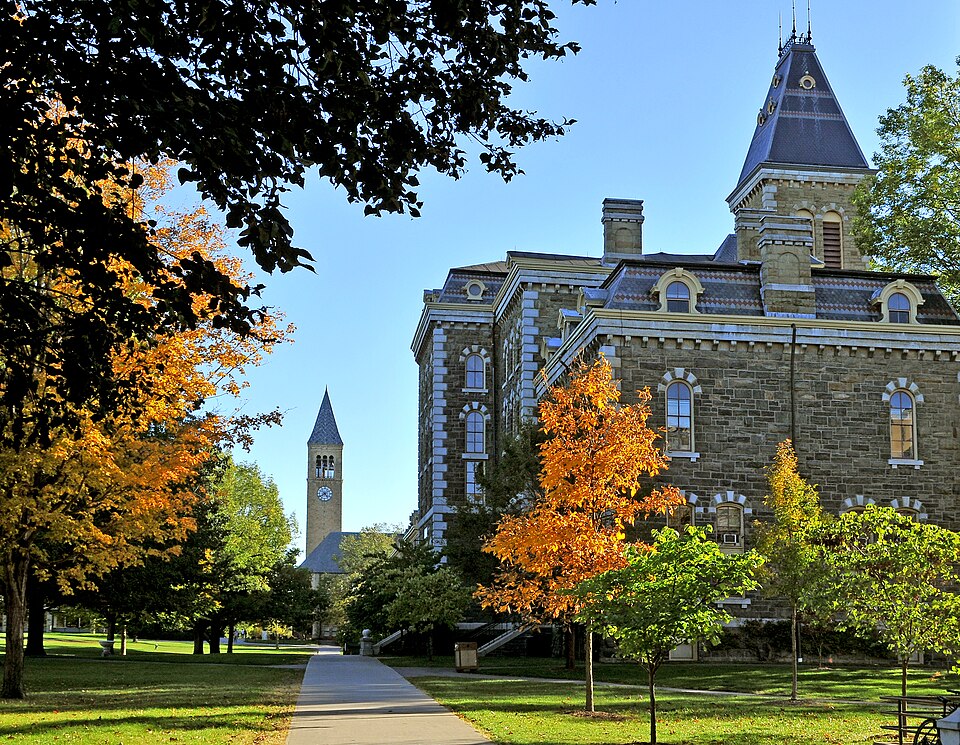
Among the universities receiving Qatari funds, Cornell University ranked first with $2.3 billion. Carnegie Mellon University followed with $1 billion, while Texas A&M University received nearly $993 million and Georgetown University about $971 million.
Kenneth Marcus, chairman and CEO of the Louis D. Brandeis Center for Human Rights Under Law and a former assistant U.S. secretary of education for civil rights, welcomed the new portal but said the figures raise troubling questions.
“It is hard to imagine that this amount of money doesn’t imply some amount of influence,” Marcus said. “It’s fair to ask what kind of influence Qatar is obtaining in exchange for its money.”
Overall, the portal reports that foreign governments, organizations and individuals have provided a total of $62.4 billion in contracts and gifts to 527 U.S. colleges and universities.
Brandy Shufutinsky, director of the education and national security program at the Foundation for Defense of Democracies, said the data is a step forward but still leaves gaps. She questioned whether universities must disclose the specific foreign entities behind the funding and how the money is ultimately used.
“The goal shouldn’t just be transparency for transparency’s sake,” Shufutinsky said. “Users should be able to truly understand the scope of foreign funding and influence in American higher education.”
Education Secretary Linda McMahon said the portal corrects years of lax enforcement. “After years of neglect by the Biden administration, the new portal will assist institutions in meeting their legal obligations and help protect our national security through improved compliance,” she said.
The database also details foreign funding received by Jewish and religious institutions. Yeshiva University reported just over $1 million in foreign funding, all from Canada, while Rabbinical College Bobover Yeshiva Bnei Zion disclosed $1.5 million, also solely from Canadian sources. The Michigan Jewish Institute, which closed in 2016, received a single $250,000 contract from an Israeli source between 2011 and 2013.
Brandeis University disclosed $7.8 million in foreign funding across 17 transactions, with significant contributions from the United Nations, Malaysia, Hong Kong and several European countries. More than half of that funding came through restricted contracts.
According to the most recent disclosure file, dated Feb. 28, 2025, Israel accounted for more than $419 million across 1,323 transactions involving about 105 institutions. The largest contracts went to Brigham Young University, totaling nearly $19 million between 2018 and 2020.
As lawmakers and analysts scrutinize the data, the new portal is likely to intensify debate over foreign influence, academic independence and national security on U.S. college campuses. Photo by LBM1948, Wikimedia commons.