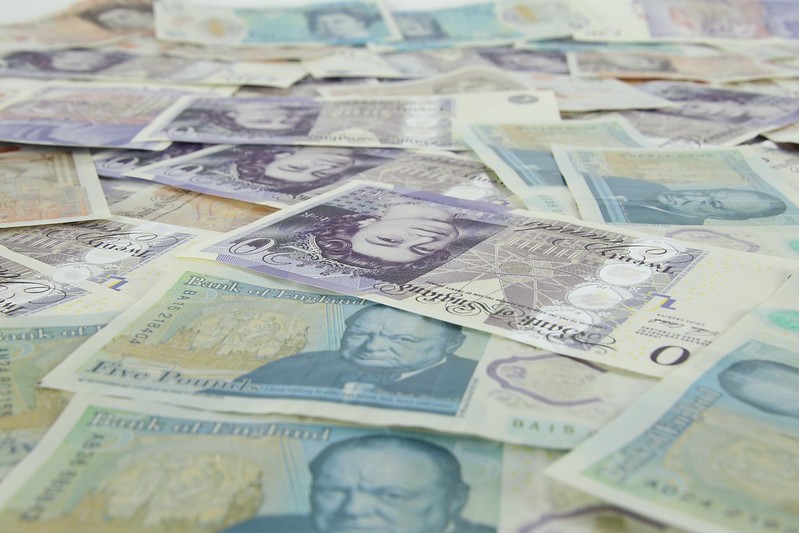
The pound slipped against the US dollar on Monday as renewed fighting between the United States and Iran unsettled financial markets, driving oil prices higher and increasing expectations
of further US interest rate rises.
Sterling fell 0.1% to $1.339 as investors moved towards the dollar, which is widely regarded as a safe-haven currency during periods of geopolitical uncertainty.
The latest market moves followed a weekend of intensified military exchanges between Washington and Tehran. Iranian forces launched missile and drone strikes against US facilities in the region, while Tehran said it had again closed the Strait of Hormuz, a vital shipping route for global oil supplies. In response, the US military said it had targeted Iranian air defence systems, coastal radar installations and other military sites.
Concerns over potential disruptions to global energy supplies pushed Brent crude oil up 2% to around $77.60 a barrel, fuelling worries that higher energy costs could add to inflationary pressures worldwide.
Analysts said the impact on currency markets had so far been limited but warned that sustained increases in oil prices could further strengthen the dollar.
"The spill-over effects into the foreign exchange market remain relatively modest so far," said Lee Hardman, senior currency analyst at MUFG.
He added that a prolonged rise in oil prices could become "a more powerful bullish catalyst for the US dollar", particularly after the Federal Reserve recently signalled it was prepared to tighten monetary policy further if inflation risks intensified.
Financial markets have increased expectations that the Federal Reserve will raise interest rates again this year. Traders are now pricing in around 37 basis points of additional US monetary tightening, compared with about 33 basis points expected from the Bank of England.
Higher interest rate expectations tend to support a country's currency by increasing returns on assets denominated in that currency.
Despite Monday's decline, sterling has remained comparatively resilient in 2026, supported by a UK economy that has proved stronger than many economists anticipated. The pound has fallen around 0.6% against the dollar this year, compared with a 2.7% decline for the euro, highlighting its relative strength despite heightened global uncertainty.