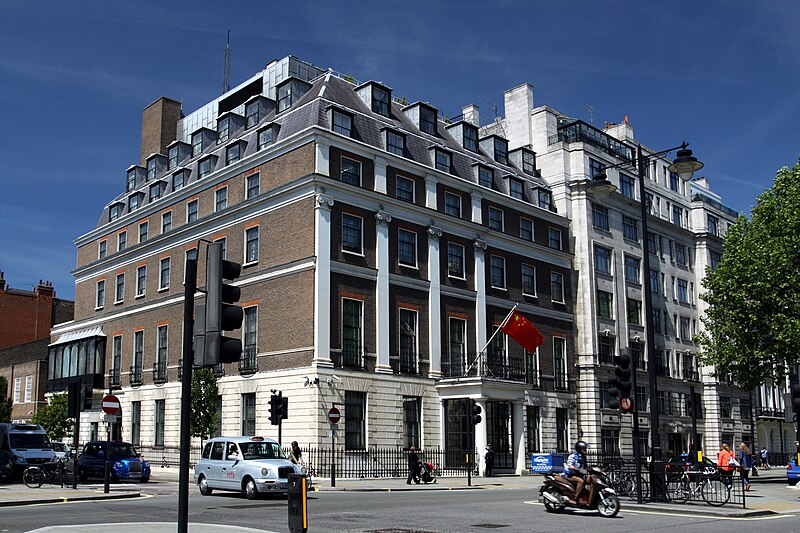
Plans for a vast new Chinese embassy in central London could deliver “security advantages” for the UK, Downing Street has insisted, even as critics warn the site could
serve as a major hub for espionage.
The comments come as the government delays its decision on planning permission for the third time, pushing the deadline into the new year. Ministers are now expected to rule on the application on 20 January.
The proposed development at Royal Mint Court would become China’s largest embassy in Europe, with capacity for around 200 staff, extensive office space and a large basement complex. It would also sit close to fibre-optic cables carrying highly sensitive financial data into the City of London.
Opponents, including MPs and councillors, argue the scale and location of the compound present national security risks. Parts of the original planning documents were submitted with sections redacted “for security reasons”, prompting further suspicion. During the summer, then Deputy Prime Minister Angela Rayner demanded clarification from Beijing on the purpose of several undisclosed rooms—answers officials now say they have received.
In a letter to the Interparliamentary Alliance on China, seen by the group and referenced publicly this week, Home Secretary Shabana Mahmood and Foreign Secretary Yvette Cooper said they had addressed the “national security issues” linked to the development. China, they wrote, had agreed that all accredited diplomats in London would be consolidated onto a single site if permission is granted.
That consolidation, No 10 argued on Tuesday, is itself a benefit. The prime minister’s spokesperson said replacing the seven separate Chinese diplomatic sites currently spread across London would “clearly bring security advantages”.
He added that both the Home Office and the Foreign Office had been “clear throughout” that no decision should be made until all relevant security considerations had been resolved.
China has consistently defended the proposal, saying the new complex would support “mutually beneficial cooperation” and that objections are unfounded.
The debate unfolds as Prime Minister Sir Keir Starmer seeks to strike what he calls a “clear-eyed” balance in UK-China relations. In a speech on foreign policy this week, he described China as both a “defining force” in global trade and technology and a persistent national security threat. He highlighted opportunities for British exports in sectors such as finance, pharmaceuticals and luxury goods, while acknowledging Beijing’s increasingly assertive behaviour.
Security officials remain wary. MI5’s director-general has repeatedly warned that Chinese state actors pose a daily threat to the UK, and the service recently issued an unusual alert naming two alleged Chinese profiles using LinkedIn to target MPs and parliamentary staff—claims China denies.
The political row intensified further on Tuesday when Shadow Housing Secretary Sir James Cleverly accused Labour of trying to “steamroller” the project through “without proper scrutiny”. He claimed ministers had shown a lack of “backbone” in dealing with Beijing, and criticised the alleged exclusion of security services from submitting confidential evidence to the inquiry.
Cleverly said a private hearing must now be held to allow intelligence officials to present their concerns away from “the eyes of the regime in Beijing”, and called for full access to the unredacted embassy blueprints.
The fate of the project will be decided early next year, with the government facing pressure from security experts, diplomats and local residents as it weighs its next steps. Photo by Chmee2, Wikimedia commons.