Plants surround us every day – in our gardens, our homes and even in our cups of tea – yet few of us stop to consider the extraordinary journeys they have taken to get here.
‘In Bloom: How Plants Changed Our World’, on display at the Ashmolean Museum from 19 March to 16 August 2026, invites visitors to look beyond petals and perfume to uncover the global stories hidden inside familiar flowers.
The exhibition opens with a moment of quiet beauty: a young woman raising a bunch of pale pink orchids to her face in Sir Lawrence Alma-Tadema’s 1879 painting. From this intimate scene, ‘In Bloom’ expands outward, tracing how plants travelled from distant continents to Britain, shaping science, trade, culture and empire along the way.
Bringing together more than 100 works – from exquisite botanical drawings and historic artefacts to bold contemporary commissions – the exhibition follows the passions of early plant hunters and collectors. Their curiosity and ambition helped transform global networks of exchange, influencing how plants were studied, traded and consumed. In doing so, they left a legacy that still defines our landscapes and back gardens today.
The story is also deeply rooted in Oxford itself. The Ashmolean Museum owes its origins to John Tradescant the Elder and his son, pioneering gardeners to royalty in the seventeenth century. Driven by a desire to “collect the world,” the Tradescants travelled across Europe, Russia and North America, gathering plants, seeds and curiosities. Their collection became the foundation of the Ashmolean, making ‘In Bloom’ a return to the museum’s botanical beginnings.
Many plants now synonymous with British life arrived through vast imperial networks linking Europe with Asia, Africa and the Americas. Tulips, roses, orchids and camellias crossed oceans as seeds, dried specimens and living plants, often relying on the expertise of local and Indigenous knowledge holders whose contributions were rarely recorded. Some arrivals sparked frenzies of obsession: tulips famously fuelled the Dutch “tulipomania” of the 1630s, while orchids, ferns and rhododendrons inspired Victorian-era collecting crazes. Others, such as tea, became everyday essentials, reshaping economies, politics and national identity.
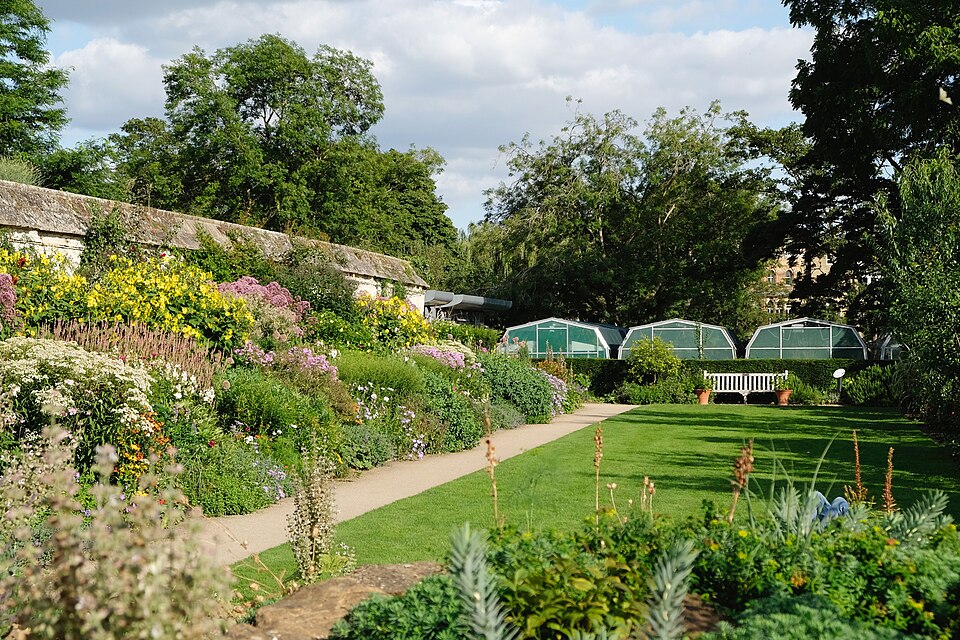
Oxford played a key role in advancing botanical science. Founded in 1621, the University of Oxford Botanic Garden – the oldest in Britain – offered a controlled space where unfamiliar species could be studied and adapted. Early herbaria, seed collections and teaching tools emerged here, including remarkable nineteenth-century papier-mâché models that magnified flowers and plants for scientific study.
Among the exhibition’s standout innovations is the Wardian Case, a sealed glass container developed in the 1840s. This deceptively simple invention revolutionised plant transport, allowing living specimens to survive long sea voyages and accelerating the global movement of plants on an unprecedented scale.
Yet ‘In Bloom’ does not shy away from the darker consequences of this botanical expansion. The demand for profitable plants reshaped landscapes and livelihoods in colonised regions, often replacing diverse ecosystems with fragile monocultures. Britain’s involvement in the opium trade, which contributed directly to the Opium Wars, is examined as one of the most troubling examples of how plant commerce and imperial ambition could devastate societies.
Visual culture is another central theme. Masterworks by pioneering botanical artists such as Rachel Ruysch, Maria Sibylla Merian, Georg Dionysius Ehret and Ferdinand Bauer reveal how art became essential to scientific discovery. Their detailed images helped identify, classify and share plant knowledge across borders, alongside Carl Linnaeus’s revolutionary system of naming species – a framework still used today. This tradition continues in modern works by artists including Rory McEwen, Pandora Sellars and Fiona Strickland.
The exhibition concludes with contemporary perspectives that reimagine our relationship with plants. New works by Anahita Norouzi, Kate Friend, Işık Güner, Alexandra Daisy Ginsberg and Justine Smith range from immersive drawings to large-scale textiles seen through the eyes of pollinating insects. A photographic commission by Fran Monks highlights Oxford scientists leading research in plant science and conservation, underscoring how the study of plants remains central to understanding climate change and environmental futures.
Together, these works show that plants are far more than decorative objects. They are agents of history, science and culture – and their stories continue to shape the world we live in today.
Dr Francesca Leoni and Dr Shailendra Bhandare, co-curators of the exhibition, say: ‘In Bloom offers the rare chance to understand, appreciate and contemplate the histories of some of our best loved blooms. Unravelling stories of great scientific achievements, daredevil explorations and networks of exceptional individuals, it presents a vivid curatorial account of how our world was changed by our interactions with plants, through outstanding objects, with a conscious attempt at delivering an environmentally responsible exhibition.’ Photo by JMski, Wikimedia commons.