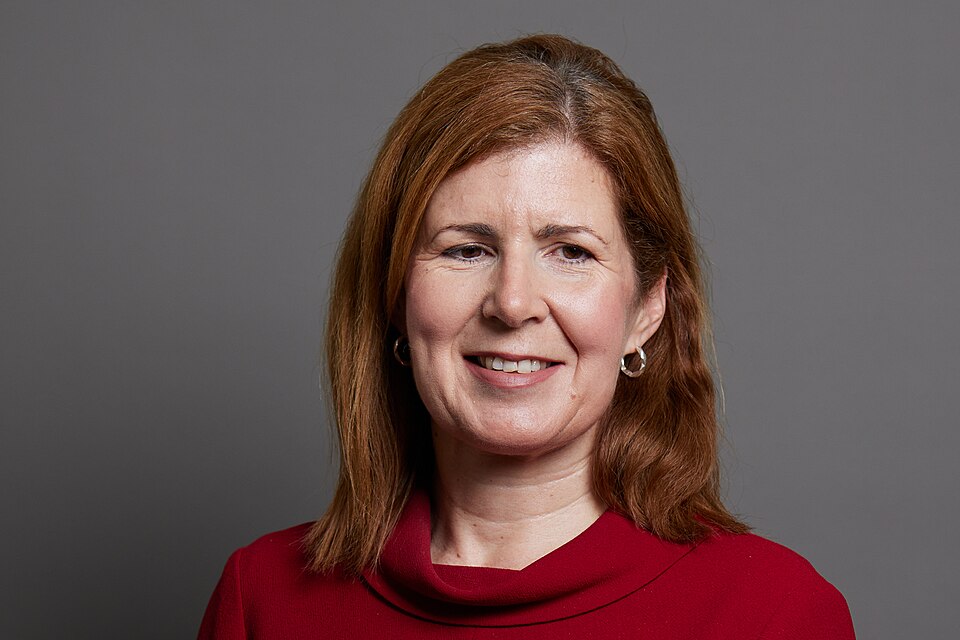
The United Kingdom has announced a new £13 million humanitarian assistance package for Lebanon, as Development Minister Baroness Jenny Chapman concluded a high-profile
diplomatic visit aimed at reinforcing international support for the crisis-hit country.
The funding, unveiled during a joint visit with senior officials from France and Qatar, will provide emergency assistance to communities affected by the ongoing humanitarian crisis, including support for healthcare, education, food security, protection services and other essential needs. The latest commitment brings total UK assistance pledged to Lebanon since March to £43 million.
Chapman's two-day visit, her first to Lebanon since taking office, came amid renewed international efforts to prevent further regional escalation. Alongside French Minister Delegate for Francophonie and International Partnerships Éléonore Caroit and Qatar's Minister of State for International Cooperation Dr. Mariam bint Ali bin Nasser Al-Misnad, she met Lebanon's senior leadership, including President Joseph Aoun, Speaker Nabih Berri and Minister of Social Affairs Haneen Sayed.
The three ministers reaffirmed their support for Lebanon's sovereignty and state institutions, while emphasizing the importance of international cooperation in addressing the country's mounting humanitarian challenges.
Chapman also welcomed recent direct talks between Israel and Lebanon, describing diplomacy as the most effective path toward achieving long-term peace, security and stability in the region.
During visits to Beirut and Saida, the delegation inspected several UK-supported humanitarian initiatives. At Lebanon's Disaster Risk Management Unit, Chapman praised the work of emergency responders and healthcare personnel coordinating relief efforts alongside the Lebanese Red Cross. She stressed that attacks on humanitarian workers and medical staff are unacceptable and called on all parties to uphold their obligations under international humanitarian law.
The minister later visited shelters housing families displaced by recent conflict, where she observed UK-funded programmes delivered in partnership with UNICEF and local organizations. These initiatives provide education, child protection and other critical services to vulnerable communities.
In southern Lebanon, Chapman toured Al Murjan High School, currently serving as a shelter for displaced families, and met representatives from ABAAD, a UK-supported organization addressing gender-based violence. The programme has delivered psychological support, improved shelter safety measures and expanded protection services for women and girls affected by the conflict.
At a Lebanese Red Cross facility, Chapman formally handed over eight UK-funded ambulances intended to strengthen emergency response capacity in southern Lebanon. The vehicles were delivered through cooperation with the British Red Cross and form part of broader UK efforts to enhance the country's crisis preparedness.
The minister also met families receiving assistance through Lebanon's Shock Responsive Social Safety Net programme, supported by the World Food Programme and funded in part by the UK. The scheme provides emergency financial support to vulnerable households struggling amid the ongoing humanitarian and economic crisis.
The visit highlighted growing coordination between the UK, France and Qatar as international partners seek to bolster Lebanon's resilience while encouraging diplomatic solutions to regional tensions.
Minister for Development Jenny Chapman said:
«The US-Iran agreement is an important step forward in reducing tensions, supporting regional stability, and reopening vital routes for global trade. Our priority now is to support its implementation and help create the conditions for a lasting peace, including an end to hostilities in Lebanon.
Reckless and disproportionate Israeli escalation in Lebanon must end, as must Hizballah’s attacks on Israel, which have dragged the Lebanese people into yet another conflict they have not chosen.
Here with my partners from France and Qatar, we’ve seen the devastating impact of the conflict. We are coming together to emphasise the importance of delivering stability in the Middle East, and of a robust and lasting ceasefire in Lebanon.
We remain committed to working with the Government of Lebanon to ensure they can deliver the response needed to support stability and resilience».
Ambassador Hamish Cowell said:
«Baroness Jenny Chapman’s visit to Lebanon comes at a critical moment, as Lebanon faces the continuing impact of conflict.
We will continue to coordinate with the Government of Lebanon and humanitarian partners.
De-escalation is needed urgently. All parties must respect the ceasefire and uphold international humanitarian law”. Photo by ©House of Lords / photography by Roger Harris, Wikimedia commons.