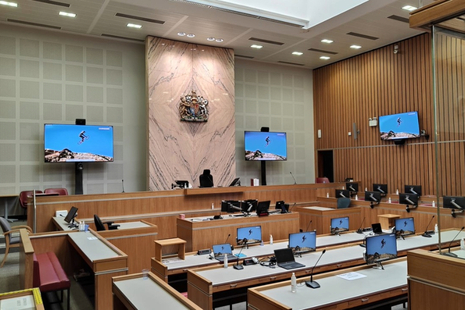
The UK Government has expanded the magistracy as part of a wider effort to speed up criminal proceedings, improve support for victims and modernise the justice system.
England’s magistrates’ courts are receiving a significant boost in personnel, with more than 3,800 magistrates recruited since the current Government took office. The expansion is intended to increase the number of cases that can be heard and help relieve pressure on the criminal justice system.
Recruitment has accelerated sharply in 2026. Nearly 1,500 new magistrates were appointed during the first six months of the year, almost twice the number recruited over the corresponding period in 2025.
The Government says the drive will strengthen local justice services and help ensure that victims of crime do not face unnecessary delays before their cases are heard.
Recruitment campaign targets a more representative magistracy
Efforts to expand the magistracy are accompanied by a drive to attract candidates from a wider range of backgrounds. Recent figures show that women accounted for 55% of new appointments, while more than one-third of those recruited were under the age of 50.
The Ministry of Justice has launched a £4 million public recruitment campaign across television and social media to encourage more people to volunteer for the role.
The longer-term objective is to increase the magistracy to 21,000 members by the 2028/29 financial year. Magistrates play a central role in England and Wales’ justice system, hearing a wide range of criminal cases and making decisions in local courts.
Sarah Sackman KC MP, Minister for Courts and Legal Services, said the latest recruitment figures represented an important step towards strengthening the justice system. She highlighted the contribution magistrates make to their communities, helping cases progress and reducing the strain on courts.
New technology to improve court proceedings
Alongside recruitment, the Government is testing technology designed to improve the recording of hearings in magistrates’ courts.
A new pilot scheme will introduce audio-recording technology in seven courtrooms across the country. The initiative is intended to produce reliable records of court proceedings, support the handling of appeals and reduce the time courts spend on administrative tasks.
Officials will assess the technology’s performance and determine whether it could help make the wider court system more efficient.
The initiative forms part of a broader programme to reform criminal justice procedures, including proposed changes to the appeals process. Under the Government’s plans, the automatic right of appeal would be replaced by a permission stage, allowing courts to determine whether an appeal should proceed.
Wider reforms to tackle delays
The recruitment drive and technology pilot are among the measures being pursued in response to Lord Leveson’s independent review of the criminal courts. The review set out recommendations for modernising the system and addressing the substantial backlog of cases in the Crown Court.
The Government’s proposed reforms are being taken forward through the Courts and Tribunals Bill, which received strong support in the House of Commons before moving to the House of Lords on 14 October 2026.
During the Bill’s passage, ministers amended the legislation to remove proposals that would have restricted jury trials. The Government says the change will preserve jury trials for almost all cases heard in the Crown Court.
Taken together, the measures are intended to increase court capacity, improve the management of proceedings and deliver a more responsive justice system for victims, defendants and communities across England and Wales.