Andy Burnham has been elected leader of the Labour Party, paving the way for him to become the UK's next prime minister on Monday.
The former Greater Manchester mayor, often referred to as the "King of the North" because of his advocacy for the region, succeeds Sir Keir Starmer after winning the leadership unopposed at a special party conference in London.
Addressing Labour MPs, members and party officials, Burnham said his leadership would focus on restoring confidence in politics by devolving more power from Westminster to England's regions and supporting communities he described as "forgotten places".
He said Labour had a final opportunity to rebuild public trust and promised to lead a united party capable of delivering change across the country.
"We are united and we put the power that comes from that unity at the service of people and places who have been waiting too long for politics to let them hope again," he told delegates.
Burnham also paid tribute to Sir Keir Starmer, who is due to leave office on Monday after leading Labour into government.
Power to the regions
The 56-year-old has made decentralisation a central theme of his political agenda, arguing that shifting decision-making away from Westminster would help reduce regional inequality and address frustration in communities that have increasingly backed Reform UK and, in some areas, the Green Party.
While Burnham reiterated his commitment to working with businesses and strengthening regional government, he provided few new details on policy during his acceptance speech.
He said his cabinet appointments would reflect "all parts of our party, all communities", adding that further announcements would be made after he formally takes office.
Earlier this year, Burnham outlined plans for what he described as the biggest transfer of power to Britain's regions in decades, presenting it as a long-term strategy to rebalance economic growth and public investment.
Challenge from Reform UK
Burnham said Labour should respond to growing support for Reform UK by remaining true to its own political identity rather than trying to imitate rival parties.
"We don't out-Green the Greens or out-Reform Reform," he said. "We are boldly, confidently, authentically Labour."
Reform UK leader Nigel Farage criticised Burnham's speech, describing it as "utterly vacuous" while speaking at the CPAC Great Britain conference. Farage also argued that Burnham was taking office without a direct electoral mandate.
Reform UK, which won seven parliamentary seats at the last general election, has led several opinion polls in recent months, increasing pressure on Labour ahead of the next national vote, expected by 2029.
Immediate priorities
Trade union leaders urged the incoming prime minister to focus quickly on living standards and economic growth.
Paul Nowak, general secretary of the Trades Union Congress (TUC), said Burnham's government should prioritise improving the lives of working people from the outset.
Burnham said his administration would begin implementing its agenda immediately after taking office.
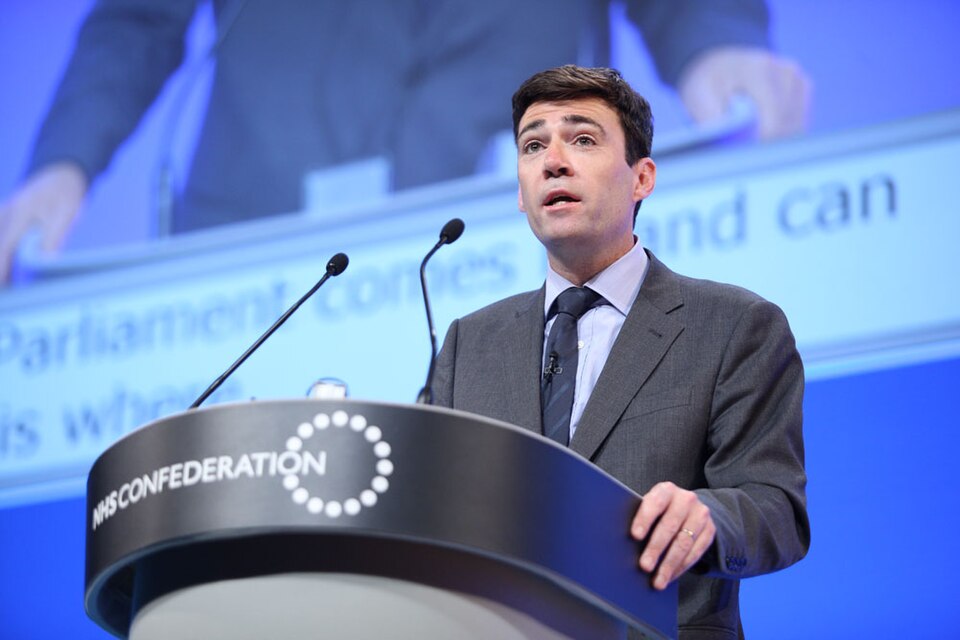
"The government I lead will confidently lay that path out, starting next week," he said, describing the leadership transition as one of the most significant moments in British politics in decades. Photo by NHS Confederation, Wikimedia commons.