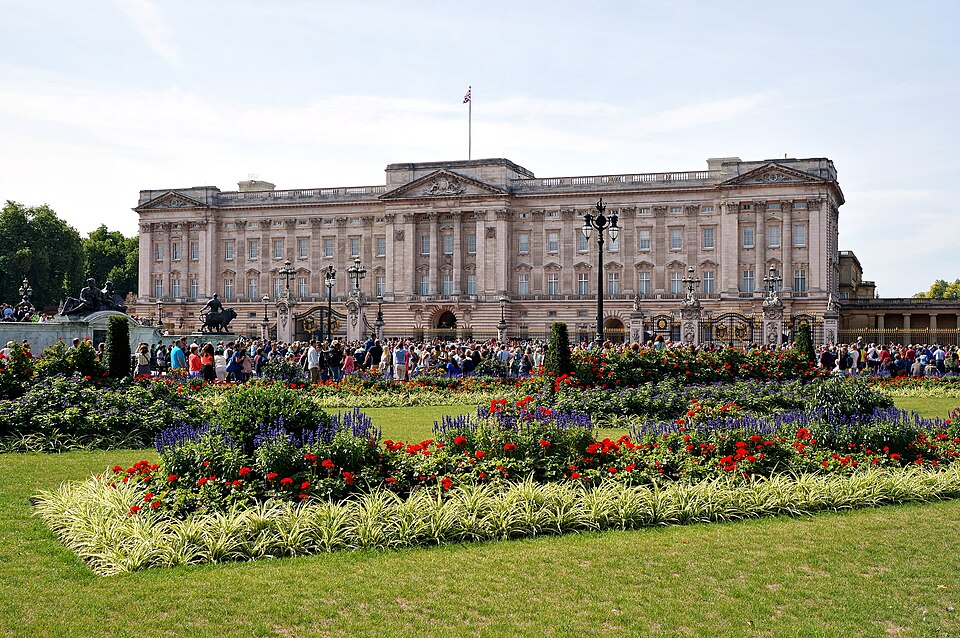
King Charles III will not move into Buckingham Palace once its decade-long refurbishment is completed next year, royal officials confirmed on Thursday, marking a historic shift for the
British monarchy after nearly 200 years of the palace serving as the sovereign's primary residence.
Instead, the King will continue living at Clarence House, his longtime London residence, while Buckingham Palace remains the monarchy's principal venue for state occasions, ceremonial events and official engagements.
The announcement coincided with the first public disclosure of the King's personal tax payments. Royal officials revealed Charles paid £12.9 million ($17 million) in taxes during the 2024/25 financial year, placing him among the UK's highest taxpayers. The disclosure forms part of broader efforts by the Royal Household to increase financial transparency following the death of Queen Elizabeth II in 2022.
Buckingham Palace is nearing completion of a £369 million ($487 million) refurbishment launched in 2017 to modernize outdated electrical systems, plumbing and heating infrastructure. When the project began, officials expected the palace to remain the monarch's primary London residence, as it had since Queen Victoria established it as the royal home in 1837.
James Chalmers, the King's Treasurer and Keeper of the Privy Purse, said Buckingham Palace would continue to serve as the symbolic and operational center of the monarchy.
"It is and will remain monarchy HQ, the crown jewel of our national buildings, with the Sovereign's Standard flying proudly whenever His Majesty is in London," Chalmers told reporters.
Although Charles will not reside there full-time, private accommodation will remain available for overnight stays when required. Neither the King nor Queen Elizabeth II has spent a night at Buckingham Palace since 2019 due to the ongoing renovation.
Officials also said public access to the palace will expand once construction is complete. Around 700,000 visitors currently tour the landmark each year.
The financial update offered a rare glimpse into the King's personal finances. While British monarchs are not legally required to pay income, capital gains or inheritance tax, Charles has continued the voluntary practice introduced by Queen Elizabeth II in 1993.
According to palace officials, the King paid £11.7 million in tax during 2023/24 and more than £30 million since ascending the throne in 2022.
Charles receives private income from the Duchy of Lancaster estate, which is expected to generate £25.2 million in 2025/26, alongside earnings from personal investments. He also receives funding through the Sovereign Grant, financed by profits from the Crown Estate, to cover the costs of official duties, palace maintenance, staffing and travel.
The Sovereign Grant rose from £86 million in 2024/25 to £132 million in 2025/26, largely driven by increased Crown Estate revenues from offshore wind farm leases. It is set to increase again to £137.9 million in 2026/27 before falling to £100 million in 2027/28 at the King's request, where it is expected to remain until 2031/32.
Chalmers said the reduction reflects the King's desire to limit public funding despite the significant investment required to complete Buckingham Palace's restoration.
The Royal Family's finances remain under scrutiny following reports last year that the Duchy of Lancaster and Prince William's Duchy of Cornwall charged rent to public institutions, including the NHS, military and schools. Earlier this month, further revelations about royal property arrangements renewed calls for greater transparency.
Prince William's office disclosed that the heir to the throne paid £7.76 million in tax during 2024/25 and directed £1.5 million in rental income from a former prison site to support the local community.
Despite the latest financial disclosures, anti-monarchy campaigners argued that the Royal Household has yet to provide full transparency over its wealth and funding. Photo by Jey Han, Wikimedia commons.