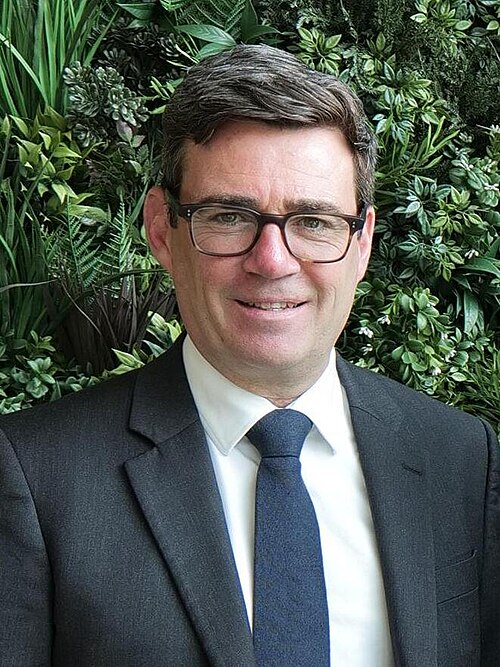
British Prime Minister Keir Starmer announced on Monday that he will step down as Labour leader, triggering a transition that is expected to elevate Andy Burnham to the party's top post
and potentially make him Britain's seventh prime minister in a decade.
In a deeply personal address outside 10 Downing Street, Starmer acknowledged that he no longer commanded the confidence needed to lead Labour into the next general election, scheduled for 2029. His decision follows months of mounting pressure from within the party amid declining public support and growing concerns over Labour's electoral prospects.
"The question my party is asking now is whether I am best placed to lead us into the next general election," Starmer said. "I have heard the answer from my parliamentary party and I accept that answer with good grace."
The announcement sets in motion a leadership process that could culminate in a rapid transfer of power. While Labour's governing bodies are expected to formally launch a leadership contest in July, senior party figures increasingly believe Burnham may emerge unchallenged, avoiding a potentially divisive internal battle.
Burnham, 56, strengthened his position within hours of Starmer's resignation announcement after securing the backing of former Health Secretary Wes Streeting, widely viewed as a potential contender. Several Labour MPs indicated that support is quickly consolidating behind the former Greater Manchester mayor, raising the prospect of a swift coronation rather than a prolonged contest.
The leadership change marks another chapter in Britain's prolonged period of political instability since the 2016 Brexit referendum. If Burnham succeeds Starmer, he would become the country's seventh prime minister in ten years, underscoring voters' growing frustration with successive governments that have struggled to deliver promised change.
Starmer outlined a timetable that would open nominations on July 9 and conclude the process by September. However, if Burnham secures overwhelming support and faces no serious opposition, a new leader could be installed as early as mid-July.
Reflecting on his tenure, Starmer highlighted his government's achievements before becoming visibly emotional while thanking his family. The prime minister's voice faltered as he paid tribute to his wife, Victoria, and their children.
"When I leave the biggest job in the country, I will spend more time on the most important job," he said. "Being the best husband I can to my fantastic wife Vic, and being the best dad I can to my beautiful children."
Pressure on Starmer intensified dramatically last week following Burnham's decisive victory in a parliamentary by-election in Makerfield, where Labour defeated a candidate from Reform UK, the insurgent party led by Nigel Farage that has topped opinion polls for more than a year.
The result boosted confidence among Labour lawmakers that Burnham's communication skills and broader public appeal could revive the party's fortunes after a period of declining support under Starmer's leadership.
Financial markets reacted positively to the prospect of a smoother succession. Sterling strengthened against major currencies while British government bonds gained, reflecting investor confidence in a more predictable transition.
Nevertheless, challenges remain. Burnham has yet to present a comprehensive national policy platform, and opponents are already seeking to exploit the transition. Farage seized on the political upheaval to renew calls for an immediate general election.
"Britain needs change — real change, not another establishment figure installed by the political class," Farage said.
As Labour prepares for a new era, the coming weeks will determine whether Burnham can unite the party and restore public confidence ahead of the next electoral test. Photo by Welsh Government, Wikimedia commons