The UK is stepping up its global push to protect the ocean while tackling poverty, announcing £14 million in new funding for community-led projects in some of the world’s most
climate-vulnerable regions.
Nature Minister Mary Creagh confirmed the investment on 26 January, unveiling the second round of the Ocean Community Empowerment and Nature (OCEAN) Grants Programme. The funding will support at least eight projects designed and led by local communities in developing countries, where declining ocean health is hitting livelihoods hardest.
The programme focuses on people living on the frontline of climate change, with a strong emphasis on empowering women, girls and marginalised groups. At the same time, it backs practical solutions to protect marine ecosystems that millions depend on for food, income and protection from extreme weather.
One of the newly funded projects is based in Ecuador, where the Mare Nostrum Foundation is working with University College London to reduce accidental wildlife deaths caused by fishing. The team is installing green LED lights in fishing nets that are visible to turtles, sharks, rays and whales—but not to many fish. Early evidence suggests the technology could cut accidental capture by up to 73%, protecting marine life without reducing fishermen’s catch.
The new awards build on the programme’s first funding round, which has already helped protect and restore more than 93,000 hectares of vital ecosystems—an area roughly equivalent to 130,000 football pitches.
Nature Minister Mary Creagh said: ‘We’re leading efforts to put local people across the world at the heart of solutions to conserve the ocean they depend on for food, income and protection from extreme weather.
These pioneering community-led projects will support the families hit hardest by climate change with lasting change, while helping to protect our global ocean for future generations”.
Jérémy Huet, conservation programme manager at Round 1 grant recipient Zoological Society of London, said:
“A healthy ocean underpins our own wellbeing – so warming waters, pollution and the loss of underwater habitats put us all of risk.
Last year we rang the alarm bells for coral reefs globally, so as we begin our second year with OCEAN working alongside communities in Mozambique, we’re delighted to see more investment into the ocean that we all rely on and the people at the frontline of protecting it.
Community-led projects are at the heart of building a better future for people and nature, and every step we take to restore our ocean’s health matters”.
Projects turning ideas into impact
The second funding round supports a wide range of practical, community-driven initiatives:
- Tackling plastic pollution in the Philippines: Eco Kolek will expand its inclusive waste recovery system to reach 12,000 households and small businesses in and around Puerto Princesa City. The project is expected to prevent around 1,100 tonnes of plastic—equivalent to nearly 1,000 double-decker buses—from reaching landfill or the sea.
- Solar-powered recycling hubs: Also in the Philippines, Resiklo Machine Shop will roll out solar-powered, community-run recycling hubs that transform marine and household plastic waste into durable products for local use and sale, cutting pollution while creating new income streams.
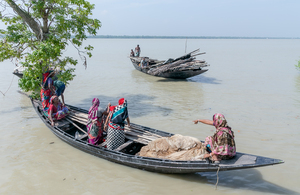
- Women-led sustainable fishing in Bangladesh: Badabon Sangho will work with women-led fishing groups to restore marine habitats, promote sustainable fishing practices and strengthen marine protection. The project combines community engagement with collaboration with public agencies and national advocacy.
By pairing ocean conservation with poverty reduction, the OCEAN Grants Programme aims to prove that protecting nature and supporting livelihoods can—and must—go hand in hand.