UK homes are safer today thanks to behind-the-scenes scientific work carried out by government experts to tackle a serious fire risk linked to household appliances.
Scientists at the Office for Product Safety and Standards (OPSS) played a central role in identifying and resolving safety failures in more than 100,000 heat pump tumble dryers manufactured by Haier. The appliances were found to present a potential fire hazard, prompting urgent technical scrutiny and regulatory action.
Understanding the risk
OPSS is the UK’s national product safety regulator, responsible for protecting people, property and places from harm caused by unsafe products. Earlier this year, OPSS experts were alerted to concerns involving specific tumble dryer models, eventually identifying that around 103,000 machines could be affected.
A multidisciplinary team of scientists, engineers and risk managers was brought together to investigate. Their task was to pinpoint the root cause of the failure, assess whether the manufacturer’s proposed repair would genuinely eliminate the risk, and determine how repairs could be monitored effectively once rolled out nationwide.
Science-led investigation
The investigation went far beyond desk-based analysis. OPSS specialists accompanied enforcement officers on inspections at manufacturing sites, scrutinised detailed technical documentation supplied by the company, and carried out hands-on examinations of the appliances in OPSS laboratories.
To strengthen oversight and provide independent assurance, OPSS also convened an external panel of experts. The panel was chaired by the Department for Business and Trade’s Chief Scientific Adviser and reviewed the evidence gathered by the team. This expert input proved critical: the panel concluded that the manufacturer’s initial repair proposal did not sufficiently address the fire risk.
From advice to action
Armed with clear scientific evidence, OPSS advised on how the risk could be properly reduced and what a robust safety modification should look like. This guidance directly informed the company’s Corrective Action Programme, ensuring that repairs or replacements would offer genuine protection for consumers.
As a result, in September 2025 the business began a national programme to repair or replace the affected tumble dryers in people’s homes, significantly reducing the risk of fire.
Why it matters
This case highlights the vital role of scientific advice in effective regulation. By combining technical expertise, independent assurance and close collaboration with enforcement teams and industry, OPSS helped turn a potentially dangerous situation into a coordinated, evidence-based response.
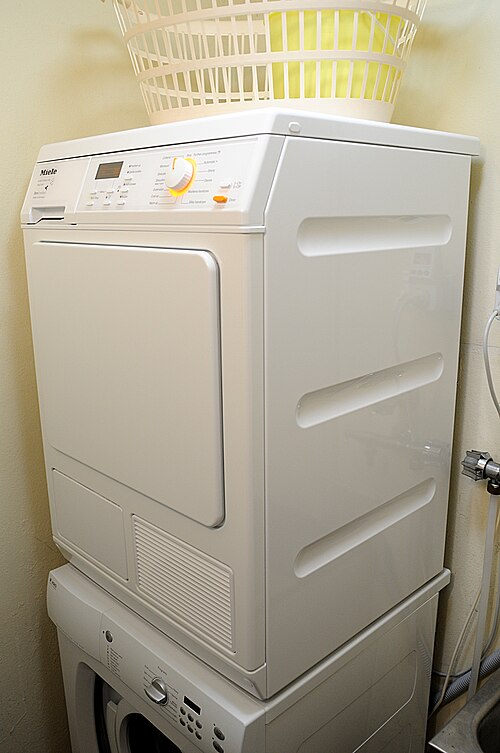
The work of OPSS, part of the Department for Business and Trade, shows how science-led regulation can protect the public, improve product safety and drive real-world change where it matters most: in people’s homes. Photo by Suzyj, Wikimedia commons.