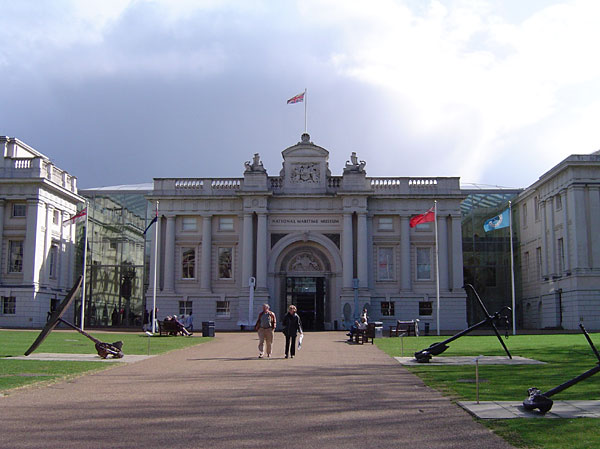
A new space adventure is landing in Greenwich. ‘Astronomers Take Over’, a playful, hands-on gallery led by real astronomers, opens at the National Maritime Museum
on 27 March 2026, inviting visitors of all ages to explore the Universe, ask big questions and get closer to the science of space than ever before.
Designed as a family-friendly experience, the temporary gallery brings the expertise of Royal Observatory Greenwich astronomers directly onto the museum floor. Visitors can meet scientists face-to-face, take part in live demonstrations and discover how astronomers study everything from distant stars to our nearest planetary neighbours.
At the heart of the experience is a Planetarium, offering live, astronomer-presented shows throughout the day. Programmes cater to different ages and interests, from Animals in Space!, which looks at the surprising role animals have played in space exploration and the stories hidden in constellations, to The Night Sky, a classic introduction to the cosmos. Solar System Sightseeing takes audiences on a guided tour of our celestial neighbourhood, perfect for first-time stargazers.
The gallery itself is divided into immersive zones dedicated to the Moon, Mars, stars and starlight. Visitors can attempt to land a spacecraft on a Martian crater, explore how astronomers use spectroscopy to discover what stars are made of, and watch explainer-led demonstrations using oversized inflatables. A highlight is the Galaxy Box, an immersive installation that helps visitors grasp the staggering scale of the Universe.
Expert voices feature throughout the space. Sir Brian May and visual artist and astrophotographer J-P Metsävainio discuss how new technology has transformed our understanding of galaxies, while Professor Sanjeev Gupta shares insights from his work on major space missions, including Mars exploration. Dr Louise Devoy, curator at Royal Observatory Greenwich, explores the Observatory’s long history of astronomical discovery.
For younger visitors, a playful scavenger hunt adds an extra layer of fun, leading families to uncover some of the strangest items ever taken into space — from a gorilla suit and Luke Skywalker’s lightsabre to an espresso machine.
From 3 April 2026, the museum will also host science theatre performances. Unboxing the Universe combines live experiments, unexpected smells and audience participation, bringing space science to life in an energetic, theatrical way.
Elizabeth Avery, Head of Astronomy at Royal Observatory Greenwich said, ‘Astronomers Take Over is an incredible opportunity to meet the Royal Observatory Greenwich astronomy team and try something different. We are very excited to share what we have been working on with our visitors and have some science fun together.’
A visit can easily become a full day out. The National Maritime Museum is part of Royal Museums Greenwich, alongside the Royal Observatory Greenwich, the historic Queen’s House and the iconic Cutty Sark. Families can explore the Cove playground, stand on the Prime Meridian, or arrive by boat along the River Thames. Greenwich is just eight minutes from London Bridge, with convenient transport links and limited on-site parking.
Astronomy programming is kindly supported by Bloomberg, CGI and Michael Edwards OBE.
Visitor information
Venue: National Maritime Museum, London
Dates: 27 March 2026 – 2028
Tickets: Adult (16+) £16; Child (4–15) £16 | Experience only £8
Website: rmg.co.uk/takeover
About the National Maritime Museum
The National Maritime Museum holds the world’s largest maritime collection and is part of Royal Museums Greenwich, which also includes the Royal Observatory Greenwich, the Queen’s House and the clipper ship Cutty Sark. Located within the Maritime Greenwich UNESCO World Heritage Site, the museums welcome visitors from around the world and are a major centre for education and research.
Sir Brian May and J-P Metsävainio are co-authors of Islands in Infinity: Galaxies in 3-D by Derek Ward Thompson, Sir Brian May and J-P Metsävainio, published by The London Stereoscopic Company. Photo by User ChrisO on en.wikipedia.