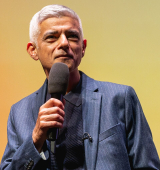
Andy Burnham will become Britain's seventh prime minister in a decade on Monday, pledging to "rewire" the country and shift the government's focus towards the rising cost of living,
struggling public services and stagnant economic growth.
The 56-year-old, who built his national profile as Mayor of Greater Manchester and became known as the "King of the North", will formally take office after Sir Keir Starmer delivers a farewell statement outside 10 Downing Street and tenders his resignation to King Charles. The King will then invite Burnham to form a new government.
Burnham is expected to use his first speech as prime minister to promise "a more stable and responsible politics", presenting his appointment as a chance for national renewal after years of political turbulence.
According to his office, he will acknowledge the scale of Britain's challenges and argue that long-term stability is essential if the government is to improve living standards and restore confidence in public institutions.
His arrival in Downing Street follows his election as Labour leader, which Burnham described last week as "the most significant change moment in our politics for 40 years". He has pledged to overhaul Britain's political and economic model, promising policies aimed at making life more affordable while reducing regional inequalities.
Many Labour MPs see Burnham as one of the party's strongest campaigners against Nigel Farage's Reform UK, believing he is better placed than his predecessor to counter the party's growing electoral appeal.
One of Burnham's first decisions will be selecting his cabinet, with particular attention focused on the appointment of a chancellor. The role is regarded as one of the most influential in government, and tensions between prime ministers and finance ministers have contributed to the collapse of previous administrations.
Energy Secretary Ed Miliband had been widely viewed as a leading contender, although recent speculation has suggested Home Secretary Shabana Mahmood could instead secure the post. Burnham has dismissed reports about his ministerial appointments, saying no final decisions have been made.
His early policy agenda will also be closely scrutinised. Plans requiring all employees to hold a digital identity document have already been abandoned after criticism from a cross-party group of MPs, who labelled the proposal a "fiasco".
Attention is now expected to turn to the government's approach to taxation, public spending, energy policy and the regulation of privatised utilities.
Burnham has repeatedly argued that essential services should face stronger public oversight, with Thames Water emerging as an early test of his approach. Britain's largest water company has faced mounting criticism over its heavy debts and repeated sewage discharges into rivers and coastal waters.
Speaking on Sunday, Deputy Labour Leader Lucy Powell suggested Thames Water could be placed under special measures, allowing it to operate under government control.
"He wants to refocus and reprioritise the government's resources onto tackling the cost of living," Powell told Sky News. "It's about rewiring the way the country and the economy work." Photo by Sergeant Tom Robinson RLC/MOD, Wikimedia commons.