Children and vulnerable patients across England could soon be better shielded from the dangers of second-hand smoke and vaping, as the government launches a
major public consultation on expanding smoke-free spaces.
The proposals would make playgrounds, schools and areas outside hospitals smoke-free, vape-free and heated tobacco-free, reflecting growing concern about the impact of second-hand exposure on children and people with medical conditions.
Under the plans, indoor public spaces — where smoking is already banned — would also become vape-free and heated tobacco-free, subject to the consultation’s outcome. However, the government has stressed that outdoor hospitality venues, such as pub gardens, along with wide open public spaces, will not be included. Private homes and private outdoor areas are also outside the scope of the proposals.
Focus on prevention, not punishment
The consultation forms part of the government’s wider 10 Year Health Plan, which aims to shift the NHS away from treating illness and towards preventing it in the first place. By targeting locations where children play and patients receive care, ministers say they want to reduce avoidable harm before it occurs and ease long-term pressure on the NHS.
Medical evidence shows that second-hand smoke can be harmful even outdoors, particularly for children, pregnant women and people with underlying health conditions. Short-term exposure can cause symptoms such as coughing, headaches and eye irritation, while long-term exposure significantly raises the risk of heart disease, stroke and several cancers.
Government commitment to a smoke-free generation
Speaking as the consultation launched, Wes Streeting, Secretary of State for Health and Social Care, said no child or hospital patient should be exposed to harm because of someone else’s smoking habits.
He emphasised that second-hand smoke increases the risk of serious illnesses such as lung cancer and heart disease, adding that prevention is central to building a healthier Britain and reducing strain on health services.
The consultation is also a key step toward delivering the Tobacco and Vapes Bill, currently progressing through Parliament. The landmark legislation aims to create a smoke-free generation and protect young people from a lifetime of nicotine addiction.
Strong backing from medical leaders
England’s Chief Medical Officer, Chris Whitty, warned that people who do not smoke can still suffer serious health consequences if they are exposed to second-hand smoke.
He highlighted increased risks of asthma, poor birth outcomes, heart disease, stroke and cancer, noting that children and medically vulnerable people face the greatest dangers. While most smokers do not intend to cause harm, he said, second-hand smoke can do exactly that — and these measures would significantly reduce the risk.
What happens next?
The consultation will gather views on how the rules should work in practice, including:
- how outdoor boundaries should be defined
- whether exemptions or designated smoking areas are needed
- how best to inform the public about any new restrictions
If the proposals move forward, there will be at least six months between new regulations being approved and coming into force. Guidance will be issued to help organisations and the public understand and follow the rules.
Enforcement would follow existing smoke-free laws, which have historically seen very high levels of compliance.
The government says the goal is clear: to protect children and vulnerable people from harm, reduce preventable illness, and support a healthier generation for years to come.
Business Minister Kate Dearden, said:
“These are targeted proposals to protect children and families from second-hand smoke and vaping, without placing extra pressure on pubs, restaurants or the wider hospitality sector.
We have been clear that we will support businesses, and after listening to their concerns, we have excluded outdoor hospitality spaces from these changes”.
Dr Charmaine Griffiths, Chief Executive of British Heart Foundation, said:
“No child should have to walk through a cloud of deadly second-hand smoke on their way to the classroom or playground, nor should any patient be exposed to harm on hospital grounds.
We strongly support the Government’s consultation and the landmark legislation behind it, and we call for urgent implementation to protect everyone from harm. Tough measures must be taken to prevent smoking from robbing more families of their loved ones and harming vulnerable people”.
Cancer Research UK’s Executive Director of Policy and Information, Dr Ian Walker, said:
“We support the UK Government taking action to create a smokefree future and protect the most vulnerable in society. This consultation is an important opportunity for people to share their views on smoke-free, heated tobacco-free, and vape-free places in England, helping to ensure decisions are guided by the strongest evidence.
Smoking is the leading cause of cancer deaths in England, and we can’t afford to lose any momentum in the fight against tobacco. The Government must now swiftly pass and implement the historic Tobacco and Vapes Bill to protect future generations from a lifetime of deadly and costly addiction”.
Hazel Cheeseman, Chief Executive of Action on Smoking and Health, said:
“Smokefree legislation has been one of the greatest public health successes of the last 20 years, saving lives, improving health and changing social norms for the better.
With smoking now far less common than when the law was introduced, the public rightly expects the same protections to extend to shared outdoor spaces where people are still being exposed to harmful second-hand smoke”.
Peter Roderick, Spokesperson for Addiction for the Association of Directors of Public Health, said:
“Smoking doesn’t just kill smokers. It also kills non-smokers, and causes a range of illnesses including cancers, heart, and lung diseases that affect adults and children alike, and is linked to stillbirth and sudden infant death syndrome.
We know that these numbers have decreased since the introduction of restrictions on smoking in public places. Introducing more smoke-free spaces will save even more lives, protect future generations, and give freedom to live a healthier life to the 88% of people – including thousands of medically vulnerable people – who don’t smoke. These changes are not only needed, but they also have strong public support and it is vital that we make them happen as soon as possible”.
Sarah Sleet, Chief Executive at Asthma + Lung UK, said:
“No one should be forced to breathe in air that could harm their health, and banning smoking and vaping in more public places would be a significant step towards better lung health for all. There is no safe level of exposure to second-hand smoke, even in outdoor spaces. Tobacco smoke contains dangerous chemicals, including tar and carbon monoxide, which puts lungs at risk - and children and people with underlying health conditions are particularly vulnerable. This is why banning smoking in places, such as outside schools and hospitals, is critical.
The risks of smoking are well documented, but vaping among non-smokers – particularly young people – is also a real concern. More research is needed into the long-term impact of vaping, but in the meantime a ban in indoor public spaces would help to reduce uptake and protect people whose lung conditions are triggered by vaping. The Tobacco and Vapes Bill is a once in a generation chance to create a smoke-free generation and protect the lungs of future generations”.
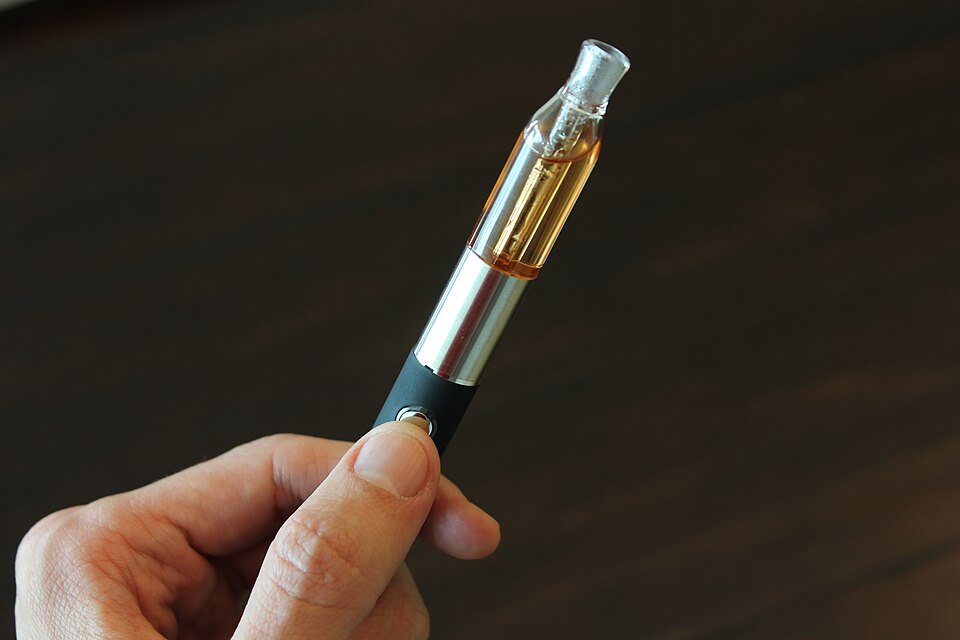
Photo by Lindsay Fox from Newport beach, United States, Wikimedia commons.